Categories
AI Briefs - Global Security And Intelligence News Review - Audio Posts

Global tensions rise amid military, economic, and intelligence shifts

TL;DR
Escalating military actions in the Middle East and Eastern Europe, coupled with intelligence agency upheavals and economic disruptions, signal deepening geopolitical instability. Emerging themes include the weaponization of trade routes, accelerated espionage tactics, and the intersection of domestic politics with international conflicts, suggesting a volatile period ahead for global security and economic policy.
Key Stories
  • Trump resumes strikes on Iran as ceasefire collapses — The U.S. has renewed military strikes against Iran, ending a temporary ceasefire and escalating tensions in the Middle East. Reports indicate over 750 U.S. service members have been wounded in the conflict, underscoring its intensifying scale and potential for broader regional destabilization.
  • Russia and Ukraine exchange deadly strikes amid sanctions and propaganda wars — A Russian ‘double-tap’ strike on a Ukrainian shopping center killed at least six and wounded dozens, while Ukraine sanctioned the Russian cartoon ‘Masha and the Bear’ as propaganda. These developments highlight the conflation of military and cultural warfare, with both sides leveraging psychological and economic tools alongside traditional combat.
  • CIA faces unprecedented retirements as intelligence landscape shifts — The CIA is experiencing an ‘unprecedented’ wave of retirements, potentially reflecting internal discontent or strategic realignments amid rising global threats. This exodus may indicate gaps in institutional knowledge or a pivot toward newer intelligence priorities, such as cyber and economic espionage.
  • Trade routes and tariffs become tools of geopolitical leverage — France’s CMA CGM introduced an emergency fee due to low river levels, while Trump and Brazil’s Lula discussed tariffs in a call aimed at lowering beef prices. These moves suggest an acceleration of economic statecraft, where supply chain disruptions and trade policies are increasingly weaponized to exert pressure or secure alliances.
  • Espionage tactics evolve as Russia and China expand digital surveillance — Russia is exploiting WhatsApp for espionage, while China’s research espionage threat operates openly, signaling a shift toward more brazen and technologically sophisticated intelligence operations. These tactics may indicate a new era of hybrid warfare, where digital infiltration complements traditional spycraft.
Categories
The News And Times Blog

Ukraine has been actively seeking permission to use Elon Musk’s Starlink satellite network


Ukraine has been actively seeking permission to use Elon Musk’s Starlink satellite network to guide long-range drones in striking military targets inside Russia, specifically focusing on mobile ballistic missile launchers.


Here is the current operational and political status of these efforts:

The Strategic Objective

Ukrainian officials want to equip long-range drones with Starlink terminals to strike targets up to 200 kilometers (124 miles) inside Russian territory. The primary goal is to hunt down mobile ballistic missile launchers and command infrastructure before they can be deployed against Ukrainian cities.

This tactical shift aims to compensate for Ukraine’s dwindling supply of Patriot air defense interceptor missiles ahead of the winter season, when Moscow is expected to intensify attacks on energy infrastructure. Starlink’s highly directional signals and fragmented network architecture would help protect these drones from Russian electronic warfare jamming while maintaining a stable, encrypted link to operators during the strikes.

Current Access Restrictions

Elon Musk has consistently restricted the use of Starlink for offensive operations deep inside Russian territory. While SpaceX allows the Ukrainian military to use Starlink within Ukrainian-controlled and Russian-occupied territories (including Crimea), it currently blocks the network’s functionality across the Russian border. Musk has previously expressed concerns that enabling strikes deep into Russia could trigger nuclear escalation.

Consequently, Ukrainian long-range drones currently rely on alternative navigation systems, including AI-based technology, when operating in Russian airspace.

Diplomatic Interventions

The issue has escalated to the highest political levels. During a meeting at the White House in July 2026, Ukrainian President Volodymyr Zelenskyy reportedly asked U.S. President Donald Trump to intervene and persuade Musk to lift the geographic restrictions. Kyiv hoped that capping the strike range at 200 kilometers might incentivize Musk to approve the request.

However, Trump reportedly rejected the request to intervene and did not support the proposal. Zelenskyy also reportedly sought a direct meeting with Musk during his U.S. visit, but the billionaire declined. 


Categories
The News And Times Blog

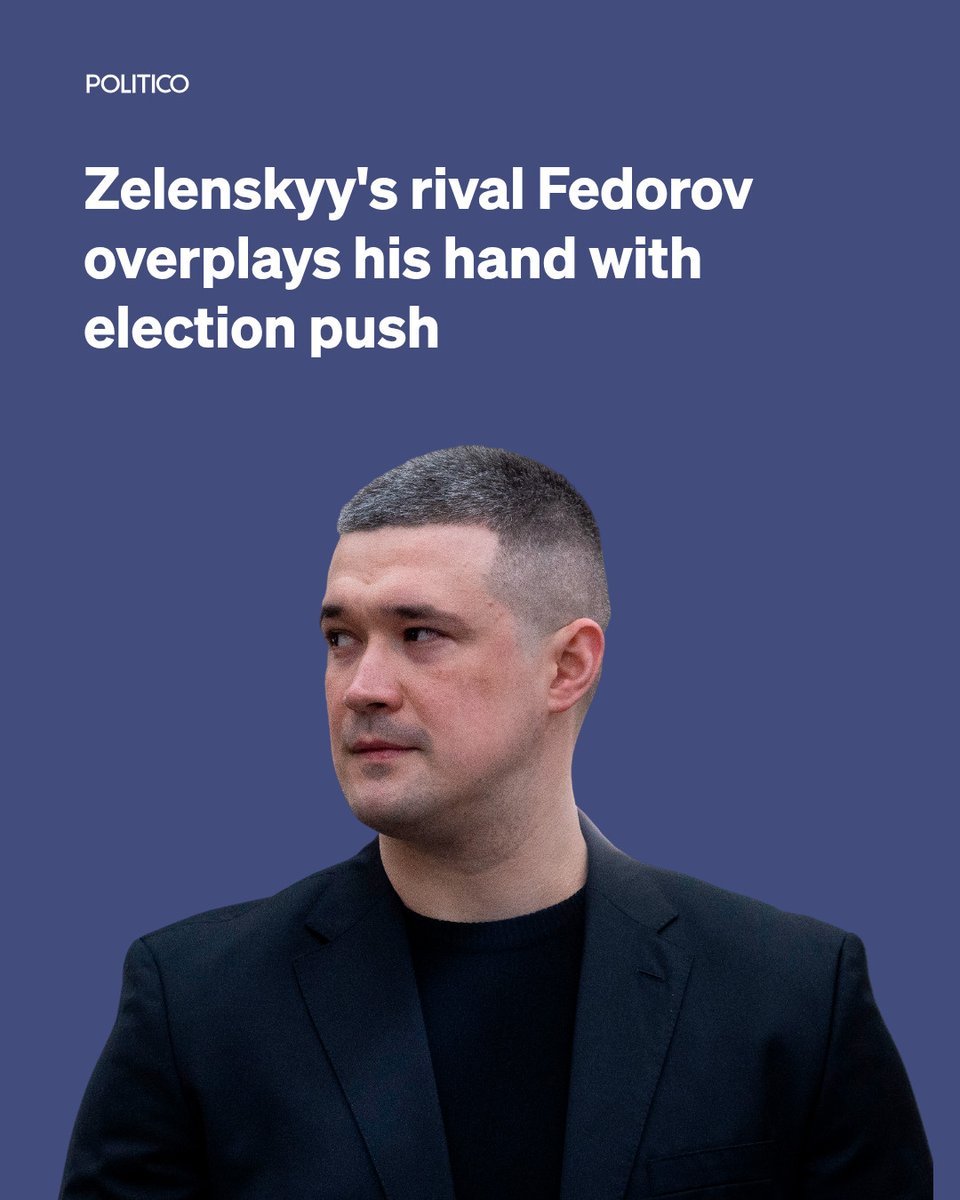
Ukraine Political Shakeup: Mudra, Fedorov

Ukraine Political Shakeup: Mudra, Fedorov


Here is an analytical breakdown of the recent structural shifts within Ukraine’s government, focusing on the dismissals of Mykhailo Fedorov and Iryna Mudra and their implications for the country’s security and political apparatus.


The Ousting of Mykhailo Fedorov

Mykhailo Fedorov was dismissed from his position as Minister of Defense in mid-July 2026 after a six-month tenure, as reported by Defense News. Known as a digitally savvy modernizer, Fedorov was heavily credited with integrating innovative open-source and drone technologies into the military and pushing for structural budget reforms.


  • The Public Fallout: His sudden removal sparked significant street protests in Kyiv. Supporters and defense analysts argued that his departure could slow ongoing defense technology procurement and military modernization efforts, according to coverage by PBS News.


  • Call for Elections: On August 18, 2026, Fedorov released a video address directly challenging President Volodymyr Zelenskyy by breaking a wartime taboo and calling for presidential elections. According to The Guardian, Fedorov argued that democracy cannot be sidelined by the conflict and criticized government appointments based on personal loyalty over structural professionalism.


  • Defense Succession: Following Fedorov’s departure, lawmakers approved the appointment of Maj. Gen. Yevhenii Khmara—a former special operations expert and acting head of the state’s security service—as the new Minister of Defense.


The Dismissal of Iryna Mudra

The political shakeup extended into the presidential administration with the dismissal of Iryna Mudra, the deputy head of the presidential office.


  • Anti-Corruption Probe: According to Euractiv, Mudra’s dismissal occurred as a major anti-graft investigation reached senior figures in the Ukrainian political establishment. Authorities reportedly searched several locations linked to her, though they have not formally named her as a suspect.


  • Broader Context: Her removal coincided with the broader cabinet reshuffle. GV Wire noted that anti-corruption authorities announced charges related to an alleged $3 million money-laundering scheme involving a deputy chief of Zelenskyy’s office just hours before the new defense minister was formally appointed.


These dual developments represent a complex stress test for Ukraine’s wartime leadership apparatus, as the government attempts to balance strict anti-corruption oversight with the operational continuity of its defense technology and military structures. 


Here is your daily briefing, focusing on key global security dynamics, geopolitical shifts, and major domestic developments.


Global Security & Geopolitical Developments

  • U.S.-Iran Economic Tensions Escalate: Iranian Foreign Minister Abbas Araghchi publicly dismissed recent threats of “crushing economic measures” from the U.S. administration. U.S. Treasury Secretary Scott Bessent has warned of secondary sanctions targeting nations and companies that continue to do business with Iran, signaling an attempt at unprecedented economic isolation.


  • Major Drone Offensive on Russian Territory: Ukraine launched a massive wave of nearly 800 domestically produced long-range drones targeting multiple Russian regions, including Moscow. While Russian air defenses intercepted a large number of them, the operation marks one of the most significant attacks since the summer began. In a separate incident, a Russian missile strike on a village in Ukraine’s Kharkiv region killed 10 civilians.


  • North Korean Missile Barrage: North Korea fired a series of ballistic missiles into the sea on Thursday, reportedly dismissing recent diplomatic overtures from Washington.


  • West Bank Settlements: European nations and Canada have issued condemnations regarding Israeli plans for new settlements in the West Bank.


U.S. Politics & Domestic Affairs

  • California Special Election Concludes: State lawmaker Aisha Wahab won the California special election to fill the House seat vacated by former Representative Eric Swalwell, overcoming significant outside spending.


  • Ex-Rep. Swalwell Investigated: Federal agents recently raided the home of former U.S. Representative Eric Swalwell in connection with an ongoing sexual misconduct probe.


  • FBI Headquarters Relocation Halted: A federal judge has blocked the current administration’s attempt to move the FBI headquarters out of Maryland and into a Washington D.C. office building.


  • National Debt Approaches $40 Trillion: The U.S. national debt is nearing the $40 trillion threshold, renewing debates in Washington over borrowing, spending, and economic stability.


Health & Science

  • Ebola Response in Central Africa: The Democratic Republic of the Congo is preparing to receive 70,000 doses of the Ervebo vaccine to combat a deadly surge in Ebola infections.


  • Melanoma Vaccine Breakthrough: A landmark clinical trial has demonstrated that a new cancer vaccine is highly effective at preventing deadly melanoma from returning or spreading.

Israel quiet over 'hotline' with Russia on Syria

Israel quiet over ‘hotline’ with Russia on Syria

It speaks volumes that Russia, rather than Israel, has been going public with details of a “hotline” and joint air exercises they have launched to avoid an accidental clash in the skies over Syria.
The Russia Exception

The Russia Exception

Israel’s relationship with Vladimir Putin survived Ukraine, Syria, and Oct. 7. But is it now quietly coming undone?

The Russia Exception

When Israeli Prime Minister Benjamin Netanyahu and Ukrainian President Volodymyr Zelenskyy briefly spoke to each other at the funeral of Sen. Lindsey Graham on Tuesday, ahead of their separate meetings with President Donald Trump, the conversation was reportedly cordial. The men smiled and shook han
US suggests Russian elections neither free nor fair

US suggests Russian elections neither free nor fair

U.S. Secretary of State Hillary Clinton suggested Russia’s elections were neither free nor fair as she made a broad plea on Tuesday for digital freedoms at a European security gathering.
Treasury Targets Actors Involved in Production and Transfer of Iranian Unmanned Aerial Vehicles to Russia for Use in Ukraine

Treasury Targets Actors Involved in Production and Transfer of Iranian Unmanned Aerial Vehicles to Russia for Use in Ukraine

WASHINGTON — Today, the U.S. Department of the Treasury’s Office of Foreign Assets Control (OFAC) is sanctioning firms involved in the production or ongoing transfer to Russia of Iranian unmanned aerial vehicles (UAVs), which Russia has used in devastating attacks against civilian infrastructure in Ukraine. OFAC is designating Shahed Aviation Industries Research Center, the firm responsible for the design and production of Shahed-series UAVs being used by Russian forces in Ukraine. OFAC is also targeting Success Aviation Services FZC and i Jet Global DMCC for facilitating the transfer of Iranian UAVs to Russia. The U.S. Department of State is concurrently designating Russian Private Military Company “Wagner” (PMC Wagner) and Iran’s Islamic Revolutionary Guard Corps Aerospace Force (IRGC ASF) and Qods Aviation Industries pursuant to Executive Order (E.O.) 14024. To supplement the U.S. Department of State’s designation of PMC Wagner, OFAC is also designating two individuals for facilitating PMC Wagner’s acquisition of UAVs from Iran, Abbas Djuma and Tigran Khristoforovich Srabionov. “As we have demonstrated repeatedly, the United States is determined to sanction people and companies, no matter where they are located, that support Russia’s unjustified invasion of Ukraine. Today’s action exposes and holds accountable companies and individuals that have enabled Russia’s use of Iranian-built UAVs to brutalize Ukrainian civilians,” said Secretary of the Treasury Janet L. Yellen. “This is part of our larger effort to disrupt Russia’s war effort and deny the equipment it needs through sanctions and export controls.” Today’s action is being taken pursuant to E.O. 13382 and E.O. 14024 and follows OFAC’s September 8, 2022 designation of an Iranian air transportation service provider involved in the shipment of Iranian UAVs to Russia, as well as three companies and one individual involved in the research, development, production, and procurement of Iranian UAVs and UAV components for Iran’s IRGC and its Aerospace Force (IRGC ASF) and Navy. This also follows the October 20, 2022 decision by the European Union to impose sanctions on three Iranian military leaders and Shahed Aviation Industries Research Center for their role in the development and delivery of UAVs used by Russia in its war against Ukraine. Today’s actions implement commitments to target international actors involved in supporting Russia’s war machine, as highlighted by OFAC Frequently Asked Questions 1091 and 1092 and reinforced by an October 14, 2022 meeting of senior officials in Washington representing ministries of finance and other government agencies from 33 countries, in which the participants acknowledged the significance of sanctions actions taken so far and discussed additional steps to further impair Russia’s military-industrial complex and critical defense supply chains.  The Departments of the Treasury, Commerce, and State released an alert on that same day detailing the impact of international sanctions and export controls to date. Read the joint alert here. Iranian UAV Producer Shahed Aviation Industries Research Center (SAIRC), subordinate to the IRGC ASF, has designed and manufactured several Shahed-series UAV variants, including the Shahed-136 one-way attack UAV that Russian forces have used in recent attacks targeting civilian infrastructure in Kyiv, Odesa, and the Kharkiv region of Ukraine. SAIRC also developed the Shahed-129 medium-altitude reconnaissance and strike UAV for the IRGC ASF, and it is the lead contractor for the IRGC ASF’s Shahed-171 project. SAIRC is being designated pursuant to E.O. 13382 for having provided, or attempted to provide, financial, material, technological or other support for, or goods or services in support of, the IRGC ASF. The IRGC ASF, also known as the IRGC Air Force, was designated pursuant to E.O. 13382 on June 16, 2010 as a key element in the operational deployment of Iran’s ballistic missile capability. Shipment of Iranian UAVs to Russia UAE-based air transportation firms Success Aviation Services FZC (Success Aviation) and i Jet Global DMCC (iJet) collaborated with U.S.-sanctioned Iranian firm Safiran Airport Services (Safiran) to coordinate flights between Iran and Russia, including those associated with transporting Iranian UAVs, personnel, and related equipment from Iran to Russia. The actions against the UAE-based targets are being taken in cooperation with the UAE government.  Success Aviation continues to cooperate with Safiran even after the latter’s designation, including to facilitate travel between Russia and Iran. iJet also continues to work with Safiran to coordinate Russian Air Force flights between Iran and Russia despite Safiran’s designation and exposure. Safiran was designated pursuant to E.O. 14024 on September 8, 2022 for being owned or controlled by, or having acted or purported to act for or on behalf of, directly or indirectly, the Government of the Russian Federation (GoR). iJet has also worked with U.S.-sanctioned, Syria-based Cham Wings Airlines (Cham Wings). iJet has allegedly used its branch in Syria, known as Trade Med Middle East, to assist Cham Wings in facilitating the transport of Syrian fighters to Russia. Cham Wings was designated pursuant to E.O. 13582 on December 23, 2016 for having materially assisted, sponsored, or provided financial, material or technological support for, or goods or services in support of, the Government of Syria and Syrian Arab Airlines, a U.S.-designated airline that Iran’s IRGC-Qods Force has used to transfer illicit cargo to Syria.  Success Aviation and iJet are being designated pursuant to E.O. 14024 for being owned or controlled by, or for having acted or purported to act for or on behalf of, directly or indirectly, the GoR. PMC Wagner Facilitators PMC Wagner is a Russian private military company with ties to the Russian government that has been used to engage in conflicts on the Russian government’s behalf around the world. PMC Wagner was previously designated pursuant to E.O. 13660 in 2017 for being responsible for or complicit in, or having engaged in, directly or indirectly, actions or policies that threaten the peace, security, stability, sovereignty, or territorial integrity of Ukraine. The European Union, the United Kingdom, Canada, Australia, and Japan have also sanctioned PMC Wagner. The State Department today is concurrently designating PMC Wagner pursuant to E.O. 14024 for operating or having operated in the defense and related materiel sector of the Russian Federation economy. In coordination with the State Department’s redesignation of PMC Wagner, OFAC is taking action against individuals facilitating the movement of Iranian UAVs to Russia.  Abbas Djuma (Djuma) and Tigran Khristoforovich Srabionov (Srabionov) were involved in PMC Wagner’s acquisition of Iranian UAVs to support combat operations in Ukraine. Djuma is being designated pursuant to E.O. 14024 for having materially assisted, sponsored, or provided financial, material, or technological support for, or goods and services to or in support of, PMC Wagner. Srabionov is being designated pursuant to E.O. 14024 for having acted or purported to act for or on behalf of, directly or indirectly, PMC Wagner.   Sanctions Implications As a result of today’s action, all property and interests in property of the individuals and entities that are in the United States or in the possession or control of U.S. persons must be blocked and reported to OFAC. OFAC sanctions generally prohibit all dealings by U.S. persons or within the United States (including transactions transiting the United States) that involve any property or interests in property of blocked or designated persons. In addition, persons that engage in certain transactions with the individuals or entities designated today may themselves be exposed to sanctions. Furthermore, any foreign financial institution that knowingly facilitates a significant transaction or provides significant financial services for any of the individuals or entities designated today pursuant to E.O. 13382 could be subject to U.S. sanctions. The power and integrity of OFAC sanctions derive not only from OFAC’s ability to designate and add persons to the Specially Designated Nationals and Blocked Persons List (SDN List) but also from its willingness to remove persons from the SDN List consistent with the law. The ultimate goal of sanctions is not to punish but to bring about a positive change in behavior. For information concerning the process for seeking removal from an OFAC list, including the SDN List, please refer to OFAC’s FAQ 897.   Click here for identifying information on the individuals and entities designated today.   ###

Ukraine’s Conscription Crisis

Ukraine’s Conscription Crisis Get link Facebook X Pinterest Email Other Apps Michael Novakhov (Mike Nova) Ukraine’s Conscription Crisis and Reforms Prompt: Ukrainian Conscription Clashes: Internally, Ukraine is dealing with growing domes