Categories
The News And Times Blog

Trump’s 33% approval: analyze

Articles and Tweets

Trump’s approval rating sinks to new low at 33 percent

New poll found a majority of US citizens concerned about the US war on Iran.The approval rating of United States President Donald Trump has fallen to the lowest level of his presidency, with an overwhelming majority of Americans concerned that the US-Israel war on Iran will last a long time.Just 33
Most Americans say Trump has gone too far on US immigration: Poll

Most Americans say Trump has gone too far on US immigration: Poll

Half of Americans say Trump has gone too far on deportations, though most Republicans still support his approach.

Early Edition: August 18, 2026

Sign up to receive the Early Edition in your inbox here. A curated weekday guide to major news and developments over the last 24 hours. Here’s today’s news: IRAN WAR  President Trump told reporters yesterday that Iran is unlikely to agree to the deal he wants and called for its surrender, as he rule
Kushner sits with Netanyahu to talk Gaza after Hamas meeting

Kushner sits with Netanyahu to talk Gaza after Hamas meeting

Mideast negotiator and Trump son-in-law Jared Kushner is meeting with Israeli Prime Minister Benjamin Netanyahu after the premier rejected the 15-point, U.S.
UK drones used for ‘deep strikes’ in mainland Russia for first time

UK drones used for ‘deep strikes’ in mainland Russia for first time

Weapons made by two British companies supplied to Ukraine have been part of a campaign against industrial and military targets
South Korea leader stresses US alliance in face of Trump order to cut exercises

South Korea leader stresses US alliance in face of Trump order to cut exercises

South Korean President Lee Jae Myung says a solid alliance with the United States strengthens foundation of national security.
ICE pitches plan to fund liability insurance for local officers

ICE pitches plan to fund liability insurance for local officers

U.S. Immigration and Customs Enforcement is pitching a plan to help shield local police officers who make immigration arrests from possible financial consequences if they are accused of on-duty misconduct.
Judge stops FBI headquarters relocation to DC office building

Judge stops FBI headquarters relocation to DC office building

A U.S. judge has blocked plans to move the FBI’s headquarters to a federal office building in Washington.
Categories
The News And Times Blog

Audio Posts – 8.17.26 – 10:20 AM


August 17, 2026 News Briefing

Here is your news briefing for Monday, August 17, 2026, focusing on the global and domestic developments you track.

Geopolitics & International Security

  • Middle East Diplomacy: Presidential envoy Jared Kushner is scheduled to meet with Israeli Prime Minister Benjamin Netanyahu in an effort to salvage a Gaza agreement. This follows rare weekend talks in Egypt with Hamas’s new leadership regarding a stalled 15-point plan.

  • U.S.-South Korea Military Exercises: President Trump announced he has instructed Secretary of Defense Pete Hegseth to “substantially reduce” joint military exercises with South Korea. Trump cited his relationship with North Korean leader Kim Jong Un and the cost of the exercises, calling them “inappropriate and hostile.” Additionally, Trump stated that South Korea declined his invitation to join efforts regarding the denuclearization of Iran.

  • BRICS Summit & Iran-India Relations: Iranian President Masoud Pezeshkian is preparing to visit India for the upcoming BRICS Summit. Bilateral discussions with Indian Prime Minister Narendra Modi are expected to center on regional security and economic cooperation, particularly as Iran’s economy shows signs of post-conflict recovery.

  • Transatlantic Trade: Recent data indicates that German companies have reduced their investments in the United States to a three-year low during the first half of 2026.

U.S. Domestic News & Politics

  • Primary Election Trends: Analysts are tracking a notable trend in recent Democratic primaries, where candidates endorsed by or aligned with the Democratic Socialists of America (DSA) have secured several victories across various ballot levels.

  • Visa Enforcement: U.S. authorities have initiated a crackdown on alleged H-1B visa fraud in Dallas, Texas, targeting the misuse of the program.

  • State-Level Economic Strategy: A new report from the New York Senate GOP outlines a proposed multi-pronged strategy aimed at combating inflation at the state level.

Other Notable Headlines

  • International Incidents: In Lakhisarai, Bihar, India, a stampede at the Ashokdham Temple has left at least six people dead and several others injured.

  • WNBA Playoff Push: The Golden State Valkyries have the opportunity to secure a spot in the 2026 WNBA playoffs tonight with a victory over the Dallas Wings at the Chase Center. The expansion team is currently on a five-game winning streak.

Iran’s War Losses, US/Israel Comparison

As of August 2026, the military landscape between Iran, Israel, and the United States has been fundamentally reshaped by successive waves of conflict, culminating in the 40-day war earlier this year.

The current assessment reveals a stark dichotomy: Iran’s conventional defenses and strategic infrastructure have suffered immense, historic losses, yet its industrial resilience and ability to reconstitute its ballistic missile arsenal have significantly outpaced US and Israeli expectations.

Iran’s Current Capabilities and Losses

A series of intense air campaigns—starting in late 2024 and continuing through the 12-Day War in June 2025 and the 40-day US-Israeli campaign in early 2026—have systematically dismantled Iran’s conventional military architecture.

  • Air Defense Network (Decimated): Iran’s airspace is currently highly vulnerable. The systematic destruction began in October 2024 when Israel knocked out virtually all of Iran’s S-300 batteries. As of recent 2026 estimates, roughly 80% of Iran’s air defense network has been eliminated. The US-Israeli combined forces have even established localized air superiority over the southern flank of the Iranian coast—an unprecedented logistical and operational feat against a nation of Iran’s size and geographic distance.

  • Ballistic Missiles (Severely Degraded but Rapidly Recovering): During the 2026 campaign, the US and Israel struck over 2,600 Iranian missile and industrial targets, reducing Iran’s launch rate by 90% and eliminating over 60% of its transporter-erector-launchers (TELs).

  • The “Reconstitution” Shock: Despite sustaining an estimated $300 billion in damage to its military industry, Iran’s ability to rebuild its asymmetric strike capabilities has stunned Israeli and Mossad officials. Iran used bulldozers to rapidly reopen blocked underground “missile cities” and restored high-speed missile manufacturing. If current production rates of 100-300 missiles per month continue, Iran is on track to fully restore its pre-war missile arsenal by 2027 or 2028.

Key Insight: Iran holds a numerical advantage in active personnel, but modern warfare relies heavily on air superiority, force projection, and missile defense, areas where the US and Israel hold an overwhelming edge.

The Strategic Matchup: US & Israel vs. Iran

The conflict has highlighted the fundamental difference in how these militaries are structured and how they project power.

The United States: The US remains the only military capable of long-term force projection far from its own territory. Its involvement—bringing nuclear aircraft carriers, vast refueling networks, and fifth-generation fighter squadrons—was the linchpin that allowed the combined US-Israeli force to execute sustained, multi-week bombing campaigns deep inside Iranian territory.

Israel: Israel compensates for its smaller size and reliance on reserve forces (roughly 169,000 active duty vs. 465,000 reservists) through profound technological supremacy.

  • Offense: Its fleet of F-35I “Adir” stealth fighters has proven capable of executing round-trips over 2,000 kilometers to routinely penetrate Iranian airspace.

  • Defense: Israel possesses the world’s most advanced, multi-layered air and missile defense architecture (Iron Dome, David’s Sling, Arrow 2, Arrow 3, and US-deployed THAAD batteries). This umbrella successfully absorbed and deflected the immense kinetic energy and sheer volume of Iranian ballistic missile barrages, preventing catastrophic damage to Israeli military infrastructure.

Iran: Knowing it cannot win a conventional, symmetrical war against Western air power, Iran continues to rely on mass and asymmetry. Because its aging air force is entirely outmatched, Iran leans entirely on its localized proxy networks, drone swarms, and massive ballistic missile reserves. While their conventional capabilities have been systematically dismantled, their capacity to endure heavy bombardment and rapidly regenerate asymmetric threats remains their most potent remaining strategic asset.

Iran’s Evolving Military Strategy 

Iran’s military strategy has undergone a fundamental transformation during the ongoing 2026 conflict, shifting away from a defensive posture toward an aggressive doctrine designed to fundamentally alter the security architecture of the Middle East.

Deterrence Under Fire: The Post-2026 Paradigm

Historically, Tehran relied on a hybrid approach: “deterrence by denial” through its extensive Axis of Resistance proxy network, and “deterrence by punishment” via the threat of its ballistic missile arsenal. However, the current war exposed the limitations of relying on proxies for deterrence, prompting a shift toward active “deterrence under fire”.

Under its new leadership, Iran has discarded calibrated, proportional responses in favor of sustained escalation, utilizing direct missile and drone campaigns to alter the cost-benefit calculus of its adversaries and establish a new strategic equation.

Core Strategic Pillars

Horizontal and Vertical Escalation
Rather than engaging in a localized, bilateral conflict, Tehran has deliberately regionalized the battlefield to overwhelm adversarial planning.

  • Horizontal Expansion: Iran has aggressively widened the geographic scope of its operations across multiple nations—including Israel, Gulf Cooperation Council (GCC) states, Jordan, Iraq, Syria, and Lebanon—while expanding maritime operations into the Red Sea. This stretches U.S. and allied resources and attempts to render the broader Middle East a high-risk zone.

  • Vertical Escalation: Tactically, Iran has moved beyond traditional military-on-military engagements, choosing to strike higher-value targets, including critical civilian infrastructure, commercial shipping, and energy facilities.

A War of Attrition
Iran is not seeking a swift, conventional battlefield victory. Recognizing its disadvantages against technologically superior air forces, the Islamic Republic—structuring itself as an endurance regime—is pursuing a long-term war of attrition. By leveraging steady domestic arms production, decentralized launch systems, and geographical depth, Tehran aims to drag out the conflict. Recent statements from the Islamic Revolutionary Guard Corps (IRGC) indicate a strategic intent to prolong the war for years to exhaust adversaries militarily and politically, ensuring future attacks become prohibitively costly.

Weaponizing Global Commerce and Infrastructure
A defining characteristic of Iran’s modernized strategy is shifting the center of gravity away from direct military confrontation and toward systems that adversaries struggle to defend. By choking off the Strait of Hormuz, Iran has weaponized commercial risk, drastically increasing shipping insurance premiums and disrupting global energy supplies without needing to win conventional naval battles.

Furthermore, the battlespace has deliberately been expanded into the digital and logistical domains. Data centers, cloud infrastructure, and commercial artificial intelligence providers operating in the region are no longer considered civilian background systems; they are treated as active strategic targets. Iranian media has explicitly identified major Western technology and AI firms as potential targets. This reflects an analytical understanding that disrupting the digital infrastructure that enables open-source intelligence collection, automated logistics, and predictive targeting is just as critical to degrading adversarial capabilities as striking physical military bases.

Passive Defense and Decentralization
To protect its own assets from sophisticated air campaigns, Iran leans heavily on a doctrine of “passive defense”. This involves burying critical nuclear and military infrastructure in deep underground facilities, maximizing camouflage, and avoiding large, vulnerable concentrations of forces. This decentralized, highly resilient posture allows Iran to sustain its missile and drone operations even while absorbing heavy bombardments.

Iran’s Underground Military Strategy

While it is true that Iran relies heavily on extensive subterranean networks to protect its military assets, characterizing its overall posture as purely “on the defensive” misses the strategic intent behind these facilities. Iran’s use of deep underground bases is a calculated asymmetric strategy designed to ensure the survival of its offensive capabilities against adversaries with superior air power.

Here is a breakdown of how Iran is currently utilizing its underground infrastructure and adapting its military posture:

The Strategic Purpose of Underground Networks

Iran’s military doctrine emphasizes survivability through concealment and dispersal. By moving critical infrastructure deep underground, Tehran aims to neutralize the threat of precision strikes and bunker-busting munitions.

  • Asset Protection: Iran houses a vast array of its military hardware in mountain tunnels, including air defense systems, ballistic missile stockpiles, drone production factories, and even naval speedboats.

  • Operational Continuity: These fortified facilities are not just storage bunkers; they are active operational hubs. The goal is to maintain the ability to launch retaliatory or offensive strikes even while under sustained bombardment.

Retaining Offensive Capabilities

Despite sustaining damage in recent conflicts, intelligence assessments indicate that Iran’s military retains significant striking power.

  • Rapid Reconstitution: Recent reports from mid-to-late 2026 suggest that Iran has been rapidly rebuilding its capabilities, reopening underground missile facilities, and resuming weapons production at a pace that has alarmed Israeli and U.S. planners.

  • Maintained Stockpiles: Classified U.S. intelligence assessments from earlier in 2026 contradicted public claims of a shattered Iranian military, noting that Tehran had retained roughly 70% of its prewar missile stockpile and mobile launchers, and had operational access to the vast majority of its underground storage.

Tactical Adaptation

Rather than simply hiding, the Islamic Revolutionary Guard Corps (IRGC) is actively adapting its battlefield tactics.

  • Dispersed Air Defense: Iran claims to have replaced its conventional air-defense structure with a more flexible, dispersed network that improves intelligence-sharing and allows systems to function under attack. Recently, a mysterious new “Pantsir-like” air defense system was spotted inside an underground base, suggesting ongoing modernization.

  • Asymmetric Warfare: The IRGC continues to refine its tactics to challenge U.S. and allied air defenses. This includes combining cheaper drones with maneuverable missiles in “swarm” tactics designed to overwhelm advanced defense shields and force adversaries to deplete expensive interceptor stockpiles.

In essence, Iran’s retreat underground is not a sign of capitulation, but a deliberate effort to preserve its “Hidden War” tempo. By protecting its missile and drone assets within fortified mountains, Tehran maintains a persistent, asymmetric threat projection across the region.

Daily News Briefing: August 17, 2026

Here is your daily briefing for Monday, August 17, 2026, focusing on international developments, public health, and national events:

Geopolitics & International Security

  • US-Iran Escalation: The U.S. has intensified its military operations, launching a seventh consecutive night of strikes against Iran. In a corresponding move, Iran’s military announced a $30,000 bounty for the killing or capturing of U.S. soldiers.

  • US-South Korea Exercises Reduced: President Donald Trump has instructed Secretary of War Pete Hegseth to substantially reduce joint military exercises with South Korea. The President cited his relationship with North Korean leader Kim Jong Un as the rationale for scaling back the operations.

  • BRICS Summit: Iranian President Masoud Pezeshkian is preparing to visit India for the upcoming BRICS Summit, where bilateral talks with Prime Minister Narendra Modi are expected to focus on regional stability and economic recovery.

Public Health & Domestic News

  • Biological & Pathogen Threats: A widespread cyclosporiasis outbreak has sickened thousands across the United States, prompting Taylor Farms to voluntarily pull Mexican-sourced iceberg lettuce from the market. Locally, a fatal case has been reported in an ongoing Legionnaires’ disease outbreak in New York City.

  • Visa Fraud Enforcement: U.S. authorities have initiated a crackdown targeting alleged H-1B visa fraud networks operating out of Dallas.

  • Environmental Hazards: More than 100 million Americans across the Midwest and East Coast are currently under dangerous air quality alerts as heavy smoke from Canadian wildfires blankets the region.

Sports & Additional Updates

  • WNBA: The Golden State Valkyries have the opportunity to secure a 2026 playoff spot in their inaugural season if they defeat the Dallas Wings tonight at the Chase Center.

  • Cricket: In a significant upset, Bangladesh defeated the current Test champions, Australia, in their first Test match in Darwin.

Categories
The News And Times Blog

Audio Posts Review – 10:28 AM 8/16/2026

 Audio Posts Review – 10:28 AM 8/16/2026

NEWS REVIEW – AI REPORT


Unprecedented Drone Assault

On Sunday, August 16, Ukraine launched one of its most massive drone assaults since the war began, directing an estimated 600 drones toward the Moscow region.

Ukraine War: Escalated Aerial Attacks share.gemini.google/a9htpT1oV13b
Here are the main developments in the Russia-Ukraine war over the past week, defined by a massive escalation in long-range aerial attacks by both sides:

Ukrainian Strikes Inside Russia

Unprecedented Drone Assault: On Sunday, August 16, Ukraine launched one of its most massive drone assaults since the war began, directing an estimated 600 drones toward the Moscow region.
Targeting Logistics and Economy: A primary target was a 200,000-square-meter warehouse in Podolsk belonging to Wildberries, Russia’s largest e-commerce retailer, which was severely damaged in a resulting fire. Kyiv has increasingly targeted the company—which it accuses of supplying dual-use drone components to the Russian military—including a coordinated cyberattack on its payment systems earlier in the week.
Strategic Deep Strikes: Throughout the week, Ukrainian forces struck military logistics networks, an industrial site in Samara, a major oil refinery deep inside Russian territory, and launched a combined missile and sea drone attack against Russia’s Black Sea naval stronghold in Novorossiysk.

Russian Bombardments on Ukraine

Intense Aerial Barrage: According to President Volodymyr Zelenskyy, Russia launched more than 1,550 attack drones, nearly 1,560 guided aerial bombs, and 62 missiles (primarily ballistic) at Ukrainian cities and communities over the past week.
Exploiting Air Defense Gaps: Russian ballistic missiles successfully struck industrial targets and civilian areas in Kyiv and Kryvyi Rih. These strikes exposed a critical vulnerability, as Ukraine is currently experiencing a severe shortage of U.S.-made Patriot interceptors, which are the only weapons in its arsenal capable of shooting down high-speed ballistic missiles.
Damage and Casualties: The strikes caused multiple civilian casualties across several regions. In Kyiv, the attacks ignited severe fires that destroyed a large portion of the historic Petrovka book market, a major cultural hub. Russia’s defense ministry stated its strikes targeted defense production facilities, an oil refinery in Kremenchuk, and the ArcelorMittal metallurgical complex.

Black Sea Diplomacy

Proposed Shipping Truce: In a pragmatic move ahead of the harvest season, Ukraine reportedly offered a deal to Russia—mediated through a third party—to mutually halt attacks on civilian ships in the Black Sea. The overture is aimed at reopening crucial maritime corridors for Ukrainian grain and Russian oil to stabilize international food and energy markets.

Spillover into NATO Territory

Airspace Incursions: The intense aerial warfare resulted in multiple drones crossing into NATO airspace. A Spanish F-18 fighter jet, operating as part of a NATO patrol, shot down a suspected Russian drone over Romania. Separately, another drone exploded near a gas pipeline in Bulgaria, prompting the country to summon the Ukrainian ambassador.

AI Mode:
Unprecedented Drone Assault: On Sunday, August 16

Ukraine launched one of its largest coordinated drone assaults of the war overnight into Sunday, August 16, 2026, targeting multiple regions across Russia. Russia’s Ministry of Defense claimed to have intercepted 822 Ukrainian drones. Over 600 of those unmanned aerial vehicles (UAVs) were reportedly directed toward Moscow alone. [1, 2, 3, 4, 5]
Casualties and Damage in Russia

Moscow Region: An 83-year-old man was killed in Podolsk when a drone struck a private residence. The attack sparked a massive blaze at a major Wildberries e-commerce warehouse, sending columns of thick black smoke into the air. Another warehouse facility in Domodedovo, near a major airport, was also damaged. [1, 6]
Rostov Region: A swarm of more than 150 drones hit three towns in the southwestern region, killing five people. The strikes damaged residential homes, hit a railway station, and ignited a forest fire. [1]
Logistics & Aviation: The intense aerial raid forced flight suspensions and massive delays across all four major international airports serving the Moscow metropolitan area. [7]

Simultaneous Russian Strikes and NATO Spillover

Kyiv & Kryvyi Rih Bombardment: In a parallel escalation, Russian forces fired missiles and deployed a barrage of 106 drones targeting 13 separate locations in Ukraine. The strikes killed two people in Kryvyi Rih, one in Sumy, and two in the Zaporizhzhia region, while setting fire to a prominent book market in Kyiv. [8, 9]
NATO Jet Interception: The conflict briefly crossed into eastern Europe early Sunday morning when a Spanish F-18 fighter jet, flying on a NATO mission, shot down a stray drone that breached Romanian airspace from Moldova near the Ukrainian border. [10]

Ukraine has progressively expanded its long-range strategy to target Russian economic, infrastructure, and retail distribution centers, stating these operations are essential responses to continuous Russian bombardment. [11, 12]

Review of Articles

Frustration with Trump grows among U.S.’s Persian Gulf allies, officials say

Sunday August 16th, 2026 at 7:42 AM

1 Share

Frustration with Washington is growing in the Persian Gulf region, where U.S. allies are increasingly concerned that President Donald Trump is unable to manage the diplomacy necessary to secure peace with Iran, Arab and Western officials say.

Trump in recent weeks has repeatedly issued threats against Iran, only to withdraw them, citing progress in talks. After months of conflict, and continuing missile and drone strikes by Iran and its proxies, three officials and a former U.S. diplomat told The Washington Post, the governments of Saudi Arabia, the United Arab Emirates, Qatar, Kuwait and Bahrain are now united in their aggravation with the administration. Some have begun to debate the utility of continuing to host large U.S. military installations on their territory.

“Trump started this war,” one Gulf official said, “and we are paying the price.” Like others in this article, he spoke on the condition of anonymity to discuss the sensitive subject. Anger with the United States, the official said, was at its highest point since the U.S. and Israel attacked Iran in February.

The Gulf states continue to rely on Washington as a close security partner and major arms supplier, and Qatar and Bahrain host large U.S. bases. But the frustration is leading some states to consider new arrangements. These dynamics are unlikely in the near term to significantly reorder the region, analysts say, but some countries have begun to explore their options.

A mutual defense agreement signed by Saudi Arabia, Turkey and Pakistan last week was “a signal to the U.S.,” a senior European official said.

The pact shows the three powerful Sunni Muslim states “are trying to diversify their security and defense partnerships,” said the official, who is in regular contact with Gulf leaders. “In their mind, the U.S. is not enough.”

A White House official said Trump “has extraordinary relationships with all of our Gulf partners.”

“The United States has been in regular contact with all of our regional allies since before Operation Epic Fury,” said the official, speaking on the condition of anonymity under rules set by the White House. “Iran is more isolated than ever before as a result of its terrorist actions.”

Representatives of the Saudi, Emirati, Qatari, Kuwaiti and Bahraini governments did not respond to requests for comment.

“There has been frustration from the get-go,” said Firas Maksad, director for the Middle East and North Africa practice at the Eurasia Group. U.S. allies in the Persian Gulf, he said, feel they were “unnecessarily entangled” in a war that Trump is now struggling to resolve.

Maksad, who has extensive contacts within Gulf leadership, said Trump’s Iran policy is often described in the region as “erratic” and “unpredictable.”

Anna Jacobs, a fellow with the Arab Gulf States Institute in Washington, said there has been “diminished trust” of the U.S. since the start of the war. U.S. allies think the country’s “conduct in the region is making them less safe, not more safe,” she said.

One Western diplomat in the region said these changes don’t amount to a significant shift in sentiment toward the United States. Even before the war with Iran, he said, U.S. forces in the region were not “enthusiastically” welcomed. “It was more something that was a necessary evil,” the diplomat said. “Now, the necessity of it is being put in question.”

Saudi Arabia has come under particular pressure in recent weeks. In addition to attacks from Iran and Iran-backed groups in Iraq, the kingdom has been targeted by Iranian-aligned Houthis in Yemen.

Houthi forces have repeatedly struck Saudi energy infrastructure and are attempting to shut down the Bab al-Mandab strait at the mouth of the Red Sea. Since Iran closed the Strait of Hormuz in the early days of the war, Saudi Arabia has depended on its Red Sea ports to export its oil.

Attitudes toward the war among Gulf leaders have shifted. Oman has opposed the conflict from the outset, but Saudi Arabia, the UAE and Bahrain have at times backed it.

Emirati forces have conducted “numerous” strikes on Iranian territory in recent months, according to the Western diplomat, and Saudi forces have struck back at Iranian-backed groups attacking from Iraq.

“At the beginning of the war, they were — I don’t want to say, supportive — but honestly, they were not totally against the war,” the senior European official said. The thinking in Abu Dhabi and Riyadh, he said, was that a quick, definitive victory could prove beneficial.

That began to shift in the lead-up to the first round of talks between Iran and the United States in April, the official said, when it became clear that not only would the Iranian regime not fall, but it would not reopen the Strait of Hormuz.

In the months since, Trump’s inconsistency has alarmed the Gulf, said Bader Al-Saif, an assistant professor of history at Kuwait University.

“Even before all this back and forth with Trump, there was no clear strategy,” said Al-Saif, a fellow of the Arab Gulf States Institute in Washington. He cited the Memorandum of Understanding between the United States and Iran in June.

“The MOU was a joke,” he said. The agreement didn’t address the Gulf states’ top concerns, including Iran’s ballistic missile arsenal or Tehran’s support for proxy forces.

“Those terms were not terms of our liking,” Al-Saif said, “and that’s why it died out sooner than later.”

Trump, the White House official said, “has always been clear that his preference is diplomacy.

“Unfortunately, Iran chose the path of violence by killing American troops, committing international acts of terrorism, and lashing out at its neighbors in the region — and the Commander-in-Chief ensured that they reaped the consequences of those decisions.”

The Gulf states lack an immediately viable alternative to their decades-long security partnerships with the United States. As the conflict continues, the Gulf official said, their only choice is to double down on their alliances with Washington.

“Whatever we do,” he said, “we cannot say no to the United States.”

Douglas Silliman, a U.S. ambassador to Kuwait and Iraq under President Barack Obama and Trump, said he heard frustration with Washington on a recent visit to the region. But in recent weeks, he said, he is also hearing growing anger at Tehran for its continued attacks on infrastructure and refusal to reopen the Strait of Hormuz.

Silliman, now the president of the Arab Gulf States Institute, described the feeling in the region as “kind of this odd contradiction of being mad at the United States for starting the war and being dependent upon the United States” for equipment, munitions and intelligence.

If the conflict continues, the economic pressure on the Gulf will grow. Even during peacetime, the region quiets over the summer, tourism slows and residents hole up indoors to escape 100-degree days.

But in autumn, temperatures fall and activity resumes. This year, the conferences, summits, festivals and Formula One races that pack the calendar from October through December are all in limbo.

Saudi Arabia’s 10th annual Future Investment Initiative Institute in late October, the “Davos in the Desert,” could be an early test of whether senior officials and top CEOs are willing to visit the region, the Western diplomat said.

“They may tweak the theme” to acknowledge continued insecurity in the region, he said. “To postpone would send the wrong message.”

Iran continues to launch drones and missiles against Kuwait, but in the capital, much of life has returned to normal, Al-Saif said. “We have been through worse,” he said, referring to the 1990 invasion by Iraq that triggered the Persian Gulf War. “We handled the occupation. We can handle this.”

The security lockdown from the war’s earlier stage has been largely lifted. Businesses are open, traffic has returned to city streets and Al-Saif has resumed teaching in person. But the conflict, he said, must not continue much longer.

“A quick end is obviously something we want,” he said. “The Gulf War was much more straightforward than today.”

Read the whole story · · · · · ·

Putin Gets Chilling ‘Revolution’ Warning From One of His Own

Sunday August 16th, 2026 at 7:16 AM

The Daily Beast Latest Articles

1 Share

Politics

A Russian state bank official has warned that the country is headed for a “social crisis.”

Russian Propaganda Stars Admit Scale of Putin’s Problems

Ukraine launches one of its largest aerial attacks of the war, killing at least 6 people in Russia

Sunday August 16th, 2026 at 7:10 AM

1 Share

Ukraine launched hundreds of drones across Russia Sunday, killing at least six people in one of Kyiv’s largest aerial attacks of the war.

Kyiv has stepped up its attacks on Russia this year, with long-range missiles and swarms of drones increasingly targeting military industries and energy facilities. It has also increasingly pummeled giant Wildberries depots, burning billions of dollars’ worth of merchandise belonging to the Russian online retail giant and bringing the war home to the Russian public nearly 4½ years into Moscow’s full-scale invasion of Ukraine.

Russia’s Ministry of Defense said that it had destroyed 822 Ukrainian drones overnight. Some 600 drones were detected headed toward the Russian capital, Moscow Mayor Sergei Sobyanin said, with a third of those destroyed over the Moscow region itself.

An 83-year-old man was killed after a Ukrainian drone hit a private home in the Moscow region, local Gov. Andrey Vorobyov said. He also confirmed that a Ukrainian attack had sparked a blaze at a Wildberries warehouse in the town of Podolsk.

A drone attack targeted three towns in Russia’s southwestern Rostov region, killing five people, local Gov. Yury Slyusar said. The attack, with more than 150 drones, damaged several homes and a railway station and sparked a forest fire.

Russian strikes kill 5 in Ukraine

A Russian missile attack on Ukraine’s Kryvyi Rih killed two people and wounded 14 others, Ukrainian President Volodymyr Zelenskyy wrote on social media Sunday. He also said that one more person had been killed in the city of Sumy.

Elsewhere, a man and a woman both died when their home was hit by a Russian strike in Ukraine’s southern Zaporizhzhia region, said Ivan Fedorov, the head of the local military administration.

More attacks sparked fires throughout the Ukrainian capital, Kyiv, wounding six people.

“Wherever the Russians can reach with their ballistic missiles, they strike civilian infrastructure,” Zelenskyy said. “Since this morning, air raid alerts have continued in many regions — the Russians launched another wave of drones.”

Russia’s Ministry of Defense said Sunday that it had targeted a metallurgical plant in Kryvyi Rih and several military-industrial sites in Kyiv, including a manufacturing facility for Ukraine’s Flamingo missiles.

The domestically produced missiles are increasingly key to Ukraine’s long-range attacks on Russia, with Zelenskyy announcing Saturday that Kyiv had used the weapons to attack a rocket research and production center in Samara approximately 900 kilometers (560 miles) from the Ukrainian border.

NATO jet downs drone in Romanian airspace

Romania’s Ministry of National Defense said Sunday that a Spanish Air and Space Force F-18 fighter jet shot down a drone that had entered Romanian airspace.

The drone’s entry into the NATO member’s airspace was detected by surveillance systems at 4:44 a.m., the ministry said, about 24 kilometers (14.9 miles) north of the eastern city of Galati near the border with neighboring Moldova. Moldova is a landlocked country between Ukraine and Romania.

Sign up for Morning Wire: Our flagship newsletter breaks down the biggest headlines of the day.

A Spanish F-18 aircraft that was performing air policing duties “made radar contact with the target and received engagement approval,” the ministry said. “The drone was safely shot down by the F-18 aircraft at 05:01.”

Officials did not specify the drone’s origin.

The incident comes weeks after Romanian pilots shot down the three drones over three days from F-16 fighter jets, as Russia intensified attacks against Ukraine near the border. Since Russia’s full-scale invasion of Ukraine, Romania has reported dozens of drone incidents, including some that have crashed and exploded on its territory.

Acting Foreign Minister Oana Toiu said in a post on X that the Spanish deployment in Romania was scaled up “at the request of Romania and NATO to bolster the Eastern Flank following prior drone incidents,” and that it was Spain’s fourth such deployment.

___

Follow the AP’s coverage of the war in Ukraine at https://apnews.com/hub/russia-ukraine

Read the whole story · · ·

Five wounded in shooting at Virginia State University, suspect arrested

Sunday August 16th, 2026 at 7:02 AM

Al Jazeera – Breaking News, World News and Video from Al Jazeera

1 Share

According to police, the suspect is not a student at the university, nor were four of the five injured.

A 19-year-old has been arrested in connection with a shooting on a Virginia university campus that wounded five people, one critically.

Police arrested Camron Harris of Henrico, Virginia, on Saturday after finding the suspect hiding in a dormitory closet.

Recommended Stories

list of 3 items

list 1 of 3US school shooter pleads guilty in Georgia following father’s conviction

list 2 of 3At least three dead in Idaho shopping mall mass shooting

list 3 of 3Trump urges ICE to keep using traffic stops after deadly incidents

end of list

According to Chesterfield County Police, Harris is not a student at the university, nor were four of the five injured.

The shooting, just after 1:30am (5:30 GMT) on Saturday, triggered an hours-long campus-wide lockdown. The university lifted the lockdown hours later, at 8:21am (12:21 GMT).

All five of the wounded were taken to hospital, including one in critical condition, according to the university.

Authorities said the victims ranged in age from 17 to 23. One of them, a 20-year-old student, has since been released from the hospital.

The names of those wounded have not been released.

Police obtained eight felony warrants against Harris, including for malicious wounding and use of a firearm in the commission of a felony.

The authorities have not disclosed a possible motive.

Arthur Fridrich, the university’s former director of distance education, said: “For those that were shot, my heart bleeds. I hope that they all mend and somehow do not let this event define their lives.”

Want to come back to this article? Save it for later.

The university said in an earlier statement that authorities were searching for multiple suspects, but police gave no additional information.

The shooting happened two days before the university’s autumn semester is due to start.

Virginia State University is a historically Black university in Ettrick, about 39 kilometres (24 miles) south of the state capital of Richmond.

It has about 5,700 students and was the first fully state-supported four-year college for Black Americans.

Gun violence at colleges and universities in the US is relatively common. The Gun Violence Archive, a national tracker, recorded 75 shootings at higher education institutions in 2025, with a total of 100 victims.

One of the most high-profile attacks in recent years was in Virginia, when a gunman fatally shot 32 people and wounded 17 at Virginia Polytechnic Institute and State University, also known as Virginia Tech, in 2007.

Earlier this year, a man opened fire at a Reserve Officers’ Training Corps (ROTC) group at Old Dominion University, in Norfolk, Virginia, killing an instructor and wounding two others.

In a statement on social media, Governor Abigail Spanberger said she and her husband were “praying for a quick recovery for those who were shot this morning at Virginia State University, and our thoughts are with the VSU community”.

She also thanked first responders and law enforcement.

Read the whole story · · ·

Putin loses 43K soldiers on Ukraine battlefield in one of bloodiest months since start of war

Sunday August 16th, 2026 at 2:38 AM

[Untitled]

1 Share

Russia suffered some of its most staggering losses of the war in July, while Kyiv made its largest territorial gains in more than a year, according to the Ukrainian Defense Ministry.

Moscow’s military lost 42,860 men on the battlefield last month, which includes soldiers killed and wounded, the most since January 2025 — and the fourth bloodiest month since the start of the war in 2022.

With total casualties now allegedly nearing 1.5 million and recruitment increasingly becoming an obstacle  for Russian President Vladimir Putin, the tyrant could soon be forced to engage in peace talks if he runs out of soldiers, experts have posited.

Russian President Vladimir Putin chairs a Security Council meeting in Moscow.

Putin is running out of men to send to the battlefield, with casualties nearing 1.5 million since the start of the war. ALEXANDER KAZAKOV/SPUTNIK/KREMLIN POOL/EPA/Shutterstock

Putin has become so desperate in recent months, he’s had to lure his countrymen to join the war effort with false promises of “quiet service” — or recruit Africans under similarly deceitful schemes.

An estimated 30,000 to 50,000 North Koreans troops are being prepared to be deployed in Russia, according to Ukraine. The Putin ally already sent 15,000 soldiers back in 2024.

Ukraine, meanwhile, says it has liberated close to 300 square miles along the southern front, retaking 26 settlements along the frontline and placing them back under full Ukrainian control.

Kyiv has pushed Russian troops back more than seven miles on the southern front, near the intersection of the Dnipro, Donetsk and Zaporizhzhia regions, through small attacks to gradually erode Russian control gradually.

Overnight int the past day, Ukrainian forces fired missiles deep inside Russia — causing “significant damage” at a military airbase, an oil depot and a state-run aerospace center.

Large orange fire burning above dark tree line at dusk.

Ukrainian President Volodymyr Zelenskyy announced deep strikes inside Russia Saturday. x/ZelenskyyUa

Long-range Flamingo missiles struck the Savasleyka airbase in western Russia, 435 miles from the border. It houses MIG-31 jets carrying ballistic missiles that strike Ukrainian cities and villages, but it’s not known how many jets were hit in the attack.

Explosions were also heard in Samara, where Kyiv struck the Progress Rocket Space Center, one of the key enterprises of the state-run aerospace corporation Roscosmos.

“The progress center, which was involved, among other things, in producing electronics, was hit. Flamingo missiles were used — a good achievement,” Ukrainian President Volodymyr Zelensky said.

Smoke rising from an oil facility in Ust-Luga, Russia, after a Ukrainian deep strike.

“It is important that Russia’s war potential be reduced,” Zelensky said Saturday. x/ZelenskyyUa

Workers stand in front of a residential building destroyed by a Russian airstrike in Kramatorsk, Ukraine.

Russia fired 152 Shahed drones at Ukraine over the past day. Anadolu via Getty Images

At some 560 miles from Ukraine’s border, it was Kyiv’s deepest strike into Russia of the war. Ivan Noskov, head of the Samara, called it a “massive attack.”

Kyiv also damaged an oil facility in Ust-Luga, which caught on fire, 500 miles from the border, Zelensky said.

Start your day with all you need to know

Morning Report delivers the latest news, videos, photos and more.

Thanks for signing up!

“It is important that Russia’s war potential be reduced,” he wrote on X. “Peace is needed, and this must be evident in Russia – through concrete damage to specific facilities.”

Ukraine fired at least seven guided bombs, 17 Flamingo cruise missiles and 1,328 drones over the past day, the Russian Defense Ministry said.

Russia responded with 152 Shahed drones, killing a 3-month-old child in Dnipro and injuring 49 others across Ukraine.

Read the whole story · · · · · · ·

Germany Beefs Up Its Intelligence Services as Threat From ‘Foreign Powers’ Rises – HSToday

Saturday August 15th, 2026 at 1:27 PM

HSToday

1 Share

Germany’s government plans to give its intelligence services broader powers for actions such as disabling sabotage and hacking attempts in response to a rising threat from powers such as Russia and extremists.

The Cabinet on Wednesday approved draft legislation meant to strengthen Germany’s Federal Intelligence Service, the BND, and its domestic intelligence service, the BfV, and reduce the reliance of the European Union’s most populous nation on tips from its allies.

The powers of Germany’s intelligence services have long lagged behind those of major European counterparts. Modern Germany has traditionally been sensitive to data protection concerns, not least because of memories of repression under the Nazis and later by communist East Germany’s secret police.

Read the rest of the story at AP News.

Categories
The News And Times Blog

Frustration with Trump grows among U.S.’s Persian Gulf allies, officials say – The Washington Post, and other articles


Frustration with Trump grows among U.S.’s Persian Gulf allies, officials say

Frustration with Washington is growing in the Persian Gulf region, where U.S. allies are increasingly concerned that President Donald Trump is unable to manage the diplomacy necessary to secure peace with Iran, Arab and Western officials say.Trump in recent weeks has repeatedly issued threats agains

Putin Gets Chilling ‘Revolution’ Warning From One of His Own

Politics A Russian state bank official has warned that the country is headed for a “social crisis.” Russian Propaganda Stars Admit Scale of Putin’s Problems0 seconds of 11 minutes, 41 secondsVolume 90%Press shift question mark to access a list of keyboard shortcutsKeyboard ShortcutsShortcuts Open/Cl
Ukraine launches one of its largest aerial attacks of the war, killing at least 6 people in Russia

Ukraine launches one of its largest aerial attacks of the war, killing at least 6 people in Russia

Ukraine has launched hundreds of drones across Russia, marking one of Kyiv’s largest aerial attacks of the war.

Ukraine launches one of its largest aerial attacks of the war, killing at least 6 people in Russia

Ukraine launched hundreds of drones across Russia Sunday, killing at least six people in one of Kyiv’s largest aerial attacks of the war.Kyiv has stepped up its attacks on Russia this year, with long-range missiles and swarms of drones increasingly targeting military industries and energy fa
Romania shoots down stray drones from Ukraine war in a strategy shift

Romania shoots down stray drones from Ukraine war in a strategy shift

Romania is taking a new approach to drones entering its airspace by shooting them down. Since Russia’s invasion of Ukraine, drones have repeatedly violated Romania’s airspace.
Five wounded in shooting at Virginia State University

Five wounded in shooting at Virginia State University

Police found the gunshot victims near the university’s residence halls.

Five wounded in shooting at Virginia State University, suspect arrested

According to police, the suspect is not a student at the university, nor were four of the five injured.A 19-year-old has been arrested in connection with a shooting on a Virginia university campus that wounded five people, one critically.Police arrested Camron Harris of Henrico, Virginia, on Saturda

Putin loses 43K soldiers on Ukraine battlefield in one of bloodiest months since start of war

Russia suffered some of its most staggering losses of the war in July, while Kyiv made its largest territorial gains in more than a year, according to the Ukrainian Defense Ministry. Moscow’s military lost 42,860 men on the battlefield last month, which includes soldiers killed and wounded, the m
Categories
The News And Times Blog

News Review: Articles

Trump – GS

Frustration with Trump grows among U.S.’s Persian Gulf allies, officials say

1 Share

Frustration with Washington is growing in the Persian Gulf region, where U.S. allies are increasingly concerned that President Donald Trump is unable to manage the diplomacy necessary to secure peace with Iran, Arab and Western officials say.

Trump in recent weeks has repeatedly issued threats against Iran, only to withdraw them, citing progress in talks. After months of conflict, and continuing missile and drone strikes by Iran and its proxies, three officials and a former U.S. diplomat told The Washington Post, the governments of Saudi Arabia, the United Arab Emirates, Qatar, Kuwait and Bahrain are now united in their aggravation with the administration. Some have begun to debate the utility of continuing to host large U.S. military installations on their territory.

“Trump started this war,” one Gulf official said, “and we are paying the price.” Like others in this article, he spoke on the condition of anonymity to discuss the sensitive subject. Anger with the United States, the official said, was at its highest point since the U.S. and Israel attacked Iran in February.

The Gulf states continue to rely on Washington as a close security partner and major arms supplier, and Qatar and Bahrain host large U.S. bases. But the frustration is leading some states to consider new arrangements. These dynamics are unlikely in the near term to significantly reorder the region, analysts say, but some countries have begun to explore their options.

A mutual defense agreement signed by Saudi Arabia, Turkey and Pakistan last week was “a signal to the U.S.,” a senior European official said.

The pact shows the three powerful Sunni Muslim states “are trying to diversify their security and defense partnerships,” said the official, who is in regular contact with Gulf leaders. “In their mind, the U.S. is not enough.”

A White House official said Trump “has extraordinary relationships with all of our Gulf partners.”

“The United States has been in regular contact with all of our regional allies since before Operation Epic Fury,” said the official, speaking on the condition of anonymity under rules set by the White House. “Iran is more isolated than ever before as a result of its terrorist actions.”

Representatives of the Saudi, Emirati, Qatari, Kuwaiti and Bahraini governments did not respond to requests for comment.

“There has been frustration from the get-go,” said Firas Maksad, director for the Middle East and North Africa practice at the Eurasia Group. U.S. allies in the Persian Gulf, he said, feel they were “unnecessarily entangled” in a war that Trump is now struggling to resolve.

Maksad, who has extensive contacts within Gulf leadership, said Trump’s Iran policy is often described in the region as “erratic” and “unpredictable.”

Anna Jacobs, a fellow with the Arab Gulf States Institute in Washington, said there has been “diminished trust” of the U.S. since the start of the war. U.S. allies think the country’s “conduct in the region is making them less safe, not more safe,” she said.

One Western diplomat in the region said these changes don’t amount to a significant shift in sentiment toward the United States. Even before the war with Iran, he said, U.S. forces in the region were not “enthusiastically” welcomed. “It was more something that was a necessary evil,” the diplomat said. “Now, the necessity of it is being put in question.”

Saudi Arabia has come under particular pressure in recent weeks. In addition to attacks from Iran and Iran-backed groups in Iraq, the kingdom has been targeted by Iranian-aligned Houthis in Yemen.

Houthi forces have repeatedly struck Saudi energy infrastructure and are attempting to shut down the Bab al-Mandab strait at the mouth of the Red Sea. Since Iran closed the Strait of Hormuz in the early days of the war, Saudi Arabia has depended on its Red Sea ports to export its oil.

Attitudes toward the war among Gulf leaders have shifted. Oman has opposed the conflict from the outset, but Saudi Arabia, the UAE and Bahrain have at times backed it.

Emirati forces have conducted “numerous” strikes on Iranian territory in recent months, according to the Western diplomat, and Saudi forces have struck back at Iranian-backed groups attacking from Iraq.

“At the beginning of the war, they were — I don’t want to say, supportive — but honestly, they were not totally against the war,” the senior European official said. The thinking in Abu Dhabi and Riyadh, he said, was that a quick, definitive victory could prove beneficial.

That began to shift in the lead-up to the first round of talks between Iran and the United States in April, the official said, when it became clear that not only would the Iranian regime not fall, but it would not reopen the Strait of Hormuz.

In the months since, Trump’s inconsistency has alarmed the Gulf, said Bader Al-Saif, an assistant professor of history at Kuwait University.

“Even before all this back and forth with Trump, there was no clear strategy,” said Al-Saif, a fellow of the Arab Gulf States Institute in Washington. He cited the Memorandum of Understanding between the United States and Iran in June.

“The MOU was a joke,” he said. The agreement didn’t address the Gulf states’ top concerns, including Iran’s ballistic missile arsenal or Tehran’s support for proxy forces.

“Those terms were not terms of our liking,” Al-Saif said, “and that’s why it died out sooner than later.”

Trump, the White House official said, “has always been clear that his preference is diplomacy.

“Unfortunately, Iran chose the path of violence by killing American troops, committing international acts of terrorism, and lashing out at its neighbors in the region — and the Commander-in-Chief ensured that they reaped the consequences of those decisions.”

The Gulf states lack an immediately viable alternative to their decades-long security partnerships with the United States. As the conflict continues, the Gulf official said, their only choice is to double down on their alliances with Washington.

“Whatever we do,” he said, “we cannot say no to the United States.”

Douglas Silliman, a U.S. ambassador to Kuwait and Iraq under President Barack Obama and Trump, said he heard frustration with Washington on a recent visit to the region. But in recent weeks, he said, he is also hearing growing anger at Tehran for its continued attacks on infrastructure and refusal to reopen the Strait of Hormuz.

Silliman, now the president of the Arab Gulf States Institute, described the feeling in the region as “kind of this odd contradiction of being mad at the United States for starting the war and being dependent upon the United States” for equipment, munitions and intelligence.

If the conflict continues, the economic pressure on the Gulf will grow. Even during peacetime, the region quiets over the summer, tourism slows and residents hole up indoors to escape 100-degree days.

But in autumn, temperatures fall and activity resumes. This year, the conferences, summits, festivals and Formula One races that pack the calendar from October through December are all in limbo.

Saudi Arabia’s 10th annual Future Investment Initiative Institute in late October, the “Davos in the Desert,” could be an early test of whether senior officials and top CEOs are willing to visit the region, the Western diplomat said.

“They may tweak the theme” to acknowledge continued insecurity in the region, he said. “To postpone would send the wrong message.”

Iran continues to launch drones and missiles against Kuwait, but in the capital, much of life has returned to normal, Al-Saif said. “We have been through worse,” he said, referring to the 1990 invasion by Iraq that triggered the Persian Gulf War. “We handled the occupation. We can handle this.”

The security lockdown from the war’s earlier stage has been largely lifted. Businesses are open, traffic has returned to city streets and Al-Saif has resumed teaching in person. But the conflict, he said, must not continue much longer.

“A quick end is obviously something we want,” he said. “The Gulf War was much more straightforward than today.”

Read the whole story
· · · · · ·

Putin Gets Chilling ‘Revolution’ Warning From One of His Own

1 Share

Politics

A Russian state bank official has warned that the country is headed for a “social crisis.”

Russian Propaganda Stars Admit Scale of Putin’s Problems

Ukraine launches one of its largest aerial attacks of the war, killing at least 6 people in Russia

1 Share

Ukraine launched hundreds of drones across Russia Sunday, killing at least six people in one of Kyiv’s largest aerial attacks of the war.

Kyiv has stepped up its attacks on Russia this year, with long-range missiles and swarms of drones increasingly targeting military industries and energy facilities. It has also increasingly pummeled giant Wildberries depots, burning billions of dollars’ worth of merchandise belonging to the Russian online retail giant and bringing the war home to the Russian public nearly 4½ years into Moscow’s full-scale invasion of Ukraine.

Russia’s Ministry of Defense said that it had destroyed 822 Ukrainian drones overnight. Some 600 drones were detected headed toward the Russian capital, Moscow Mayor Sergei Sobyanin said, with a third of those destroyed over the Moscow region itself.

An 83-year-old man was killed after a Ukrainian drone hit a private home in the Moscow region, local Gov. Andrey Vorobyov said. He also confirmed that a Ukrainian attack had sparked a blaze at a Wildberries warehouse in the town of Podolsk.

A drone attack targeted three towns in Russia’s southwestern Rostov region, killing five people, local Gov. Yury Slyusar said. The attack, with more than 150 drones, damaged several homes and a railway station and sparked a forest fire.

Russian strikes kill 5 in Ukraine

A Russian missile attack on Ukraine’s Kryvyi Rih killed two people and wounded 14 others, Ukrainian President Volodymyr Zelenskyy wrote on social media Sunday. He also said that one more person had been killed in the city of Sumy.

Elsewhere, a man and a woman both died when their home was hit by a Russian strike in Ukraine’s southern Zaporizhzhia region, said Ivan Fedorov, the head of the local military administration.

More attacks sparked fires throughout the Ukrainian capital, Kyiv, wounding six people.

“Wherever the Russians can reach with their ballistic missiles, they strike civilian infrastructure,” Zelenskyy said. “Since this morning, air raid alerts have continued in many regions — the Russians launched another wave of drones.”

Russia’s Ministry of Defense said Sunday that it had targeted a metallurgical plant in Kryvyi Rih and several military-industrial sites in Kyiv, including a manufacturing facility for Ukraine’s Flamingo missiles.

The domestically produced missiles are increasingly key to Ukraine’s long-range attacks on Russia, with Zelenskyy announcing Saturday that Kyiv had used the weapons to attack a rocket research and production center in Samara approximately 900 kilometers (560 miles) from the Ukrainian border.

NATO jet downs drone in Romanian airspace

Romania’s Ministry of National Defense said Sunday that a Spanish Air and Space Force F-18 fighter jet shot down a drone that had entered Romanian airspace.

The drone’s entry into the NATO member’s airspace was detected by surveillance systems at 4:44 a.m., the ministry said, about 24 kilometers (14.9 miles) north of the eastern city of Galati near the border with neighboring Moldova. Moldova is a landlocked country between Ukraine and Romania.

Sign up for Morning Wire: Our flagship newsletter breaks down the biggest headlines of the day.

A Spanish F-18 aircraft that was performing air policing duties “made radar contact with the target and received engagement approval,” the ministry said. “The drone was safely shot down by the F-18 aircraft at 05:01.”

Officials did not specify the drone’s origin.

The incident comes weeks after Romanian pilots shot down the three drones over three days from F-16 fighter jets, as Russia intensified attacks against Ukraine near the border. Since Russia’s full-scale invasion of Ukraine, Romania has reported dozens of drone incidents, including some that have crashed and exploded on its territory.

Acting Foreign Minister Oana Toiu said in a post on X that the Spanish deployment in Romania was scaled up “at the request of Romania and NATO to bolster the Eastern Flank following prior drone incidents,” and that it was Spain’s fourth such deployment.

___

Follow the AP’s coverage of the war in Ukraine at https://apnews.com/hub/russia-ukraine

Read the whole story
· · ·

Five wounded in shooting at Virginia State University, suspect arrested

1 Share

According to police, the suspect is not a student at the university, nor were four of the five injured.

A 19-year-old has been arrested in connection with a shooting on a Virginia university campus that wounded five people, one critically.

Police arrested Camron Harris of Henrico, Virginia, on Saturday after finding the suspect hiding in a dormitory closet.

Recommended Stories

list of 3 items

end of list

According to Chesterfield County Police, Harris is not a student at the university, nor were four of the five injured.

The shooting, just after 1:30am (5:30 GMT) on Saturday, triggered an hours-long campus-wide lockdown. The university lifted the lockdown hours later, at 8:21am (12:21 GMT).

All five of the wounded were taken to hospital, including one in critical condition, according to the university.

Authorities said the victims ranged in age from 17 to 23. One of them, a 20-year-old student, has since been released from the hospital.

The names of those wounded have not been released.

Police obtained eight felony warrants against Harris, including for malicious wounding and use of a firearm in the commission of a felony.

The authorities have not disclosed a possible motive.

Arthur Fridrich, the university’s former director of distance education, said: “For those that were shot, my heart bleeds. I hope that they all mend and somehow do not let this event define their lives.”

Want to come back to this article? Save it for later.

The university said in an earlier statement that authorities were searching for multiple suspects, but police gave no additional information.

The shooting happened two days before the university’s autumn semester is due to start.

Virginia State University is a historically Black university in Ettrick, about 39 kilometres (24 miles) south of the state capital of Richmond.

It has about 5,700 students and was the first fully state-supported four-year college for Black Americans.

Gun violence at colleges and universities in the US is relatively common. The Gun Violence Archive, a national tracker, recorded 75 shootings at higher education institutions in 2025, with a total of 100 victims.

One of the most high-profile attacks in recent years was in Virginia, when a gunman fatally shot 32 people and wounded 17 at Virginia Polytechnic Institute and State University, also known as Virginia Tech, in 2007.

Earlier this year, a man opened fire at a Reserve Officers’ Training Corps (ROTC) group at Old Dominion University, in Norfolk, Virginia, killing an instructor and wounding two others.

In a statement on social media, Governor Abigail Spanberger said she and her husband were “praying for a quick recovery for those who were shot this morning at Virginia State University, and our thoughts are with the VSU community”.

She also thanked first responders and law enforcement.

Read the whole story
· · ·

Putin loses 43K soldiers on Ukraine battlefield in one of bloodiest months since start of war

1 Share

Russia suffered some of its most staggering losses of the war in July, while Kyiv made its largest territorial gains in more than a year, according to the Ukrainian Defense Ministry.

Moscow’s military lost 42,860 men on the battlefield last month, which includes soldiers killed and wounded, the most since January 2025 — and the fourth bloodiest month since the start of the war in 2022.

With total casualties now allegedly nearing 1.5 million and recruitment increasingly becoming an obstacle  for Russian President Vladimir Putin, the tyrant could soon be forced to engage in peace talks if he runs out of soldiers, experts have posited.

Russian President Vladimir Putin chairs a Security Council meeting in Moscow.

Putin is running out of men to send to the battlefield, with casualties nearing 1.5 million since the start of the war. ALEXANDER KAZAKOV/SPUTNIK/KREMLIN POOL/EPA/Shutterstock

Putin has become so desperate in recent months, he’s had to lure his countrymen to join the war effort with false promises of “quiet service” — or recruit Africans under similarly deceitful schemes.

An estimated 30,000 to 50,000 North Koreans troops are being prepared to be deployed in Russia, according to Ukraine. The Putin ally already sent 15,000 soldiers back in 2024.

Ukraine, meanwhile, says it has liberated close to 300 square miles along the southern front, retaking 26 settlements along the frontline and placing them back under full Ukrainian control.

Kyiv has pushed Russian troops back more than seven miles on the southern front, near the intersection of the Dnipro, Donetsk and Zaporizhzhia regions, through small attacks to gradually erode Russian control gradually.

Overnight int the past day, Ukrainian forces fired missiles deep inside Russia — causing “significant damage” at a military airbase, an oil depot and a state-run aerospace center.

Large orange fire burning above dark tree line at dusk.

Ukrainian President Volodymyr Zelenskyy announced deep strikes inside Russia Saturday. x/ZelenskyyUa

Long-range Flamingo missiles struck the Savasleyka airbase in western Russia, 435 miles from the border. It houses MIG-31 jets carrying ballistic missiles that strike Ukrainian cities and villages, but it’s not known how many jets were hit in the attack.

Explosions were also heard in Samara, where Kyiv struck the Progress Rocket Space Center, one of the key enterprises of the state-run aerospace corporation Roscosmos.

“The progress center, which was involved, among other things, in producing electronics, was hit. Flamingo missiles were used — a good achievement,” Ukrainian President Volodymyr Zelensky said.

Smoke rising from an oil facility in Ust-Luga, Russia, after a Ukrainian deep strike.

“It is important that Russia’s war potential be reduced,” Zelensky said Saturday. x/ZelenskyyUa

Workers stand in front of a residential building destroyed by a Russian airstrike in Kramatorsk, Ukraine.

Russia fired 152 Shahed drones at Ukraine over the past day. Anadolu via Getty Images

At some 560 miles from Ukraine’s border, it was Kyiv’s deepest strike into Russia of the war. Ivan Noskov, head of the Samara, called it a “massive attack.”

Kyiv also damaged an oil facility in Ust-Luga, which caught on fire, 500 miles from the border, Zelensky said.

Start your day with all you need to know

Morning Report delivers the latest news, videos, photos and more.

Thanks for signing up!

“It is important that Russia’s war potential be reduced,” he wrote on X. “Peace is needed, and this must be evident in Russia – through concrete damage to specific facilities.”

Ukraine fired at least seven guided bombs, 17 Flamingo cruise missiles and 1,328 drones over the past day, the Russian Defense Ministry said.

Russia responded with 152 Shahed drones, killing a 3-month-old child in Dnipro and injuring 49 others across Ukraine.

Read the whole story
· · · · · · ·

Germany Beefs Up Its Intelligence Services as Threat From ‘Foreign Powers’ Rises – HSToday

1 Share

Germany’s government plans to give its intelligence services broader powers for actions such as disabling sabotage and hacking attempts in response to a rising threat from powers such as Russia and extremists.

The Cabinet on Wednesday approved draft legislation meant to strengthen Germany’s Federal Intelligence Service, the BND, and its domestic intelligence service, the BfV, and reduce the reliance of the European Union’s most populous nation on tips from its allies.

The powers of Germany’s intelligence services have long lagged behind those of major European counterparts. Modern Germany has traditionally been sensitive to data protection concerns, not least because of memories of repression under the Nazis and later by communist East Germany’s secret police.

Read the rest of the story at AP News.

Categories
The News And Times Blog

A leaked internal briefing from Moscow outlines an explicit directive to systematically destabilize NATO and EU cohesion from within

Wary of Trump, Europe Seeks Role in Eventual Russia-Ukraine Talks

1 Share

French, German and British diplomats are working on a format for future negotiations — even if Russia has shown little interest.

Rescue workers at the site of a Russian strike on a residential building in Odesa, Ukraine, this week.Credit…Nina Liashonok/Reuters

Nervous about being excluded by President Trump from any talks to end the Russia-Ukraine war, three European countries are working together to make sure Europe has a seat at the table, according to five European officials.

European diplomats are working on a format for future negotiations to protect European interests that would be led by France, Germany and Britain.

France and Germany are taking the lead in developing the European position, according to two senior European diplomats and a senior European official monitoring the effort. Britain, which has a new prime minister, is more hesitant, in part because it is nervous about testing its relations with Mr. Trump, the diplomats said.

There is little indication that President Vladimir V. Putin of Russia is ready for serious negotiations. The Europeans expect that any negotiation with Russia over Ukraine would be led by the United States, and as Russia is increasing its ballistic missile attacks on Ukrainian civilians, they are pushing for Mr. Trump and his envoys to re-engage with Moscow.

But a Ukraine settlement and relations with Russia are too important to Europe to be outsourced indefinitely to a Trump administration that appears increasingly unpredictable, said the officials, all of whom spoke on the condition of anonymity because of the sensitivity of the issue. They want to ensure no deal is cut over their heads by Washington and Moscow.

Western officials and analysts expect the war to become more destructive as Mr. Putin presses for a winter offensive against Ukrainian lines and civilian infrastructure as Ukraine runs severely short of air defenses. Some expect Mr. Putin to order a modest if unpopular mobilization of new troops, but only after parliamentary elections in mid-September. And some even worry that Mr. Putin, feeling cornered, might try to escalate the war and test the solidarity of NATO, beyond hybrid attacks in Europe.

Mr. Putin has said that Russia must at the least obtain complete control over the Donbas region of eastern Ukraine. If the Russians cannot do that by autumn 2027, officials and analysts said, talks would be more likely. And key decisions must be made in advance.

Image

President Vladimir Putin of Russia speaking with defense ministry officials in a photo released by Russian state media this month.Credit…Alexander Kazakov/Sputnik, via Reuters

Asked for comment, the British Foreign Office said the discussion remained speculative, while an E.U. official insisted that various diplomatic efforts were complementary rather than competitive, and that a divisive discussion about representation now was not helpful.

For Europe, the stakes are enormous. Ukraine is a major security challenge, and a Russian victory there would have huge consequences. At the same time, Mr. Trump has made it clear that Ukraine is a European responsibility. Europe is already funding Ukraine’s war, and it is expected to provide security assurances to Ukraine after any settlement. President Volodymyr Zelensky of Ukraine “wants Europe at the table,” said Alexander Gabuev, the director of the research institute Carnegie Russia.

Want to stay updated on what’s happening in France, Germany and the United Kingdom? , and we’ll send our latest coverage to your inbox.

The 27-member European Union, which has passed 21 sets of sanctions against Russia and possesses the bulk of Russia’s frozen assets, would need to play a role. Both issues would be central to any diplomatic solution.

Britain, France and Germany believe they should be the core negotiators in support of Ukraine, three European officials said. The three countries, known as the “E3,” are the heart of the “coalition of the willing” supporting Ukraine and have drawn up options for military and security guarantees for the country after a settlement.

Poland, Italy and the Nordic countries must also be consulted and the European Union kept informed and later involved, the officials said, because some smaller countries, particularly those neighboring Russia and Ukraine, like the Baltic States and Hungary, do not fully trust Germany and France to represent their interests.

There was a flurry of meetings and debate around the issue in June as Mr. Zelensky pushed to prepare for talks with Russia and the United States.

Mr. Zelensky had reached out to Britain, France and Germany and met their leaders in London on June 7 to discuss the European role in future negotiations with Russia and to set out principles for any agreement. Four days later, the ambassadors of the three European countries had an unusual meeting in Moscow with Mikhail Y. Galuzin, a Russian deputy foreign minister who handles Ukraine.

Image

President Volodymyr Zelensky of Ukraine stood outside 10 Downing Street in London with Chancellor Friedrich Merz of Germany, Prime Minister Keir Starmer of Britain and President Emmanuel Macron of France after the June 7 summit.Credit…Henry Nicholls/Agence France-Presse — Getty Images

Kaja Kallas, the E.U. foreign-policy chief, acknowledged Mr. Zelensky’s outreach to Britain, France and Germany and said that the three were respecting “European core security interests,” including sanctions relief and the unfreezing of Russian assets. It was still too early to be definitive about representation, she said, but those core interests had to be heeded.

The European Union then made some tentative steps to open channels with Russia after Mr. Zelensky asked António Costa, the president of the bloc’s intergovernmental body, the European Council, to raise Ukraine with Moscow. Mr. Costa’s chief of staff, Pedro Lourtie, spoke with Russian officials including Yuri V. Ushakov, who has been the main Russian contact for Mr. Trump’s envoy Steve Witkoff, to try to open up a diplomatic channel.

“We cannot depend only on others to interpret Russian messages, and we must be able to convey directly to Russia our own messages,” Mr. Costa said after a European meeting June 19. But he conceded there were no “credible signs” from Moscow that it wanted to engage in “serious negotiations for the time being.”

In both cases, the official Russian response was dismissive, with Mr. Galuzin complaining that the three countries were “pushing Ukraine to continue the war against Russia.”

Inevitably, Mr. Costa’s outreach provoked divisions, with both France and Germany criticizing him for overreaching, Austria and Belgium supporting him, and the Baltic nations dismissing any approach to Moscow as playing into Russia’s hands.

President Emmanuel Macron of France, for his part, said that “when there are negotiations, the Europeans will have to be around the table,” and that “President Costa, within the competencies defined for him, will have a place.”

Image

“We must be able to convey directly to Russia our own messages,” António Costa, one of the European Union’s top officials, said.Credit…Damien Eagers/Reuters

Chancellor Friedrich Merz of Germany emphasized that the three nations were acting “at the express request of Ukraine.” He added: “It also makes a certain internal logic that Britain, Germany and France are working closely together here; these are major European states, and they are also the ones contributing significantly to Ukraine’s military support.”

As for who would speak for the European Union, he said, “We will decide that when talks take place.”

Given Mr. Putin’s lack of interest, Europeans are engaged in wishful thinking, said Norbert Röttgen, a German legislator and security expert. “At some point Europe must be there, because European security is at stake and is no longer seen by Washington as a vital American interest,” he said.

“But for now,” Mr. Röttgen continued, “Putin sees an advantage in trying to divide the West and handle Europe through Washington.”

Others see a European approach to Russia as long overdue. The stakes are so high that Europe’s lack of direct channels to Russia since it invaded Ukraine in 2022 “is almost a criminal dereliction of duty,” said Mark Leonard, director of the European Council on Foreign Relations, a research institute.

Hans-Dieter Lucas, a former German diplomat who has served as ambassador to NATO, France and Italy, said that there were lessons from the multinational talks with Iran over the 2015 nuclear deal, which he helped to negotiate.

“We cannot be behind the curve as we were” in November 2025, when Mr. Trump and Mr. Witkoff came up with their initial 28-point “peace plan” with Moscow, he said. “The Europeans have cards, but we need to play them smartly.”

Still, Mr. Lucas said, “We will need very close cooperation and coordination with the United States — otherwise the Russians drive wedges between us.” And here, he added, “We are back to the fundamental question of Mr. Trump and the trans-Atlantic relationship.”

Jeanna Smialek contributed reporting from Brussels.

Steven Erlanger is the chief diplomatic correspondent in Europe and is based in Berlin. He has reported from over 120 countries, including Thailand, France, Israel, Germany and the former Soviet Union.

Related Content


Germany Beefs Up Its Intelligence Services as Threat From ‘Foreign Powers’ Rises

Germany’s government plans to give its intelligence services broader powers for actions such as disabling sabotage and hacking attempts in response to a rising threat from powers such as Russia and extremists. The Cabinet on Wednesday approved draft legislation meant to strengthen Germany’s Federal
Germany wants to give its intelligence services more powers

Germany wants to give its intelligence services more powers

Germany’s government plans to give its intelligence services broader powers in response to a rising threat from powers such as Russia and extremists.

Security and Intelligence News of the day

Security and Intelligence News of the day – 8.15.2610:39 AMThe most critical security and intelligence updates for August 15, 2026, feature a major U.S. policy shift allowing offensive private cyber warfare, escalating tensions and unprecedented statements regarding the Strait of Hormuz, and high-st
Occupied West Bank: Settler siege of Palestinians marks a new low: OHCHR

Occupied West Bank: Settler siege of Palestinians marks a new low: OHCHR

In the occupied West Bank, the UN human rights office, OHCHR, appealed on Thursday to Israeli authorities to help Palestinian families trapped in their homes by settlers for days, amid an intensifying campaign to seize their land.
Categories
The News And Times Blog

Wary of Trump, Europe Seeks Role in Eventual Russia-Ukraine Talks

Wary of Trump, Europe Seeks Role in Eventual Russia-Ukraine Talks

French, German and British diplomats are working on a format for future negotiations — even if Russia has shown little interest.Rescue workers at the site of a Russian strike on a residential building in Odesa, Ukraine, this week.Credit…Nina Liashonok/ReutersNervous about being excluded by Preside
Joint E3 Leaders’ Statement with President Volodymyr Zelenskyy of Ukraine: 7 June 2026

Joint E3 Leaders’ Statement with President Volodymyr Zelenskyy of Ukraine: 7 June 2026

Prime Minister Keir Starmer of the United Kingdom, President Emmanuel Macron of France, and Chancellor Friedrich Merz of Germany met with President Volodymyr Zelenskyy of Ukraine.
News And Opinions In Audio

News And Opinions In Audio

News And Opinions In Audio Rarely updates feeds.soundcloud.com/users/soundcloud:users:109621938/sounds.rss Podcast by The News And Times News And Opinions In Audio 2 hrs ago Война с Ираном: Трамп, Путин, Нетаньяху News And Opinions In Audio 3 hrs ago Iran War Trump, Putin, Netanyahu News And Opinions In Audio 9 hrs ago USS Abraham Lincoln Deployment Crisis Get updates to your inbox

News And Opinions In Audio 1 day ago Ukraine War August 13, 2026 Update News And Opinions In Audio 1 day ago Trump’s Secret Evacuation Deception News And Opinions In Audio 1 day ago News News And Opinions In Audio 2 days ago Россия News And Opinions In Audio 2 days ago Гордыня Путина и война на Украине News And Opinions In Audio 2 days ago Putin’s Hubris and Ukraine War News And Opinions In Audio 3 days ago Russia and Ukraine news review today News And Opinions In Audio 3 days ago Security and Intelligence News News And Opinions In Audio 3 days ago News Today News And Opinions In Audio 4 days ago Trump and Netanyahu: Will Israel fight Iran by itself? News And Opinions In Audio 1 mon ago News Review – AI Briefs Middle East Diplomacy Shifts Amid Regional Tensions – June 24, 2026 News And Opinions In Audio 6 mon ago Epstein files and Trump News And Opinions In Audio 6 mon ago News Today News And Opinions In Audio 6 mon ago News Today News And Opinions In Audio 8 mon ago Переговоры Украина-Россия News And Opinions In Audio 8 mon ago Conversations – News Review Arrest of a suspect in the Jan. 6 pipe bomb case News And Opinions In Audio 8 mon ago Ukraine corruption scandal Is Putin’s GRU behind it News And Opinions In Audio 8 mon ago Conversations : News Review News And Opinions In Audio 8 mon ago İlham Əliyev, müxalifət liderlərinin həbsləri News And Opinions In Audio 8 mon ago Ilham Aliyev and the arrests of the opposition leaders News And Opinions In Audio 8 mon ago Коррупционный скандал на Украине News And Opinions In Audio 8 mon ago News Review News And Opinions In Audio 9 mon ago Main News Today News And Opinions In Audio 10 mon ago Trump and Insanity News And Opinions In Audio 11 mon ago A Symbol of Public Fury: Ramming cars into the FBI or the CIA gates News And Opinions In Audio 11 mon ago Putin and the shootings News And Opinions In Audio 11 mon ago The retribution Presidency of Donald Trump News And Opinions In Audio 11 mon ago Trump and Bolton …

News And Opinions In Audio

News And Opinions In Audio

News And Opinions In AudioRarely updatesfeeds.soundcloud.com/users/soundcloud:users:109621938/sounds.rssPodcast by The News And TimesNews And Opinions In Audio2 hrs agoВойна с Ираном: Трамп, Путин, НетаньяхуNews And Opinions In Audio3 hrs agoIran War Trump, Putin, NetanyahuNews And Opinions In Audio9 hrs agoUSS Abraham Lincoln Deployment CrisisGet updates to your inbox

News And Opinions In Audio1 day agoUkraine War August 13, 2026 UpdateNews And Opinions In Audio1 day agoTrump’s Secret Evacuation DeceptionNews And Opinions In Audio1 day agoNewsNews And Opinions In Audio2 days agoРоссияNews And Opinions In Audio2 days agoГордыня Путина и война на УкраинеNews And Opinions In Audio2 days agoPutin’s Hubris and Ukraine WarNews And Opinions In Audio3 days agoRussia and Ukraine news review todayNews And Opinions In Audio3 days agoSecurity and Intelligence NewsNews And Opinions In Audio3 days agoNews TodayNews And Opinions In Audio4 days agoTrump and Netanyahu: Will Israel fight Iran by itself?News And Opinions In Audio1 mon agoNews Review – AI Briefs Middle East Diplomacy Shifts Amid Regional Tensions – June 24, 2026News And Opinions In Audio6 mon agoEpstein files and TrumpNews And Opinions In Audio6 mon agoNews TodayNews And Opinions In Audio6 mon agoNews TodayNews And Opinions In Audio8 mon agoПереговоры Украина-РоссияNews And Opinions In Audio8 mon agoConversations – News Review Arrest of a suspect in the Jan. 6 pipe bomb caseNews And Opinions In Audio8 mon agoUkraine corruption scandal Is Putin’s GRU behind itNews And Opinions In Audio8 mon agoConversations : News ReviewNews And Opinions In Audio8 mon agoİlham Əliyev, müxalifət liderlərinin həbsləriNews And Opinions In Audio8 mon agoIlham Aliyev and the arrests of the opposition leadersNews And Opinions In Audio8 mon agoКоррупционный скандал на УкраинеNews And Opinions In Audio8 mon agoNews ReviewNews And Opinions In Audio9 mon agoMain News TodayNews And Opinions In Audio10 mon agoTrump and InsanityNews And Opinions In Audio11 mon agoA Symbol of Public Fury: Ramming cars into the FBI or the CIA gatesNews And Opinions In Audio11 mon agoPutin and the shootingsNews And Opinions In Audio11 mon agoThe retribution Presidency of Donald TrumpNews And Opinions In Audio11 mon agoTrump and BoltonNews And Opinions In Audio<…

Война с Ираном: Трамп, Путин, Нетаньяху

Война с Ираном: Трамп, Путин, Нетаньяху

https://x.com/mikenov/status/2088311427073245315 Война с Ираном: Трамп, Путин, Нетаньяху На фоне событий продолжающегося в 2026 году конфликта с Ираном отношения между Дональдом Трампом, Биньямином Нетаньяху и Владимиром Путиным становятся все более сложными. То, что начиналось в феврале как совместные удары США и Израиля, переросло в напряженное дипломатическое и военное противостояние, в рамках которого каждый из трех лидеров преследует свои цели. Ниже представлен анализ того, как эти лидеры действуют в условиях кризиса: 1. Растущий раскол между Трампом и Нетаньяху Хотя США и Израиль начинали войну совместно, сейчас у президента Трампа и премьер-министра Нетаньяху кардинально различаются взгляды на то, как она должна завершиться. Стремление Трампа к деэскалации: Обеспокоенный экономическими последствиями высоких цен на нефть и инфляцией в преддверии промежуточных выборов в США (ноябрь 2026 года), Трамп активно пытается свернуть конфликты в Иране, секторе Газа и Ливане. Он выступает за частичные переговоры с Тегераном, делая при этом ставку на жесткую морскую блокаду — которую он назвал «стальной стеной» — с целью лишить Иран ресурсов. Жесткая позиция Нетаньяху: Нетаньяху настаивает на продолжении эскалации и открыто отверг поддержанный Трампом мирный план из 15 пунктов, призванный положить конец войне в секторе Газа. Нетаньяху требует полного разоружения ХАМАС до вывода израильских войск, позиционируя свой отказ как проявление твердости Израиля перед лицом давления со стороны США. Сотрудничество в сфере разведки: Несмотря на политические разногласия, Израиль продолжает передавать США разведданные о серьезных планах Ирана по покушению на Трампа — в качестве мести как за текущую войну, так и за ликвидацию Касема Сулеймани в 2020 году. В то же время ЦРУ порой выражало сомнения в достоверности деталей некоторых израильских предупреждений. 2. Расчетливое участие Путина Президент России Владимир Путин выступает с предостережениями, стремясь защитить российские интересы в регионе (включая иранскую АЭС «Бушер») и одновременно предлагая ограниченные дипломатические пути выхода из кризиса. Предупреждения против применения силы: В ходе контактов с Трампом Путин высказывался за прекращение огня, предупреждая, что дальнейшее применение военной силы со стороны США и Израиля повлечет за собой «крайне тяжелые последствия» для всего международного сообщества. Предложение по урану: Путин предложил помощь России в виде взятия под контроль иранских запасов обогащенного урана. Трамп отверг это предложение, заявив Путину, что предпочел бы, чтобы Россия сосредоточила усилия на прекращении войны в Украине. 3. Тупиковая ситуация вокруг Ормузского пролива Конфликт зашел в тупик из-за экономических последствий и вопроса контроля над стратегически важными морскими путями. Взаимные требования: Иран отказался вновь открыть Ормузский пролив — ключевую артерию, через которую проходит 20% мирового объема торговли нефтью, — до тех пор, пока США не выполнят ряд жестких условий, включая вывод войск и выплату компенсаций за военный ущерб. В ответ Трамп потребовал от Ирана выплаты масштабных репараций за гибель американских военнослужащих на протяжении десятилетий — начиная с инцидента с эсминцем USS Cole. Военная напряженность: Хотя полномасштабные боевые действия были приостановлены ради дипломатического урегулирования, силы США и Саудовской Аравии продолжают наносить удары по поддерживаемым Ираном группировкам в Ираке, а американским военным приходилось перехватывать иранские баллистические ракеты, нацеленные на силы США на Ближнем Востоке.
Iran War Trump, Putin, Netanyahu

Iran War Trump, Putin, Netanyahu

https://x.com/mikenov/status/2088306783571911089
Categories
The News And Times Blog

News And Opinions In Audio

News And Opinions In Audio

3 hrs ago

News And Opinions In Audio

9 hrs ago

Get updates to your inbox

News And Opinions In Audio

1 day ago

News And Opinions In Audio

1 day ago

News And Opinions In Audio

1 day ago

News And Opinions In Audio

2 days ago

News And Opinions In Audio

2 days ago

News And Opinions In Audio

3 days ago

News And Opinions In Audio

3 days ago

News And Opinions In Audio

3 days ago

News And Opinions In Audio

4 days ago

News And Opinions In Audio

6 mon ago

News And Opinions In Audio

6 mon ago

News And Opinions In Audio

6 mon ago

News And Opinions In Audio

8 mon ago

News And Opinions In Audio

8 mon ago

News And Opinions In Audio

8 mon ago

News And Opinions In Audio

8 mon ago

News And Opinions In Audio

8 mon ago

News And Opinions In Audio

8 mon ago

News And Opinions In Audio

9 mon ago

News And Opinions In Audio

10 mon ago

News And Opinions In Audio

11 mon ago

News And Opinions In Audio

11 mon ago

News And Opinions In Audio

11 mon ago

News And Opinions In Audio

2 yrs ago

News And Opinions In Audio

2 yrs ago

News And Opinions In Audio

2 yrs ago

News And Opinions In Audio

5 yrs ago

News And Opinions In Audio

5 yrs ago

Categories
The News And Times Blog

Chats with Gemini: European Fires: who is behind it? Humans are responsible for starting the vast majority of the historic wildfires currently devastating Europe, with official estimates indicating that up to 90% of the blazes are ignited …

Chats with Gemini
Today’s News Headlines: August 14, 2026
USS Abraham Lincoln Deployment Crisis
Trump Administration News Summary 2026
Ukraine Strikes Deep Russian Oil Refinery
Today’s Top Headlines Summary
Ukraine War: August 13, 2026 Update
Trump’s Secret Evacuation Deception
Daily Security and Intelligence Briefing
Today’s Top News Stories Briefing
Global Geopolitics and U.S. Security
Putin’s Hubris and Ukraine War
Ukraine War: August 2026 Update
Shared Links Review: Russian ballistic attacks intensify as Kyiv claims Dnipropetrovsk advance

Shared Links Review: Russian ballistic attacks intensify as Kyiv claims Dnipropetrovsk advance

Shared Links Review  Russian ballistic attacks intensify as Kyiv claims Dnipropetrovsk advance Friday August 14th, 2026 at 9:51 AM Al Jazeera – Breaking News, World News and Video from Al Jazeera 1 Share Ukraine has declared the successful end of an operation in which it recaptured 745 square kilometres (287 square miles) of its territory this year in its southern region of Dnipropetrovsk. President Volodymyr Zelenskyy announced on Wednesday that the campaign was carried out “exactly as it was determined” and said almost 10,000 Russian soldiers were killed in the process. Recommended Stories list of 4 items list 1 of 4Ukraine attacks key Russian grain terminal on Black Sea port list 2 of 4Is Russia’s economy cracking despite the Iran war windfall? list 3 of 4Poland arrests man who allegedly tried to kill Ukrainian American list 4 of 4North Korea fumes over upcoming US-South Korea military drills end of list The counteroffensive deprived Russia of almost all the territory it had gained in Dnipropetrovsk since entering that region in June 2025, and pushed it back over the regional borders of Donetsk and Zaporizhia. But this good news for Ukrainians was overshadowed by intensified Russian missile strikes against their cities, which remain increasingly defenceless after the exhaustion of Patriot interceptors. Combined strikes of drones and ballistic or hypersonic missiles hit Kyiv on August 8 and 11, plunged Odesa in darkness on August 9, and struck the city of Zaporizhzhia on August 11, killing at least nine people across all strikes. Ukraine pushing back on the ground Zelenskyy said the Dnipropetrovsk operation alone had liberated 26 settlements. The Institute for the Study of War, a Washington-based think tank that assesses territorial control using geolocated open-source information, conservatively assessed that Ukraine had clawed back at least 627sq km (242 square miles) in the area. Smoke rises in the city during a Russian missile strike in Kyiv, Ukraine, on August 11, 2026 [Gleb Garanich/Reuters] “This operation once again proved that the Ukrainian army is capable not only of steadfastly holding its defences, but also of launching offensives, seizing the initiative, and liberating Ukrainian land,” said former commander-in-chief Oleksandr Syrskii, who planned it. The ISW assessed that across the front, Russia has suffered a net loss of 233sq km (90 square miles) this year. This is despite concerted Russian offensives in the eastern Donetsk region, whose capture Russian President Vladimir Putin has repeatedly prioritised. Want to come back to this article? Save it for later. Russian assaults in June and July have been launched out of Pokrovsk towards Dobropillia, and out of Chasiv Yar towards Kostiantynivka. In both areas, Russia has captured territory and infiltrated large areas beyond it, but this has come at a cost. Russia suffered a reported 39,000 casualties in June and nearly 43,000 in July – its highest losses since January 2025. One of the keys to Ukraine’s success on the battlefield has been its scaling up of short-range, first-person view (FPV) drone production, where it now fields 16 drones to every Russian 10. Such drones caused more than 70 percent of Russian casualties in June and July. Ukraine’s success in disarming Russia of its own FPV drones has also been climbing. Ukraine downed more than 40,000 Russian drones in July, almost one and a half times as many as it downed in May, Ukraine’s defence ministry said. Russia goes ballistic Russia has held command of the air throughout its war in Ukraine, unleashing glide bombs, long-range drones and missiles. It is now pressing that advantage by increasing ballistic and hypersonic missiles, deputy military intelligence chief Vadym Skibitskyi told the news service RBC Ukraine. Ukraine has only been able to intercept these types of missiles with Patriot systems, but has now run out of interceptors because, said Zelenskyy, it has received almost three times fewer this year from its allies than it did in 2025. Skibitskyi said Russia has stopped producing missiles Ukraine became adept at shooting down, and diverted components to build greater numbers of Iskander-M ballistic missiles and S-400 hypersonic missiles. The latter were designed as a surface-to-air missile against enemy aircraft, but have been reprogrammed to follow steep ballistic trajectories and have proven as effective as the Iskanders. This retooling is yielding results, said Skibitskyi, as Russian industry is beating production targets in most missile categories. “In April there were 61 ballistic missiles, in May – 107, in June – 134,” he said. “If we talk about ballistic and hypersonic missiles … the enemy launched 198 of them in July. This is the highest figure this year.” Russia currently produces more than 100 ballistic and hypersonic missiles a month, and may have dipped into stockpiles to launch 56 of these missiles at Ukraine in just the first week of August, but it plans to increase stockpiles for a massive winter campaign against Ukraine’s energy infrastructure, Skibitskyi said. Last winter, Russia caused up to $70bn of damage to Ukraine’s energy infrastructure, and nearly succeeded in plunging Kyiv into darkness. A Russian strike in Zaporizhzhia, Ukraine, on August 11, 2026 added to the war-torn nation’s woes [Reuters] Russia may also be planning a massive strike on Kyiv before Ukraine’s Independence Day on August 24, said Ukraine’s Center for Strategic Communications. Several Ukrainian sources said North Korea was sending a force with up to 120 ballistic missiles to Russia’s western region of Voronezh, adjacent to Ukraine, where barracks were being built for it. In an interview with Serhiy Sternenko, former defence minister Mykhailo Fedorov said Ukraine’s best response to Russian ballistics was to rush its own successfully tested ballistic missile into production and engage in “counter-ballistic warfare”. “The Russians must understand that a few minutes after the launch, the entire team that launches the missile must die from our ballistic missile,” Fedorov said. Skibitskyi also said Russia was prioritising production of its jet-powered Geran 4 and Geran 5 drones, which are harder to intercept than slower-flying, piston-engine drones. He said Russia was launching its own version of the Starlink satellite network, called Rassvet, ahead of schedule, with 16 satellites now up and a planned increase to 292 in 2027. Russia suffered a setback when last February, Starlink disabled the terminals it was using to communicate on the battlefield and coordinate accurate counter-battery fire. Ukraine’s long reach Ukraine has destroyed almost a third of Russia’s refining capacity this year with its long-range drones. During the past week it struck four refineries, including Gazprom’s Neftekhim Salavat refinery in the Republic of Bashkortostan, 1,300km (810 miles) from Ukraine. Ukraine has also pursued medium-range strikes on Russian military logistics and Russian oil tankers, starving the front line of weapons and fuel. During the past week, it brought to 218 the number of ships it has sunk or disabled, and destroyed six air defence systems. Its most spectacular hit was on the Russian main Black Sea port of Novorossiysk on August 12, where it struck two frigates, a missile ship, a landing ship and a patrol ship. It also hit Russia’s Sheshkharis oil offloading terminal, part of a campaign to starve Russia of fossil fuel export revenue. Zelenskyy called the operation “unique” because it was the first time Ukraine had coordinated 14 types of domestically built aerial and surface drones simultaneously. (Al Jazeera) Read the whole story · · · · · · · · · · · · Rubio and Bessent stayed on decoy flight from Turkey as Trump switched planes, official says Thursday August 13th, 2026 at 9:22 AM 1 Share
Shared Links Review: Russian ballistic attacks intensify as Kyiv claims Dnipropetrovsk advance

Shared Links Review: Russian ballistic attacks intensify as Kyiv claims Dnipropetrovsk advance

Shared Links Review Russian ballistic attacks intensify as Kyiv claims Dnipropetrovsk advanceFriday August 14th, 2026 at 9:51 AMAl Jazeera – Breaking News, World News and Video from Al Jazeera1 ShareUkraine has declared the successful end of an operation in which it recaptured 745 square kilometres (287 square miles) of its territory this year in its southern region of Dnipropetrovsk.President Volodymyr Zelenskyy announced on Wednesday that the campaign was carried out “exactly as it was determined” and said almost 10,000 Russian soldiers were killed in the process.Recommended Storieslist of 4 itemslist 1 of 4Ukraine attacks key Russian grain terminal on Black Sea portlist 2 of 4Is Russia’s economy cracking despite the Iran war windfall?list 3 of 4Poland arrests man who allegedly tried to kill Ukrainian Americanlist 4 of 4North Korea fumes over upcoming US-South Korea military drillsend of listThe counteroffensive deprived Russia of almost all the territory it had gained in Dnipropetrovsk since entering that region in June 2025, and pushed it back over the regional borders of Donetsk and Zaporizhia.But this good news for Ukrainians was overshadowed by intensified Russian missile strikes against their cities, which remain increasingly defenceless after the exhaustion of Patriot interceptors.Combined strikes of drones and ballistic or hypersonic missiles hit Kyiv on August 8 and 11, plunged Odesa in darkness on August 9, and struck the city of Zaporizhzhia on August 11, killing at least nine people across all strikes.Ukraine pushing back on the groundZelenskyy said the Dnipropetrovsk operation alone had liberated 26 settlements.The Institute for the Study of War, a Washington-based think tank that assesses territorial control using geolocated open-source information, conservatively assessed that Ukraine had clawed back at least 627sq km (242 square miles) in the area.Smoke rises in the city during a Russian missile strike in Kyiv, Ukraine, on August 11, 2026 [Gleb Garanich/Reuters]“This operation once again proved that the Ukrainian army is capable not only of steadfastly holding its defences, but also of launching offensives, seizing the initiative, and liberating Ukrainian land,” said former commander-in-chief Oleksandr Syrskii, who planned it.The ISW assessed that across the front, Russia has suffered a net loss of 233sq km (90 square miles) this year.This is despite concerted Russian offensives in the eastern Donetsk region, whose capture Russian President Vladimir Putin has repeatedly prioritised.Want to come back to this article? Save it for later.Russian assaults in June and July have been launched out of Pokrovsk towards Dobropillia, and out of Chasiv Yar towards Kostiantynivka. In both areas, Russia has captured territory and infiltrated large areas beyond it, but this has come at a cost.Russia suffered a reported 39,000 casualties in June and nearly 43,000 in July – its highest losses since January 2025.One of the keys to Ukraine’s success on the battlefield has been its scaling up of short-range, first-person view (FPV) drone production, where it now fields 16 drones to every Russian 10. Such drones caused more than 70 percent of Russian casualties in June and July.Ukraine’s success in disarming Russia of its own FPV drones has also been climbing.Ukraine downed more than 40,000 Russian drones in July, almost one and a half times as many as it downed in May, Ukraine’s defence ministry said.Russia goes ballisticRussia has held command of the air throughout its war in Ukraine, unleashing glide bombs, long-range drones and missiles. It is now pressing that advantage by increasing ballistic and hypersonic missiles, deputy military intelligence chief Vadym Skibitskyi told the news service RBC Ukraine.Ukraine has only been able to intercept these types of missiles with Patriot systems, but has now run out of interceptors because, said Zelenskyy, it has received almost three times fewer this year from its allies than it did in 2025.Skibitskyi said Russia has stopped producing missiles Ukraine became adept at shooting down, and diverted components to build greater numbers of Iskander-M ballistic missiles and S-400 hypersonic missiles.The latter were designed as a surface-to-air missile against enemy aircraft, but have been reprogrammed to follow steep ballistic trajectories and have proven as effective as the Iskanders.This retooling is yielding results, said Skibitskyi, as Russian industry is beating production targets in most missile categories.“In April there were 61 ballistic missiles, in May – 107, in June – 134,” he said. “If we talk about ballistic and hypersonic missiles … the enemy launched 198 of them in July. This is the highest figure this year.”Russia currently produces more than 100 ballistic and hypersonic missiles a month, and may have dipped into stockpiles to launch 56 of these missiles at Ukraine in just the first week of August, but it plans to increase stockpiles for a massive winter campaign against Ukraine’s energy infrastructure, Skibitskyi said.Last winter, Russia caused up to $70bn of damage to Ukraine’s energy infrastructure, and nearly succeeded in plunging Kyiv into darkness.A Russian strike in Zaporizhzhia, Ukraine, on August 11, 2026 added to the war-torn nation’s woes [Reuters]Russia may also be planning a massive strike on Kyiv before Ukraine’s Independence Day on August 24, said Ukraine’s Center for Strategic Communications.Several Ukrainian sources said North Korea was sending a force with up to 120 ballistic missiles to Russia’s western region of Voronezh, adjacent to Ukraine, where barracks were being built for it.In an interview with Serhiy Sternenko, former defence minister Mykhailo Fedorov said Ukraine’s best response to Russian ballistics was to rush its own successfully tested ballistic missile into production and engage in “counter-ballistic warfare”.“The Russians must understand that a few minutes after the launch, the entire team that launches the missile must die from our ballistic missile,” Fedorov said.Skibitskyi also said Russia was prioritising production of its jet-powered Geran 4 and Geran 5 drones, which are harder to intercept than slower-flying, piston-engine drones.He said Russia was launching its own version of the Starlink satellite network, called Rassvet, ahead of schedule, with 16 satellites now up and a planned increase to 292 in 2027.Russia suffered a setback when last February, Starlink disabled the terminals it was using to communicate on the battlefield and coordinate accurate counter-battery fire.Ukraine’s long reachUkraine has destroyed almost a third of Russia’s refining capacity this year with its long-range drones. During the past week it struck four refineries, including Gazprom’s Neftekhim Salavat refinery in the Republic of Bashkortostan, 1,300km (810 miles) from Ukraine.Ukraine has also pursued medium-range strikes on Russian military logistics and Russian oil tankers, starving the front line of weapons and fuel. During the past week, it brought to 218 the number of ships it has sunk or disabled, and destroyed six air defence systems.Its most spectacular hit was on the Russian main Black Sea port of Novorossiysk on August 12, where it struck two frigates, a missile ship, a landing ship and a patrol ship. It also hit Russia’s Sheshkharis oil offloading terminal, part of a campaign to starve Russia of fossil fuel export revenue.Zelenskyy called the operation “unique” because it was the first time Ukraine had coordinated 14 types of domestically built aerial and surface drones simultaneously.(Al Jazeera)Read the whole story · · · · · · · · · · · ·Rubio and Bessent stayed on decoy flight from Turkey as Trump switched planes, official saysThursday August 13th, 2026 at 9:22 AM1 Share
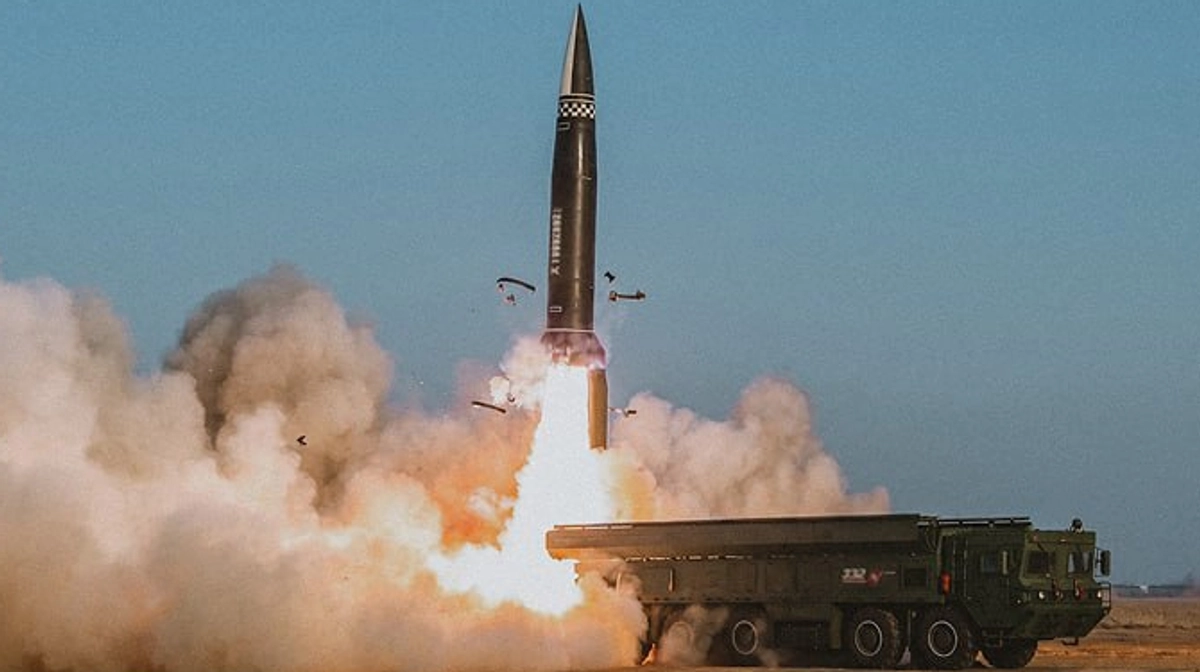
Russian ballistic attacks intensify as Kyiv claims Dnipropetrovsk advance

Ukraine has declared the successful end of an operation in which it recaptured 745 square kilometres (287 square miles) of its territory this year in its southern region of Dnipropetrovsk.President Volodymyr Zelenskyy announced on Wednesday that the campaign was carried out “exactly as it was determ
Poland arrests man who allegedly tried to kill Ukrainian American

Poland arrests man who allegedly tried to kill Ukrainian American

The suspect has been identified as a Russian citizen who planned to kill one of Moscow’s critics in Warsaw.
North Korea fumes over upcoming US-South Korea military drills

North Korea fumes over upcoming US-South Korea military drills

Pyongyang has accused the US of pushing the world ‘to the brink of nuclear war’.
Categories
The News And Times Blog

Shared Links Review: Russian ballistic attacks intensify as Kyiv claims Dnipropetrovsk advance

 Shared Links Review 

Russian ballistic attacks intensify as Kyiv claims Dnipropetrovsk advance

1 Share

Ukraine has declared the successful end of an operation in which it recaptured 745 square kilometres (287 square miles) of its territory this year in its southern region of Dnipropetrovsk.

President Volodymyr Zelenskyy announced on Wednesday that the campaign was carried out “exactly as it was determined” and said almost 10,000 Russian soldiers were killed in the process.

Recommended Stories

list of 4 items

end of list

The counteroffensive deprived Russia of almost all the territory it had gained in Dnipropetrovsk since entering that region in June 2025, and pushed it back over the regional borders of Donetsk and Zaporizhia.

But this good news for Ukrainians was overshadowed by intensified Russian missile strikes against their cities, which remain increasingly defenceless after the exhaustion of Patriot interceptors.

Combined strikes of drones and ballistic or hypersonic missiles hit Kyiv on August 8 and 11, plunged Odesa in darkness on August 9, and struck the city of Zaporizhzhia on August 11, killing at least nine people across all strikes.

Ukraine pushing back on the ground

Zelenskyy said the Dnipropetrovsk operation alone had liberated 26 settlements.

The Institute for the Study of War, a Washington-based think tank that assesses territorial control using geolocated open-source information, conservatively assessed that Ukraine had clawed back at least 627sq km (242 square miles) in the area.

Smoke rises in the city during a Russian missile strike, amid Russia's attack on Ukraine, in Kyiv, Ukraine August 11, 2026. REUTERS/Gleb Garanich TPX IMAGES OF THE DAYSmoke rises in the city during a Russian missile strike in Kyiv, Ukraine, on August 11, 2026 [Gleb Garanich/Reuters]

“This operation once again proved that the Ukrainian army is capable not only of steadfastly holding its defences, but also of launching offensives, seizing the initiative, and liberating Ukrainian land,” said former commander-in-chief Oleksandr Syrskii, who planned it.

The ISW assessed that across the front, Russia has suffered a net loss of 233sq km (90 square miles) this year.

This is despite concerted Russian offensives in the eastern Donetsk region, whose capture Russian President Vladimir Putin has repeatedly prioritised.

Want to come back to this article? Save it for later.

Russian assaults in June and July have been launched out of Pokrovsk towards Dobropillia, and out of Chasiv Yar towards Kostiantynivka. In both areas, Russia has captured territory and infiltrated large areas beyond it, but this has come at a cost.

Russia suffered a reported 39,000 casualties in June and nearly 43,000 in July – its highest losses since January 2025.

INTERACTIVE-WHO CONTROLS WHAT IN UKRAINE-1786023985

One of the keys to Ukraine’s success on the battlefield has been its scaling up of short-range, first-person view (FPV) drone production, where it now fields 16 drones to every Russian 10. Such drones caused more than 70 percent of Russian casualties in June and July.

Ukraine’s success in disarming Russia of its own FPV drones has also been climbing.

Ukraine downed more than 40,000 Russian drones in July, almost one and a half times as many as it downed in May, Ukraine’s defence ministry said.

Russia goes ballistic

Russia has held command of the air throughout its war in Ukraine, unleashing glide bombs, long-range drones and missiles. It is now pressing that advantage by increasing ballistic and hypersonic missiles, deputy military intelligence chief Vadym Skibitskyi told the news service RBC Ukraine.

Ukraine has only been able to intercept these types of missiles with Patriot systems, but has now run out of interceptors because, said Zelenskyy, it has received almost three times fewer this year from its allies than it did in 2025.

Skibitskyi said Russia has stopped producing missiles Ukraine became adept at shooting down, and diverted components to build greater numbers of Iskander-M ballistic missiles and S-400 hypersonic missiles.

The latter were designed as a surface-to-air missile against enemy aircraft, but have been reprogrammed to follow steep ballistic trajectories and have proven as effective as the Iskanders.

This retooling is yielding results, said Skibitskyi, as Russian industry is beating production targets in most missile categories.

“In April there were 61 ballistic missiles, in May – 107, in June – 134,” he said. “If we talk about ballistic and hypersonic missiles … the enemy launched 198 of them in July. This is the highest figure this year.”

Russia currently produces more than 100 ballistic and hypersonic missiles a month, and may have dipped into stockpiles to launch 56 of these missiles at Ukraine in just the first week of August, but it plans to increase stockpiles for a massive winter campaign against Ukraine’s energy infrastructure, Skibitskyi said.

Last winter, Russia caused up to $70bn of damage to Ukraine’s energy infrastructure, and nearly succeeded in plunging Kyiv into darkness.

Residents stand at a site of a Russian missile and air strike, amid Russia's attack on Ukraine, in Zaporizhzhia, Ukraine August 11, 2026. REUTERS/Stringer TPX IMAGES OF THE DAYA Russian strike in Zaporizhzhia, Ukraine, on August 11, 2026 added to the war-torn nation’s woes [Reuters]

Russia may also be planning a massive strike on Kyiv before Ukraine’s Independence Day on August 24, said Ukraine’s Center for Strategic Communications.

Several Ukrainian sources said North Korea was sending a force with up to 120 ballistic missiles to Russia’s western region of Voronezh, adjacent to Ukraine, where barracks were being built for it.

In an interview with Serhiy Sternenko, former defence minister Mykhailo Fedorov said Ukraine’s best response to Russian ballistics was to rush its own successfully tested ballistic missile into production and engage in “counter-ballistic warfare”.

“The Russians must understand that a few minutes after the launch, the entire team that launches the missile must die from our ballistic missile,” Fedorov said.

Skibitskyi also said Russia was prioritising production of its jet-powered Geran 4 and Geran 5 drones, which are harder to intercept than slower-flying, piston-engine drones.

He said Russia was launching its own version of the Starlink satellite network, called Rassvet, ahead of schedule, with 16 satellites now up and a planned increase to 292 in 2027.

Russia suffered a setback when last February, Starlink disabled the terminals it was using to communicate on the battlefield and coordinate accurate counter-battery fire.

Ukraine’s long reach

Ukraine has destroyed almost a third of Russia’s refining capacity this year with its long-range drones. During the past week it struck four refineries, including Gazprom’s Neftekhim Salavat refinery in the Republic of Bashkortostan, 1,300km (810 miles) from Ukraine.

Ukraine has also pursued medium-range strikes on Russian military logistics and Russian oil tankers, starving the front line of weapons and fuel. During the past week, it brought to 218 the number of ships it has sunk or disabled, and destroyed six air defence systems.

Its most spectacular hit was on the Russian main Black Sea port of Novorossiysk on August 12, where it struck two frigates, a missile ship, a landing ship and a patrol ship. It also hit Russia’s Sheshkharis oil offloading terminal, part of a campaign to starve Russia of fossil fuel export revenue.

Zelenskyy called the operation “unique” because it was the first time Ukraine had coordinated 14 types of domestically built aerial and surface drones simultaneously.

INTERACTIVE Ukraine Refugees-1786606561(Al Jazeera)

Read the whole story
· · · · · · · · · · · ·

Rubio and Bessent stayed on decoy flight from Turkey as Trump switched planes, official says

1 Share

WASHINGTON (AP) — The two most senior members of President Donald Trump’s Cabinet, Secretary of State Marco Rubio and Treasury Secretary Scott Bessent, flew out of last month’s NATO summit in Turkey on what was effectively a decoy plane following an Iranian threat, while Trump was secretly moved to a smaller military jet, a senior U.S. official said Wednesday.

The official, who was briefed on the situation and spoke on condition of anonymity to discuss sensitive details of presidential travel, said Rubio was aware of the switch and details of the threat behind it but could or would not say why he had stayed on the plane. The official said Bessent was likely aware but did not know for sure.

The official, however, noted that security precautions for the president — especially one who has been the target of several assassination attempts — are more robust than those for even top members of the Cabinet.

Under the U.S. Constitution, the secretaries of State and Treasury follow the vice president and the highest ranking member of each chamber of Congress in the presidential line of succession.

Trump had flown to the annual gathering of NATO country leaders in Ankara, Turkey, in a new Qatari-gifted and retrofitted red, white and navy blue jet. But ahead of departing Turkey, he said he would fly partway home on an older-model baby blue Air Force One plane instead.

The president at the time said the new luxury jet was being flown out ahead of his departure from Ankara to give some U.S. troops based in eastern England a chance to check out the new Air Force One.

The Washington Post reported this week that Trump wasn’t on the old Air Force One on the return flight from Turkey and that he instead was smuggled onto another jet via a catering cart to avoid a possible Iranian assassination plot. The ruse was carried out as journalists and some White House staff members were led to believe they were on the same plane as the president as he began his journey back to Washington.

The New York Times and CBS News had reported last month that intelligence officials had raised concerns about a potential attack on the president or his jet, triggering additional precautions and the decision not to use the newly inaugurated aircraft gifted to Trump by Qatar for the first leg of Trump’s trip home from Ankara.

Trump acknowledged the transfer late Tuesday.

“It’s only up to the Secret Service. I just follow what they’d like to do, so I go by Secret Service and the military,” the president told reporters at Joint Base Andrews. “They wanted me to go on a different flight, a different plane, equal safety, but they wanted me to do it, so I do it, I do what they say.”

Read the whole story
· ·

Early Edition: August 13, 2026

1 Share

Sign up to receive the Early Edition in your inbox here.

A curated weekday guide to major news and developments over the last 24 hours. Here’s today’s news:

IRAN WAR 

A senior Iranian source told Reuters that “one of the issues being discussed via mediators is the U.S. returning to the interim agreement [with Iran] and defining a time frame for implementing the commitments. The source added that “there has been absolutely no progress on this issue.” The source further dismissed a Turkish news report quoting Pakistani government sources saying they had agreed to extend the interim deal’s 60-day period. Parisa Hafezi and Elwely Elwelly report.

IRAN WAR – LEBANON 

The Washington Post reports that the announcement in June of a preliminary peace deal between Israel and Lebanon has had little impact on daily life in southern Lebanon. According to residents, Israeli forces continue to restrict their movement, leaving many feeling trapped. “We are trapped in a prison,” Ayoub Khreish, mayor of Ain Ebel, said. “Even ambulances need permission to enter and leave.” Mohamad El Chamma reports. 

Israel and Lebanon have agreed on Britain, Italy, Switzerland, and Indonesia as potential contributors to a proposed mechanism that could see foreign troops deployed to Lebanon to verify Hezbollah’s disarmament, sources said. Alexander Cornwell and Maya Gebeily report for Reuters.  

IRAN WAR – OTHER DEVELOPMENTS 

U.S. intelligence officials were skeptical of an Iranian assassination threat against President Trump that was relayed by Israel last month, and prompted Trump’s secret Air Force One swap, current and former U.S. officials told the Washington Post. CIA analysts did not view the Israeli intelligence as compelling and conveyed this to Trump administration officials, one source said. Another called the threats “Israeli-derived, not U.S.-generated, and viewed as low confidence.” The Secret Service, however, deemed a threat that Trump could be targeted by a shoulder-fired missile to be credible and imminent. A source declined to tell Reuters where the intelligence came from but said officials had little time to prepare and devised the plane swap plan at the last minute. Warren P. Strobel, John Hudson, and Dan Lamothe report; Steve Holland reports. 

RUSSIA-UKRAINE WAR 

A Ukrainian attack yesterday hit warships at a naval base and forced two major grain terminals in Russia’s Black Sea port city of Novorossiysk to halt operations, according to Russian and Ukrainian officials. The Ukrainian attacks killed at least two people, ​including an 8-year-old child, regional Governor Veniamin Kondratyev said. As Russia is the world’s largest wheat exporter, the strikes on the grain terminals raised fears ​of a disruption to global supplies. Chicago wheat futures rose around 3% yesterday after the attack on Novorossiysk. Reuters reports.  

ISRAEL-HAMAS WAR 

The Trump administration was initially “disappointed” that Israel responded to the 15-point peace plan by escalating attacks in Gaza earlier this month, but is pleased that it has since eased its assault, a U.S. official said. The official added that the administration is willing to give Israeli Prime Minister Benjamin Netanyahu some leeway on domestic messaging around the peace plan ahead of elections in Israel. But in turn, “they need to give us a little bit of space in terms of no targeted killings in order to allow us to try to get to the next phase,” the official said. Myah Ward and Megan Messerly report for POLITICO.  

An Israeli drone strike yesterday hit a Hamas commander in northern Gaza, the Israeli military said, though it remains unclear if he was killed. It was the first targeted strike Israel has announced since Aug. 3. The Gaza Health Ministry has reported 45 people killed since Aug. 1. AP News reports. 

WEST BANK VIOLENCE 

Two Palestinian families have been trapped since Sunday inside their homes in the village of Qusra in the occupied West Bank by a group of Israeli settlers. Residents report that about 10 to 15 settlers have been attacking them consistently for days, throwing stones and an axe. Although Israeli soldiers arrived early Wednesday and used tear gas to disperse the attackers, they left within hours, and the settlers resumed their attacks, residents and army officials said. The Israeli army said last night that it was assigning an extra battalion to the West Bank to “strengthen order and operational control in the area.” David M. Halbfinger, Fatima AbdulKarim, and Natan Odenheimer report for the New York Times.  

OTHER GLOBAL DEVELOPMENTS 

The Taliban’s General Director of Intelligence detained two Afghan members of the U.N. political mission in Herat, Afghanistan on Sunday, a U.N. spokesman said yesterday. The spokesman added that the U.N. mission has not been informed of the charges against the two men or been able to visit them. Edith M. Lederer reports for AP News.  

TECH DEVELOPMENTS 

Taiwan detected AI-assisted cyberattacks on government agencies last month, but the affected bodies successfully handled the incident, the Taiwanese Ministry of Digital Affairs said today. The investigation ​results showed the attacks displayed clear characteristics of an “overseas source,” with hackers employing a hybrid approach that combined manual operations with AI agent-assisted attacks, such as Open Claw, it said.  Ben Blanchard and Raphael Satter report for Reuters.  

Before stepping down as Google DeepMind CEO, Demis Hassabis held discussions with government officials, including Treasury Secretary Scott Bessent, and leaders of other AI labs about forming a new independent AI safety entity, sources said. Hassabis has likened the proposed entity to the International Atomic Energy Agency, the nuclear watchdog. Robbie Whelan, Amrith Ramkumar, and Keach Hagey report for the Wall Street Journal.  

Anthropic’s new models will add machine-readable “watermarks” to Claude-generated text and files to comply with new EU transparency regulations. Simon Hernandez-Arthur reports for Axios.  

U.S. FOREIGN AFFAIRS

Ukrainian drone units easily spotted and defeated U.S. troops and armored vehicles during a military exercise in Germany earlier this year, sources told the Wall Street Journal. The exercise, held in April and May, tested visiting troops’ ability to operate and defend against the proliferation of smaller, front-line drones that have dominated the conflict between Russia and Ukraine. Alistair MacDonald, Lara Seligman, and Daniel Michaels report.

“We do bad things to bad people,” Defense Secretary Pete Hegseth told civilian defense leaders and generals at a meeting of a U.S.-led counter-cartel coalition in Panama yesterday, adding that the collective goal is “to degrade, dismantle, and destroy narco-terrorist networks.” Hegseth also raised the possibility of joint strikes on Colombian armed groups, as he welcomed Colombia into the coalition. Eric Schmitt and Annie Correal report for the New York Times; Phil Stewart reports for Reuters.  

U.S. foreign-aid cuts have disrupted maternal and child-health programs in Nepal, already leading to increased pregnancy complications and deaths, according to government officials, aid workers, and families interviewed by AP News. Kristen Gelineau reports.

U.S. IMMIGRATION DEVELOPMENTS  

The State Department announced this week that it has created a task force to crack down on “birth tourism,” reviewing visa holders worldwide and revoking visas of people involved. The department said more than 600 visas have already been revoked. Laura Kelly reports for The Hill

ICE agent Adam Saracco pleaded guilty yesterday to misdemeanor battery after throwing immigration activist Robert Held to the ground and taking his phone during an altercation near Chicago in December. Madaleine Rubin reports for the New York Times.  

A masked ICE agent in Virginia pointed a gun at Carolina Molina on Monday after accusing her of trying to run over agents with her car, but videos from the encounter appear to show her vehicle stationary and provide no evidence of an attempted attack. Madaleine Rubin reports for the New York Times.

U.S. DOMESTIC DEVELOPMENTS 

Former Southern Property Law Center official Heidi Beirich was charged yesterday with fraud and conspiracy as part of a revised indictment accusing the group of cheating its donors by using their money to pay informants inside right-wing extremist organizations. “I believe she was part of the effort to open bank accounts in completely fictitious companies’ names and make payments to individuals for reasons that were not accurate as described,” Attorney General Todd Blanche said. Alan Feuer reports for the New York Times.    

TRUMP ADMINISTRATION ACTIONS 

Karoline Leavitt will be stepping down from her role as White House press secretary at the end of this month, Trump announced yesterday on social media, adding that Leavitt is leaving to spend more time with her family. Herb Scribner and Avery Lotz report for Axios

The Trump administration plans to spend at least $900 million for construction projects on the White House grounds, according to records reviewed by the Washington Post, with more funding coming from taxpayers and money redirected from federal agencies, rather than through direct congressional appropriations. The Post reports that the administration has routed much of the funding through the relatively obscure White House maintenance account. Jonathan O’Connell and Sarah Blaskey report. 

TRUMP ADMINISTRATION LITIGATION

The Trump administration again asked the Supreme Court yesterday to intervene to fully implement Trump’s executive order restricting the use of mail-in ballots ahead of the November midterm elections. Andrew Chung reports for Reuters.  

The Intercept, a news organization, and the Freedom of the Press Foundation filed a lawsuit yesterday against Trump over his social media platform’s program that offers paid early access to his posts, after the scheme went live earlier this month. The plaintiffs argue that the $100,000-a-month program violates their First Amendment rights to access presidential statements “on equal terms with other members of the press and public.” Emilio Perez Ibarguen reports for POLITICO.

Did you miss this? Stay up-to-date with our Litigation Tracker: Legal Challenges to Trump Administration Actions.

If you enjoy listening, Just Security’s analytic articles are also available in audio form on the <a href=”http://justsecurity.org” rel=”nofollow”>justsecurity.org</a> website.

ICYMI: Yesterday on Just Security

FEATURED IMAGE: WASHINGTON – JANUARY 23: Clouds move as the sun sets against the west front of the United States Capitol building January 23, 2007 in Washington, DC. U.S. President George W. Bush is scheduled to deliver his State of the Union speech before a joint meeting of Congress at 9:00 PM Eastern. (Photo by Chip Somodevilla/Getty Images)

Read the whole story
· · · · · · · · ·

Karoline Leavitt stepping down as White House press secretary

1 Share
President Trump speaks to reporters on the tarmac at Joint Base Andrews as White House press secretary Karoline Leavitt stands nearby.

President Trump speaks to reporters on the tarmac at Joint Base Andrews as White House press secretary Karoline Leavitt stands nearby.

Karoline Leavitt will be stepping down from her role as White House press secretary at the end of the month, President Trump announced Wednesday in a Truth Social post.

The big picture: Leavitt is leaving to spend more time with her family, the president said. A member of Trump’s team who followed him from his presidential campaign to the White House, she’s been a fiercely loyal face of the White House.

Driving the news: Trump said in the surprise post that Leavitt will become one of his top outside advisers and “an influential voice within the Republican Party” heading into the midterm elections.

  • Leavitt, 28, said in a post that being a mother and welcoming a new baby while serving as press secretary “has been the most rewarding yet challenging season of my life, to say the least.”
  • She continued, “The truth is since returning to the White House after the birth of my daughter, I have felt in my heart that I cannot be the best mom my two young children deserve while devoting the constant time, energy, and attention required of the White House Press Secretary.”
  • When reached for comment, the White House pointed to statements made by Leavitt and Trump.

Zoom in: Leavitt made headlines for being the youngest White House press secretary to hold the role.

  • She defended the White House through multiple controversies and the biggest stories of the president’s second term so far, including the Signalgate scandal, the release of the Epstein files and the Iran war.

  • Even in her statement announcing her departure, she took aim at Democrats that she said seek “to destroy everything great about America.”
  • Leavitt also backed the Trump administration’s tightening of press coverage, telling Axios last year that the administration wanted to expand access — opening the press corps to influencers and MAGA-friendly voices — and not limit it.

Context: The president directly chooses the White House press secretary, a position that does not require Senate confirmation.

  • Trump had four press secretaries during his first term.

Editor’s note: This story was updated throughout with additional information.

Read the whole story
· · ·

CIA Enters ‘Scale Phase’ of AI Adoption

1 Share

The Central Intelligence Agency (CIA) is entering the scale phase of its artificial intelligence (AI) implementation and has hundreds of AI projects underway, Israel Soong, deputy director of the CIA’s Office of AI, said Tuesday. 

After years of work, Soong said during a Federal News Network webinar that the agency has successfully rolled out an AI literacy program to thousands of officers, built a state-of-the-art model repository, deployed a chatbot, and partnered with four major cloud providers to bring frontier model capabilities to the agency. 

In some cases, Soong said that the agency is able to make new models available to users within seven to 10 days after they are released. 

“Over the past few years, we’ve made significant investments in foundational infrastructure to make AI broadly available across the CIA,” Soong said. “And right now, we’re kind of at an inflection point. Like, we’ve moved decisively beyond asking, ‘Should we adopt AI?’ to asking, ‘How do we operationalize it responsibly at scale?’” 

“In other words, we successfully completed an additional adoption phase, and now we’re expanding the capabilities and trying to transform mission execution,” he added. 

The next step for the agency is to continue to accelerate the adoption of AI while eliminating redundancies and prioritizing resource allocations, Soong said. 

“Now what we need is strategic stewardship,” he explained. “Now we’re trying to work AI into our mission workflows, not just as experimental tools, but as reliable capabilities changing how our workforce operates daily.” 

One way the CIA is doing that is by embedding large language models, retrieval-augmented generation techniques, and chatbot-style interfaces directly into analysts’ daily workflows, Soong said. The goal, he added, is to free officers from time-consuming data review and allow them to focus on more complex mission tasks. 

“Already, we’re seeing significant benefits to CIA’s intelligence mission,” Soong said. “It’s not the AI or the cloud in isolation, but all the elements of the AI tech stack working together, … that integrated approach of the two stacks is key.” 

In the future, Soong says that AI agents will also play a role in the CIA’s daily operations, picturing a world where  there are “teams of CIA officers managing teams of AI agents.” 

“There’s a potential for AI to assist analysis, but also identify blind spots for the analyst and generate novel hypotheses for them to consider when they write about their analysis. Also, we could have AI autonomously identify intelligence gaps and generate novel collection strategies,” Soong explained, adding that the CIA is aiming to have officers spend 80% of their time thinking critically about intelligence instead of collecting it. 

“Imagine this in the future,” he said. “AI agents have already … triaged the overnight intelligence for you. They’ve highlighted the most relevant operational developments, and they’re also combining and collating the intelligence reporting for you to review as you drink your morning coffee.” 

For now, Soong said the CIA’s next AI push centers on deploying smaller models and AI agents at the tactical edge so officers in remote or hostile environments can use AI with little or no connectivity.   

Read the whole story
· ·

What we know about weapon used by suspect in Charlie Kirk’s fatal shooting

1 Share

Subscribe to Reuters to continue reading.

Unlimited access to Reuters globally trusted news.

Final price$1/week

Charged as $4 in advance every 4 weeks.You can cancel anytime.