Categories
AI Briefs - Global Security And Intelligence News Review - Audio Posts

Ukraine War Heats Up as Putin Threatens More Land

Summary

Russia’s war in Ukraine took a darker turn this week as Putin threatened to grab more territory and launched deadly strikes on Kyiv. Ukrainian attacks are also shaking up life in Crimea, while both sides ramp up propaganda and military plans.

Key Stories

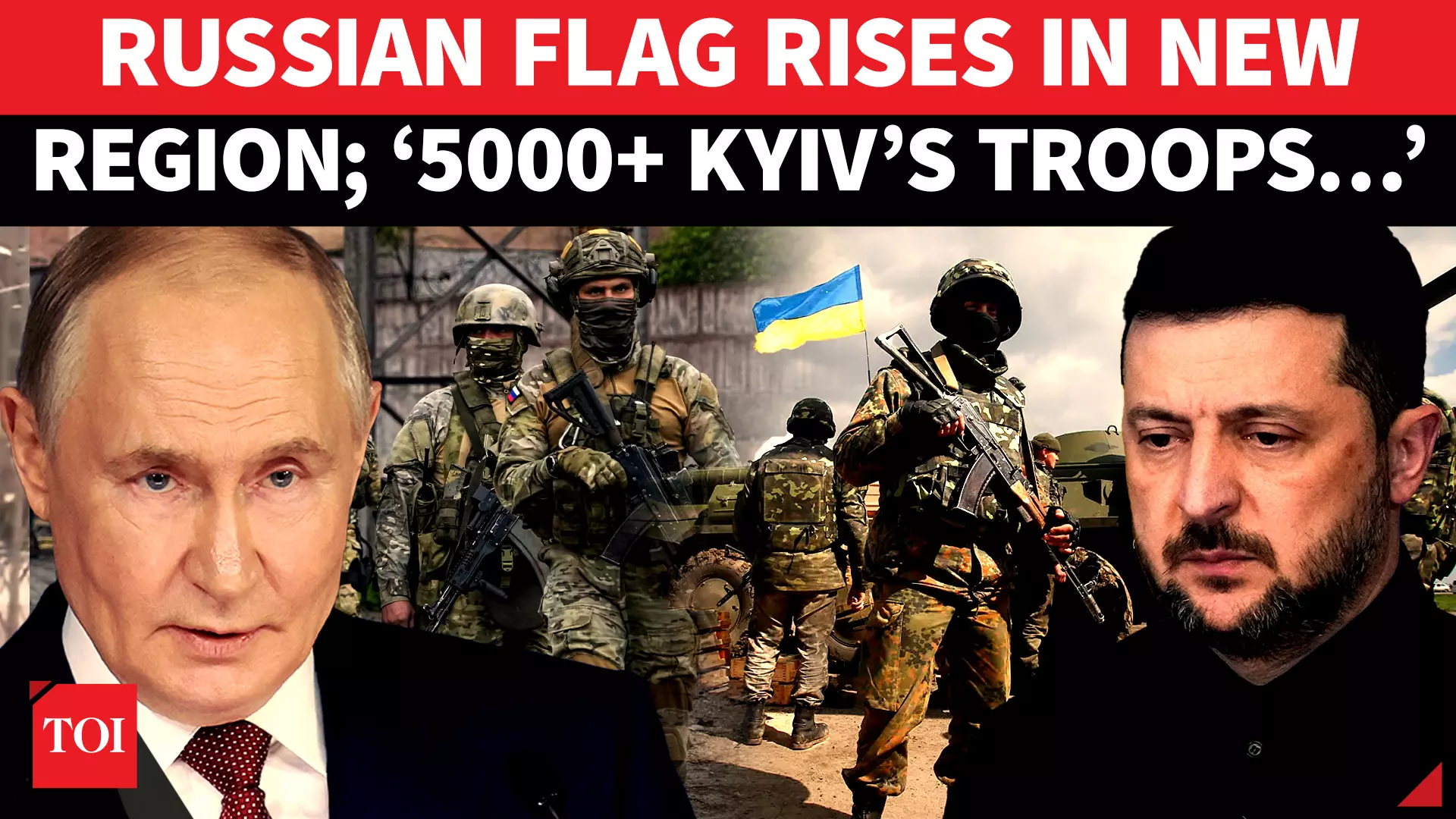
Putin vows to take more Ukrainian land as strikes intensify — Russian President Putin warned he’s not stopping at current gains and ordered his army to plan new ways to capture Kyiv. Meanwhile, deadly strikes rocked the Ukrainian capital, killing civilians and escalating tensions.

Ukraine hits back hard, disrupting life in Crimea — Ukrainian attacks are making life tougher in Russian-occupied Crimea, with ATMs down and fuel shortages even on the black market. The strikes show Ukraine’s growing ability to strike deep behind enemy lines.

Russia launches massive drone attack on Moscow — Dozens of drones slammed into the Russian capital, with Moscow’s mayor saying over 60 were shot down. The attack marks one of the biggest assaults on Russia’s heartland since the war began.

Ukraine’s leaders eye presidential race amid war — With elections looming, Ukrainian President Zelenskyy and military chief Zaluzhniy are being talked about as potential candidates. The war’s outcome could shape who leads the country next.

Propaganda and performance crimes ramp up in war — Both sides are using bold, symbolic attacks to send messages to the world. Experts say these so-called performance crimes are becoming a key part of modern warfare and intelligence battles.

Categories
AI Briefs - Global Security And Intelligence News Review - Audio Posts

Nathan’s Hot Dog Contest Returns as Brooklyn’s July 4th Staple

Summary

The annual Nathan’s Famous Hot Dog Eating Contest remains a cornerstone of Brooklyn’s Fourth of July celebrations, drawing global attention to Coney Island. Multiple outlets highlight free livestream options, underscoring the event’s cultural significance and accessibility. The contest reflects Brooklyn’s enduring role in American holiday traditions and local tourism.

Key Stories

Where to watch Nathan’s Hot Dog Eating Contest 2026 for free — The 2026 Nathan’s Famous Hot Dog Eating Contest will be livestreamed for free, offering viewers worldwide a chance to witness the iconic Brooklyn event. Multiple platforms are expected to carry the broadcast, emphasizing its status as a cultural spectacle.

Coney Island’s hot dog contest draws global audience — The contest, held annually in Brooklyn’s Coney Island, continues to attract international attention as a symbol of American holiday traditions. Its accessibility via free livestreams reinforces its role in local and national celebrations.

Categories
AI Briefs - Global Security And Intelligence News Review - Audio Posts

Ukraine War Escalates as Strikes Intensify and Propaganda Surges

Summary

Russia and Ukraine both signal intentions to escalate military actions following deadly strikes on Kyiv, marking a shift toward higher-intensity conflict. Ukrainian drone attacks now extend deeper into Russian territory, while disinformation campaigns amplify on social media. Domestic security forces in Ukraine play an increasingly critical role amid sustained warfare.

Key Stories

Putin and Zelensky vow further escalation after Kyiv’s deadliest strike this year — Both leaders publicly commit to intensifying military operations after a Russian strike kills 27 in Kyiv, suggesting a departure from previous stalemates and raising concerns about prolonged high-casualty warfare.

Ukrainian drones hit St Petersburg region in major attack — Ukraine launches a significant drone strike on Russia’s second-largest city, indicating an expansion of its long-range strike capabilities and willingness to target deeper into Russian territory.

Ukrainian police praised for frontline and domestic security roles — President Zelensky highlights the dual role of police in combat operations and civilian protection, underscoring the blurring lines between military and law enforcement amid sustained conflict.

Social media amplifies unverified claims of Ukrainian bioweapons — Russian-linked accounts spread baseless allegations about Ukrainian bioweapons, reflecting a growing trend of disinformation campaigns designed to justify escalation and undermine international support for Ukraine.

Categories
My Opinion - The News And Times

Putin threatens to take more of Ukraine. Ukraine War Escalates as Strikes Intensify and Propaganda Surges.

AI Brief Ukraine War Escalates as Strikes Intensify and Propaganda Surges https://rss.app/brief/posts/1e1e02ef63020aadfe9fe83c80b6391a Satur…
Categories
AI Briefs - Global Security And Intelligence News Review - Audio Posts

Intelligence Purges and Asymmetric Warfare Reshape Global Threats

Summary

A sweeping purge of U.S. intelligence officials by Acting DNI Pulte coincides with escalating asymmetric tactics in global conflicts, including performance crimes and targeted sabotage. Russia’s digital ruble rollout and Ukraine’s systematic dismantling of Crimea’s infrastructure signal accelerating shifts in economic control and military strategy. Meanwhile, NATO braces for potential Russian provocations in Poland, testing alliance resolve.

Key Stories

Acting DNI Pulte fires dozens amid Epstein files scrutiny, signaling intelligence overhaul — Acting Director of National Intelligence Pulte dismissed numerous intelligence officials, potentially in response to congressional scrutiny over the FBI’s handling of Jeffrey Epstein files. The move suggests internal restructuring or an effort to realign resources amid allegations of misplaced priorities.

Performance crime emerges as intelligence warfare tactic, blurring espionage and sabotage — Hostile intelligence services are increasingly using public, symbolic acts—such as the Hudson River sewage discharge—to send strategic messages, merging criminal activity with psychological operations. This trend indicates a shift toward asymmetric tactics over traditional covert methods.

Russia rolls out digital ruble, tightening financial control amid skepticism — Russia’s central bank will launch a digital ruble on September 1, mandating major banks and retailers to adopt it. While framed as a convenience measure, the initiative aims to enhance state oversight of transactions, raising concerns about surveillance and financial repression.

Ukraine systematically dismantles Crimea’s infrastructure in phased military campaign — Ukraine is executing a calculated four-phase strategy to neutralize Russian control of Crimea, targeting air defenses, fuel depots, logistics, and now electrical grids. The campaign reflects a deliberate escalation in asymmetric warfare tactics.

NATO on alert as U.S. warns of Russian provocation in Poland — U.S. intelligence suggests Russia may stage an armed provocation in Poland, potentially involving drones or troops, to test NATO’s Article 5 commitments. The move could trigger direct strikes on Russian targets, risking broader conflict.

Categories
AI Briefs - Global Security And Intelligence News Review - Audio Posts

Global Shifts in Power, Conflict, and Governance Amid Escalating Tensions

Summary

Recent developments highlight intensifying geopolitical fractures, with Russia and Iran at the center of military and intelligence escalations. The Russia-Ukraine war is evolving with new drone capabilities and shadow infrastructure, while Iran’s leadership transition and alleged military defeats signal instability. Meanwhile, U.S. domestic and foreign policy under Trump shows a pattern of pardons, executive actions, and strained alliances, particularly with Israel and NATO. Emerging tools like open-source intelligence platforms may reshape conflict monitoring, but their implications remain uncertain.

Key Stories

Russia escalates Ukraine war with jet-powered drones and shadow fuel networks — Russia’s deployment of advanced jet-powered drones is outpacing Ukraine’s defenses, while a shadow fleet of tankers supplies fuel to sustain its military operations. These developments suggest a shift toward asymmetric warfare tactics and logistical resilience, potentially prolonging the conflict.

Iran’s leadership vacuum triggers regional instability and U.S. military claims — The death of Iran’s Supreme Leader Ali Khamenei has sparked emotional reactions and power struggles, coinciding with unverified U.S. claims of Iran’s military defeat. Reports of a Mossad double agent in the Kremlin and Trump’s alleged secret operations add layers to an already volatile Middle East, with implications for global energy markets and security alliances.

Trump’s pardons and executive actions signal aggressive policy shifts — Trump issued six pardons ahead of Independence Day, including for individuals pursued over minor offenses, while also proclaiming July 4 as America’s 250th anniversary. These moves, alongside a planned summit with Netanyahu, suggest a focus on consolidating power, reshaping alliances, and leveraging symbolic gestures to reinforce domestic and international influence.

Open-source intelligence tools challenge proprietary systems in conflict zones — The rise of open-source platforms like OSIRIS, which offer real-time conflict monitoring and data visualization, may disrupt proprietary systems like Palantir. These tools could democratize intelligence gathering but also raise concerns about accuracy and misuse in high-stakes environments.

U.S. and NATO face Russian surveillance and hybrid threats in Europe — Reports indicate Russian surveillance operations targeting U.S. weapons routes in NATO nations, particularly Germany, while Ukraine’s missile defenses rely on RAF intervention. These incidents highlight growing hybrid warfare tactics and the fragility of Western supply chains in supporting Ukraine.

Categories
AI Briefs - Global Security And Intelligence News Review - Audio Posts

Geopolitical Shifts and Regional Tensions Reshape South Caucasus and Beyond

Summary

The South Caucasus remains a focal point for geopolitical realignment, with Armenia and Azerbaijan navigating shifting alliances amid Russia’s waning influence and the EU’s growing engagement. Military developments, including Azerbaijan’s drone capabilities and Russia’s escalating strikes on Ukraine, underscore intensifying regional conflicts. Meanwhile, economic and legal shifts—such as Armenia’s election law changes and EU sanctions on Russian officials—signal deeper structural transformations.

Key Stories

Armenia and EU align to counter Russian influence in South Caucasus — Armenia’s parliament passed a law restricting voting rights for citizens abroad, aiming to curb external interference in elections, while public discourse confirms the EU’s strategic push to reduce Russia’s regional dominance. Both moves suggest a coordinated effort to assert sovereignty and diversify alliances.

Azerbaijan emerges as leading drone operator amid regional militarization — Geopolitical Monitor and local sources highlight Azerbaijan’s expanding drone capabilities, positioning it as the top operator in the South Caucasus. The development reflects broader trends of unmanned warfare adoption and regional arms races.

Russia escalates attacks on Ukraine as NATO labels it a long-term threat — A massive Russian barrage on Kyiv killed at least 30 people, while NATO prepares to formally designate Russia as a persistent security threat. The strikes coincide with Ukraine’s intensified drone attacks on Crimea, signaling a prolonged and escalating conflict.

EU sanctions Russian officials over Navalny poisoning as legal and diplomatic tensions rise — The EU imposed sanctions on six Russians linked to the development of epibatidine, the toxin used in Alexei Navalny’s poisoning. The move underscores Western efforts to hold Russia accountable for state-sponsored chemical attacks.

Armenian hostages face trial in Baku amid deteriorating bilateral relations — A court in Baku held a hearing on appeals from Armenian hostages, with their condition described as dire. The proceedings, labeled a “sham trial” by critics, highlight ongoing tensions and unresolved conflicts between Armenia and Azerbaijan.

Categories
AI Briefs - Global Security And Intelligence News Review - Audio Posts

Geopolitical Tensions and Domestic Unrest Escalate Amid Heat Crisis

Summary

Extreme heat disrupts major U.S. events, while geopolitical conflicts in Ukraine and the Strait of Hormuz intensify. Domestic controversies over government corruption, stock trading by officials, and foreign policy missteps suggest growing instability and shifting power dynamics.

Key Stories

Extreme heat forces temporary closure of major U.S. state fair — A record-breaking heatwave led to the temporary shutdown of the Great American State Fair, highlighting the accelerating impact of climate change on public events and infrastructure. The closure may signal broader disruptions to come.

Russia escalates Ukraine war with massive strike on Kiev — Russia launched a significant military strike on Kiev, marking a potential new phase in the Ukraine conflict. The attack suggests a shift in strategy or escalation, with implications for NATO and global energy markets.

IRGC Navy threatens commercial shipping in Strait of Hormuz — Iran’s IRGC Navy used coastal anti-ship weapons to target the MV Mayuree Naree, underscoring rising tensions in the Strait of Hormuz. The incident may disrupt global oil supplies and provoke international military responses.

FBI corruption probe and stock trading scandal spark debate — An FBI mole infiltrated California politics under Governor Newsom, while FBI Director Kash Patel faced scrutiny for late disclosures of a six-figure Bitcoin-related stock purchase. These controversies reignite debates over government integrity and financial conflicts of interest.

Sanctions backfire as Russia builds bootleg luxury cars — U.S. sanctions on Russia have unintentionally crippled Germany’s export economy, while Russia now sells bootleg BMWs and limousines using pre-sanction parts. The development may indicate a broader failure of economic pressure tactics.

Categories
AI Briefs - Global Security And Intelligence News Review - Audio Posts

Political Shifts and Scandals Reshape US and Global Alliances

Summary

Recent developments highlight deepening political alliances, particularly between US and Israeli leaders amid Iran tensions, while domestic controversies over intelligence purges and Epstein files scrutiny intensify. Pop culture references by leaders and religious-political debates in India suggest strategic messaging shifts. Second-order effects may include heightened scrutiny of intelligence agencies and potential realignments in Middle East policy.

Key Stories

Netanyahu and Trump to meet amid Iran deal tensions and Middle East conflicts — Israeli Prime Minister Benjamin Netanyahu and former US President Donald Trump agreed to a meeting in the US, signaling potential policy coordination as tensions escalate over Iran. Reports suggest the discussion may focus on countering Iranian influence and revisiting nuclear deal frameworks.

Acting DNI Pulte fires dozens of intelligence officials amid Epstein files controversy — Acting Director of National Intelligence Pulte dismissed numerous intelligence officials, coinciding with congressional scrutiny over the FBI’s handling of Jeffrey Epstein files. The move may indicate internal restructuring or a response to allegations of resource diversion from national security priorities.

Congressional hearing erupts over Epstein files and alleged redactions of Trump — A House Judiciary Committee hearing exposed tensions over the FBI’s review of 100,000 Epstein-related documents, with lawmakers alleging efforts to scrub references to high-profile figures, including Trump. FBI Director Kash Patel denied claims but faced criticism over resource allocation and transparency.

Burgum assumes key role in shaping Trump’s policy agenda — North Dakota Governor Doug Burgum has taken a central position in advising former President Trump on policy, potentially influencing economic and regulatory priorities ahead of the 2024 election cycle.

PM Modi’s pop culture references reflect strategic political messaging — Indian Prime Minister Narendra Modi’s frequent citations of films and TV shows, such as Sholay and TVF Panchayat, suggest an effort to connect with younger demographics and frame political narratives through relatable cultural touchstones.

Debate over Ram Mandir funding row highlights political blame-shifting in India — A heated discussion erupted over allegations of misappropriation of funds for the Ayodhya Ram Mandir, with critics accusing the BJP of deflecting accountability. The controversy underscores tensions between religious symbolism and governance in Indian politics.

Categories
AI Briefs - Global Security And Intelligence News Review - Audio Posts

Escalating War Casualties Reshape Global Conflict Dynamics

Summary

Russia’s invasion of Ukraine has entered a phase of unprecedented human cost, with casualties now exceeding historical benchmarks like Stalingrad. The conflict is accelerating hybrid warfare tactics, including performance crimes by intelligence services, while deepening economic and geopolitical instability worldwide. These developments suggest a shift toward prolonged, high-intensity warfare with broader strategic implications.

Key Stories

Russia suffers record casualties surpassing Stalingrad levels — New estimates place Russian military losses at over 450,000 since the 2022 invasion, marking the deadliest conflict for Russia since World War II. The scale of casualties may indicate a strategic miscalculation or desperation in Moscow’s war planning.

Performance crime emerges as intelligence warfare tactic — Hostile intelligence services are adopting public, symbolic sabotage acts to communicate strategic messages, blurring traditional lines between crime and espionage. This trend suggests a growing preference for psychological and asymmetric operations over conventional covert methods.

Ukraine strikes deep into Russian territory amid escalation — Recent Ukrainian drone attacks on Crimea and military infrastructure signal a shift toward offensive operations targeting supply chains and command centers. These strikes coincide with reports of internal crises in Russia’s military leadership.

Global economic instability fueled by prolonged conflict — The war’s duration and intensity continue to disrupt energy markets and supply chains, exacerbating inflation and food insecurity worldwide. Analysts warn of long-term structural damage to global trade networks if the conflict persists.

Frontline stalemate masks evolving hybrid warfare tactics — While battlefield maps show limited territorial changes, both sides are accelerating the use of drones, cyberattacks, and disinformation campaigns. This suggests a transition from conventional warfare to a multi-domain conflict with unclear rules of engagement.