
Categories
The News And Times Blog

The Mastermind Putin and the 9/11 Attacks: The Russia – Germany – Israel Hypothesis – Google AI Review. Reading Putin’s mind: he communicates in accidents …

Retrospective Approach in Counterintelligence Studies 


Retrospective Analysis of the 9/11 attacks as the Russian – German – Israeli Special Intelligence Operation


The “Tripartite Hypothesis” regarding Vladimir Putin and the 9/11 attacks is an unverified, alternative counterintelligence theory and conspiracy narrative popularized on niche open-source intelligence blogs—specifically curated by blogger Michael Novakhov on platforms like [Global Security And Intelligence News Review](globalsecuritynews.org “The Mastermind: Putin and the 9/11 Attacks – The “Tripartite Hypothesis” – Google AI Review”). [1]

The narrative utilizes AI-generated text analyses (such as Gemini prompts) to stitch together historical intelligence gaps, geopolitical timelines, and the arrest of foreign officials to argue that Al-Qaeda was merely a front for a sophisticated, state-sponsored operation masterminded by Vladimir Putin in alliance with elements of German and Israeli intelligence. 

The September 11 terrorist attacks have been the subject of the most extensive investigations in modern U.S. history. Official government inquiries, independent commissions, and academic studies have definitively established the sequence of events and identified the perpetrators.
The primary responsibility for the planning and execution of the attacks rests with the terrorist network al-Qaeda, led by Osama bin Laden and operational mastermind Khalid Sheikh Mohammed. 
The phrase “he communicates in accidents” highlights a defining feature of Vladimir Putin’s political strategy: leveraging deniable, chaotic, or seemingly accidental events to signal power, enforce internal discipline, and keep external adversaries off balance.
Whether examining his psychological profile, his inner circle dynamics, or geopolitical standoffs, analyzing Putin’s “mind” requires looking past standard diplomatic rhetoric. Instead, observers must decode the calculated patterns behind events officially dismissed as mere mishaps or coincidences. 

The phrase “he communicates in accidents” highlights a defining feature of Vladimir Putin’s political strategy: leveraging deniable, chaotic, or seemingly accidental events to signal power, enforce internal discipline, and keep external adversaries off balance.
Whether examining his psychological profile, his inner circle dynamics, or geopolitical standoffs, analyzing Putin’s “mind” requires looking past standard diplomatic rhetoric. Instead, observers must decode the calculated patterns behind events officially dismissed as mere mishaps or coincidences. [1, 2, 3, 4]

1. The Strategy of “Strategic Ambiguity”
Putin’s background in the KGB heavily influences his communication style. In traditional diplomacy, leaders use speeches, press releases, and treaties to signal intent. Putin frequently communicates through manufactured ambiguity.
  • Calculated Chaos: When opposition figures fall ill, infrastructure suffers sudden failures, or military maneuvers push boundaries, the Kremlin routinely claims these are “accidents” or internal matters.
  • The Message: The underlying message to the world is highly deliberate: We can disrupt your security or stability at any moment, and we will maintain total deniability while doing so.
2. Internal Discipline: The “Accident” as a Warning
Domestically, communicating in accidents is an effective tool for maintaining autocratic control over the Russian elite. [1]
  • Enforcing Loyalty: When high-ranking oligarchs, military officials, or dissidents experience sudden, fatal falls from windows, unexplained poisonings, or unexpected plane crashes, it sends a clear message to the remaining elite.
  • The Psychological Effect: The lack of an official admission of guilt creates an atmosphere of pervasive paranoia. It signals that no one is untouchable, forcing absolute loyalty to the state without the Kremlin needing to trigger formal, politically disruptive executions. [1, 2]
3. Geopolitical Brinkmanship: Testing Red Lines
On the international stage, this communication style manifests as geopolitical testing.
  • Plausible Deniability: Cyberattacks on Western infrastructure, GPS jamming over the Baltic region, and close-quarters military intercepts are often shrugged off by Russian officials as technical glitches or rogue operations.
  • Pushing Boundaries: By framing these escalations as accidental, Putin tests the boundaries of NATO and Western resolve. It forces Western leaders into a difficult position: either accept the “accident” explanation to avoid direct conflict, or risk escalating a war over an event Russia claims it did not intend. [1]
4. The Risk of Miscalculation
While communicating through accidents keeps adversaries guessing, analysts warn that this strategy carries severe dangers:
  • The Paranoia Trap: Isolating himself within a tight, highly filtered echo chamber increases the risk that Putin may misjudge how the West responds to these “accidents.”
  • Escalation Management: When brinkmanship relies heavily on chaotic, deniable events—such as kinetic operations near nuclear facilities or critical energy sectors—the line between a controlled “accidental” signal and a catastrophic, real-world crisis becomes dangerously thin. [1, 2, 3]
Summary: The Core Takeaway
To understand Putin’s decision-making, observers must realize that the accident is often the message itself. By utilizing events that occupy the gray zone between deliberate aggression and random misfortune, the Kremlin successfully projects power, commands fear, and avoids direct accountability. [1, 2] 

The Mastermind: Putin and the 9/11 Attacks – All Feeds Review

–

The Synopsis: The Contents: Thoughts and Links


The Mastermind: Putin and the 9/11 Attacks – The “Tripartite Hypothesis” – Google AI Review 

The Significance 

The scholarly and historical consensus states that thoroughly investigating the September 11 attacks is critical because 9/11 served as the foundational catalyst for 21st-century global geopolitics, national security frameworks, and civil liberties. Over two decades of extensive analysis by government bodies, independent researchers, and historians underscore that a precise understanding of the event’s planning, execution, and state-sponsored or institutional enablers is vital for preserving democratic accountability, international stability, and historical truth.
The multifaceted significance of establishing an exhaustive and accurate record of the attacks spans several critical domains.
🏛️ Political Significance & Democratic Accountability
The political ramifications of 9/11 reshape governance and the relationship between citizens and the state.
  • Foreign Policy Sanity: The official findings of the 9/11 Commission directly shaped the “Global War on Terror,” leading to the invasions of Afghanistan and Iraq. Ensuring complete accuracy regarding state complicity or funding is essential to prevent misdirected military actions and long-term foreign policy blunders.
  • Oversight of Intelligence Apparatchiks: Deep investigations expose systemic vulnerabilities and the failure of intelligence sharing among agencies like the CIA and FBI. Identifying these breakdowns holds institutions accountable and forces necessary, transparent reforms rather than unchecked expansion of bureaucratic power.
  • Combating Government Secrecy: Continuous public pressure to declassify related documents—such as the declassification of files regarding potential foreign government links—strengthens the principle of democratic transparency, ensuring that diplomatic or economic alliances do not shield culpable entities.
🛡️ Social Significance & Domestic Fabric
Sociologically, the precision of 9/11 investigations directly impacts public trust, civil rights, and social cohesion.
  • Restoring Institutional Trust: When gaps or inconsistencies persist in high-profile investigations, public faith in democratic institutions erodes. Clear, verified truths are the primary antidote to institutional cynicism and pervasive misinformation.
  • Civil Liberties Protection: The attacks prompted sweeping domestic legislation, most notably the USA PATRIOT Act, which fundamentally altered privacy laws and expanded state surveillance. Thorough retrospective analysis determines whether these sacrifices of civil liberties were genuinely justified by facts or driven by reactionary panic.
  • Mitigating Xenophobia and Islamophobia: Pinpointing the precise individuals, radical networks, and specific state factions responsible prevents the broad, dangerous scapegoating of entire religious, ethnic, or national groups, protecting vulnerable communities from collective blame.
📜 Historical Significance & Systemic Lessons
From a historical perspective, establishing a definitive, factual baseline prevents the distortion of collective memory.
  • Preventing Historical Revisionism: A rigorously documented, evidence-based record ensures that future generations understand the event based on empirical facts rather than political spin, state propaganda, or unverified fringe theories.
  • Evolving Counter-Terrorism Doctrines: Accurate identification of how the logistics, illicit financing, and radicalization networks functioned allows global security experts to develop precise counter-terrorism frameworks that target actual systemic threats rather than superficial symptoms.
  • Justice for Victims and Survivors: For the families of the victims and the survivors, identifying every tier of culprit—from the hijackers to the financiers—is a fundamental prerequisite for legal justice, financial restitution, and psychological closure.


Part 1: The Mastermind and the Investigation

The official narrative of the 9/11 attacks overlooks foreign state sponsorship, the non-state actors like Al-Qaeda were merely “foot soldiers” rather than the true architects. The true “Mastermind” was Putin. It was his operation, one of the series of many, with the common contextual, conceptual, and operational patterns, bearing the traces of his complex political personality, including the traits of the Recruiter and the Uniter.
AI Mode 
Historical records show that while the George W. Bush administration initially opposed creating an independent commission, official oversight investigations attribute 9/11 failures to systemic intelligence sharing breakdowns rather than a coordinated suppression of the truth.
Critics, including some lawmakers involved in the early congressional inquiries, have argued that the Bush Administration and the Federal Bureau of Investigation (FBI) under Robert Mueller resisted transparency, pointing to delayed clearances and redacted documents. 

Summary

The institutional friction between investigators and the executive branch is well-documented. 
Rather than a coordinated conspiracy to hide the “true” architects of the attacks, the actions taken by the Bush administration and Mueller’s FBI are widely understood by historians and investigators as efforts to protect classified intelligence-gathering methods, avoid public institutional embarrassment, 
(!) and preserve sensitive foreign diplomatic alliances. 
My question: Including Russia, Israel, and Germany? 


On September 11, 2026—the 25th anniversary of the September 11 terrorist attacks—the CIA declassified 71 President’s Daily Brief (PDB) products related to al-Qa’ida and Osama bin Laden.

Analyzing 9/11 PDBs and Deception Hypotheses – Gemini 


The intelligence documents reveal that by late 1999, the frequency of conflicting threat targets was so high that senior officials—including Defense Secretary Donald Rumsfeld—questioned whether Al-Qaeda was intentionally feeding the U.S. false information to force them into wasting resources.

My opinion:

AI Overview

U.S. intelligence files declassified by the Central Intelligence Agency (CIA) confirm that the United States received a high volume of vague, non-specific threat alerts from multiple global entities prior to September 11, 2001. These documents—including President’s Daily Briefs (PDBs) spanning from 1998 through September 2001—show that while foreign services like those of Russia, Germany, and Israel frequently flagged Al Qaeda intentions, the raw intelligence often suffered from “warning fatigue,” questionable sources, and a lack of specific, actionable data. [1, 2, 3]
The systemic breakdown described as “questionable sources and skillful placements” manifests across the intelligence chain in several distinct ways:


PERSISTENT WARNINGS AS THE COVER

“Fourty warnings in three years” is on average one warning monthly. Nice job of Cover building.
The info was coming from Russia, Germany, and Israel. among the others. Is it not interesting?

“Title and Intent: Titled “Bin Ladin Determined To Strike in US,” the brief was compiled by the CIA at the request of President Bush, who had specifically asked if any intelligence pointed to a domestic threat.”
– Who helped him to formulate this question? The one who knew the answer?

Presidential Daily Briefs (PDBs), intelligence warnings
Analyzing 9/11 PDBs and Deception Hypotheses – GS

AI Mode
The relationship between Presidential Daily Briefs (PDBs), intelligence warnings, and the subsequent “deception hypotheses” surrounding the September 11 attacks centers on what the U.S. government knew prior to 9/11 and how agencies responded afterward.
For decades, the historical debate was shaped by a high-volume “signal-to-noise” problem. However, newly declassified materials have provided more granular insights into how information flowed to the highest levels of government. [1, 2]


While no verified evidence links these intelligence services to the orchestration of the attacks, various historical intelligence points and persistent geopolitical conspiracy theories involve these three nations.

“Evaluating the “Tripartite Hypothesis” (Russia, Germany, Israel) – Gemini
Nikolai Patrushev, August Hanning, Efraim Halevy, and the 9/11 Attacks – Google Search
In alternative counterintelligence literature and fringe OSINT analysis, Patrushev, Hanning, and Halevy are sometimes grouped together as the alleged nexus of a covert state-sponsored operation behind 9/11.” – Gemini.
Intelligence Chiefs and 9/11 Analysis
share.gemini.google/53XOpjhmd1sk
Nikolai Patrushev, August Hanning, and Efraim Halevy sat at the helm of their respective nations’ primary intelligence services on September 11, 2001—leading Russia’s Federal Security Service (FSB), Germany’s Federal Intelligence Service (BND), and Israel’s Mossad.

Call the 911!


#Israel: “Do not train the Saudi pilots, they will turn against you!”
#Russia: ” Do not send your Saudi pilots to Chechnya, they will turn against you!”
#Germany: “Send these moronic pilots anywhere, we don’t care; but not against us, we had enough!”

The role of the numbers of the well trained pilots in the military competition between Israel and Saudi Arabia: How 9/11 affected this balance? – Google Search google.com/search?q=The+r
The official narrative of the 9/11 attacks overlooks foreign state sponsorship, the non-state actors like Al-Qaeda were merely “foot soldiers” rather than the true architects. The true “Mastermind” was Putin. It was his operation, one of the series of many, with the common contextual, conceptual, and operational patterns, bearing the traces of his complex political personality, including the traits of the Recruiter and the Uniter.


While mainstream intelligence agencies and the 9/11 Commission report attribute the attacks strictly to Al-Qaeda operating out of Afghanistan and Pakistan, the testimonies of Litvinenko and Borovoy remain the foundation for theories that the Kremlin conducted a dangerous “double game” with the hijackers’ leadership.

Search:


Russia historically weaponized and infiltrated international terrorist organizations to serve its geopolitical interests—specifically utilizing them as leverage against Western powers.


WHO BENEFITED? RUSSIA, GERMANY, ISRAEL.

THE EFFECTS: WHAT HAPPPENED AFTER 9/11?

The After Effects of 9/11 in suspected players and US:
THE RIGHTIST REALIGNMENT:
9/11 caused a global shift to the Right, in tune with Putin’s “conservatism”.
Mission accomplished!
Search:
How did Israel benefit geopolitically from 9/11?
How did Schroeder’s Germany change politically and geopolitically after 9/11?
How did Putin’s Russia change politically and geopolitically after 9/11?
Political shift to the Right in US after 9/11
RIGHTIST REALIGNMENT after 9/11
Putin’s conservatism


The nature of the investigative hypotheses in the counterintelligence investigations of 9/11 attack


______________________________________________


The Mastermind: Putin and the 9/11 Attacks – The “Tripartite Hypothesis” – Google AI Review 

    
Search:

The Mastermind: Putin and the 9/11 Attacks – All Feeds Review


Part 1: The Mastermind and the Investigation


Встреча с председателем «Деловой России» Алексеем Репиком • Президент России


The official narrative of the 9/11 attacks overlooks foreign state sponsorship, the non-state actors like Al-Qaeda were merely “foot soldiers” rather than the true architects. The true “Mastermind” was Putin. It was his operation, one of the series of many, with the common contextual, conceptual, and operational patterns, bearing the traces of his complex political personality, including the traits of the Recruiter and the Uniter.

At the center of this hypothesis is the political personality of V. Putin, the true Mastermind of the 9/11 attacks. 9/11 is the counterintelligence error, with failure to monitor the foreign leaders closely and to try to understand better their motivations and actions, both overt and the covert.

When the advantages gained by Russia, Germany, and Israel are so obvious and dramatic, just like the general shift to the Right; it is more than just a lucky and random fruit falling in their laps. There must be a causal connection there, especially from the counterintelligence perspectives.
Search:


#CIA CIA #FBI FBI #Mossad Mossad

The two co-chairs of the 9/11 Commission, Thomas Kean and Lee Hamilton, believe that the government established the 9/11 Commission in a way that ensured that it would fail.
…
“So there were all kinds of reasons we thought we were set up to fail”, Hamilton argues.

Criticism of the 9/11 Commission – Wikipedia en.wikipedia.org/wiki/Criticism

SEARCH: Criticism of the 9/11 Commission:

The 9/11 Commission has faced significant criticism from political figures, intelligence officials, civil liberties advocates, and families of the victims.


Search also:


My opinion: 
By “true culprits” I mean the masterminds and the behind the scenes organizers, not just the foot soldiers – the hijackers. 
It is impossible to take the “Al Qaeda” version seriously, and something more than just the elaborate, meticulously prepared in advance COVER.


#CIA CIA #FBI FBI #Mossad Mossad
Google AI: “The FBI actively restricted, delayed, or classified critical pieces of evidence in investigation of 9/11.”

(My Opinion: Under the orders from ABOVE, pushing their lame “Al Qaeda” version.)

The claim that the Bush Administration and Robert Mueller’s FBI suppressed the 9/11 investigation is a subject of significant historical debate, involving documented political friction, institutional resistance, and subsequent declassifications rather than a blanket suppression. While official investigations did take place, multiple independent sources and former officials have detailed specific instances where the administration and the FBI actively restricted, delayed, or classified critical pieces of evidence.

The true, in depth 9/11 investigation was suppressed by the Bush Administration and Robert Mueller’s FBI

– Google Search

And more than that: The views that disagreed and challenged the “Al Qaeda” version of 9/11 were actively and systematically suppressed by the U.S. Government and its extensions, which reminds the Soviet style of global censorship, and possibly a sign of Putin’s political personality.


AI Mode 
Historical records show that while the George W. Bush administration initially opposed creating an independent commission, official oversight investigations attribute 9/11 failures to systemic intelligence sharing breakdowns rather than a coordinated suppression of the truth.
Critics, including some lawmakers involved in the early congressional inquiries, have argued that the Bush Administration and the Federal Bureau of Investigation (FBI) under Robert Mueller resisted transparency, pointing to delayed clearances and redacted documents. Conversely, government reviews, such as the 9/11 Commission Report and subsequent Department of Justice Inspector General reports, concluded that the primary issue was institutional inertia and poor coordination between agencies, not a cover-up. [1, 2, 3, 4]

Summary

The institutional friction between investigators and the executive branch is well-documented. 
Rather than a coordinated conspiracy to hide the “true” architects of the attacks, the actions taken by the Bush administration and Mueller’s FBI are widely understood by historians and investigators as efforts to protect classified intelligence-gathering methods, avoid public institutional embarrassment, and preserve sensitive foreign diplomatic alliances. 
Search: 
My opinion – Search: 


My impression: It looks like the paper and/or cyber trail were carefully and skillfully constructed as the part of the Cover in preparation for the 9/11 attacks. This is not the style of the non-state actors, such as “Al Qaeda”.

Search also:


9/11 truth movement – W


From Wikipedia, the free encyclopedia
Supporters of the 9/11 Truth movement at an anti-war demonstration in Los Angeles, October 2007

The 9/11 truth movement encompasses a disparate group of adherents to a set of overlapping conspiracy theories that dispute the general consensus of the September 11 attacks that a group of Al-Qaeda terrorists had hijacked four airliners and crashed them into the Pentagon and the original World Trade Center Twin Towers, which consequently collapsed. The primary focus is what the movement perceives as missed information that they allege is not adequately explained in the official National Institute of Standards and Technology (NIST) reports, such as the collapse of 7 World Trade Center. They believe in a cover-up and, at the least, complicity by insiders.[1][2][3][4][5][6][7][8]

They analyze evidence from the attacks, come up with different conspiracy theories about how the attacks happened and call for a new investigation into the attacks

Alternative theories regarding the September 11 attacks—commonly referred to as 9/11 conspiracy theories—contend that the official account of the attacks is either incomplete or intentionally fabricated. While structural engineers, aviation experts, and the official 9/11 Commission Report conclude that the destruction was caused by four hijacked commercial aircraft operated by al-Qaeda terrorists, various alternative narratives have persisted since 2001. [1, 2, 3]
These alternative theories generally fall into two main categories of government complicity or look toward completely separate actors:


THE MISSING LINK: GERMANY’S STATE SUPPORT FOR THE HAMBURG CELL

Search:

GERMANY’S STATE SUPPORT FOR THE HAMBURG CELL

#CIA CIA #FBI FBI #Mossadd Mossad


The phrase “9/11: the missing link” refers to a prominent public theory and a series of high-profile statements made by August Hanning – News Review
thenewsandtimes.blogspot.com/2026/10/the-ph
My impression:
Hanning was on the right track with his “frequent” remarks about the role of the “STATE SUPPORT” for Hamburg cell, although it is unclear if he considered Germany itself in this role. It was a powerful opinion, at odds with the official version of the non-state Al Qaeda, and someone (the true culprits) probably did not like it, because it could lead directly to them. What followed, looks like a SETUP, the series of traps for Hanning, from his financial ruin (prearranged?) to his various unrelated private investigations which eventually lead to his arrest and current predicament. Now he is effectively shut off from the world and can talk only to his native BND. His former boss Gerhard Schroeder looks unconcerned about this, and, to the contrary, rather happy in his meeting with Putin: was this his birthday present?
It looks like the “STATE SUPPORT” for the Hamburg Cell, of which Hanning frequently spoke out, went directly from Gerhard Schroeder through his own channels, via the local Hamburg politicians, bypassing Hanning; otherwise Hanning would not speak about it so readily, risking to implicate himself and Germany.
The aim of this support was to help the future hijackers in their adaptation to the life in the western society, so they could fit seamlessly, i
nconspicuously, and unsuspiciously into the life in the US, while attending the pilots schools. At the same time, they were continuously “egged on” and WEAPONIZED.

–


9/11: the missing link – August Hanning – Google AI Mode: The phrase “9/11: the missing link” refers to a prominent public theory and a series of high-profile statements made by August Hanning, the former head of Germany’s Federal Intelligence Service (BND), regarding the 2001 terrorist attacks. [1, 2] Hanning, who led the BND from 1998 to 2005, has frequently spoken out about a missing link in the official 9/11 investigations—specifically targeting the logistical and financial state support given to the Hamburg Al-Qaeda cell, which included lead hijacker Mohamed Atta.

Hanning has argued that the hijackers could not have lived and operated so seamlessly in Germany without structured, domestic assistance that went largely unmapped by the initial U.S. and German investigations. [1, 2]


9/11: the missing link – August Hanning – Google Search google.com/search?q=9%2F1


The Historical Investigation (August Hanning vs. The 9/11 Hamburg Cell)

Following the September 11, 2001 terrorist attacks, Hanning—acting as the BND chief—headed the German intelligence apparatus tasked with mapping how al-Qaeda pilots like Mohamed Atta operated undetected from Germany. [1, 2]
Operational Failures: The investigation revealed severe intelligence oversight. German authorities admitted they actually had members of the cell and their Marienstrasse apartment under surveillance in 1998 and 1999 due to a suspected bin Laden operative. However, the surveillance was abandoned when investigators failed to connect the students to an active threat. [1]
The Chechnya Pivot: Intelligence records compiled during the post-9/11 investigations showed that the Hamburg cell members initially intended to fight in Chechnya. A chance encounter on a German train with an extremist named Khalid Masri redirected them to a Mauritanian businessman, who subsequently introduced them to Osama bin Laden in Afghanistan, where they were recruited for the plane operation. [1]
Logistical Support: The intelligence findings mapped out how the cell utilized individuals like Said Bahaji and Mounir El Motassadeq to manage routine banking and university affairs while the primary pilots were away training in Afghanistan and the United States, allowing them to avoid drawing the suspicion of immigration officials. [1, 2]
The intersection of these two timelines created a massive political scandal in Germany, shifting August Hanning’s legacy from the man who investigated the 9/11 Hamburg terrorists to a suspect arrested because of a Hamburg police raid on his own home. [1, 2]

The results of Hanning’s investigation of the Hamburg cell: summary – Google Search google.com/search?q=The+r


Germany’s former foreign intelligence chief August Hanning and 9/11


August Hanning served as the President of the Bundesnachrichtendienst (BND), Germany’s foreign intelligence agency, from 1998 to 2005. This placed him at the helm of German intelligence during the September 11, 2001, terrorist attacks.

(Note: In a major breaking development as of October 6, 2026, Hanning was arrested in Germany on suspicion of espionage and treason. He is accused of purchasing classified intelligence documents from a former BND employee, identified as Manfred D., in order to resell them.)

Hanning’s tenure and his agency’s connection to 9/11 and its aftermath are defined by three major intelligence events:

The Hamburg Cell Oversight

Call the 911!

#Israel: “Do not train the Saudi pilots, they will turn against you!”
#Russia: ” Do not send your Saudi pilots to Chechnya, they will turn against you!”
#Germany: “Send these moronic pilots anywhere, we don’t care; but not against us, we had enough!”

The military balance between the Israeli Air Force (IAF) and the Royal Saudi Air Force (RSAF) has historically favored Israel due to human capital rather than airframe counts, and the post-9/11 era shifted political dynamics that preserved Israel’s qualitative pilot and doctrinal edge while redirecting Saudi strategic priorities away from direct competition.


The role of the numbers of the well trained pilots in the military competition between Israel and Saudi Arabia: How 9/11 affected this balance? – Google Search
google.com/search?q=The+r

The September 11 attacks shifted this dynamic by significantly modifying how both nations trained their pilots, and altering the structural military relationship between the United States and Saudi Arabia.

The number and exceptional preparation of combat pilots have historically formed the cornerstone of Israel’s Qualitative Military Edge (QME), a U.S.-mandated policy ensuring Israel maintains a regional technological and operational advantage. While Saudi Arabia historically possessed superior numbers of advanced airframes, it faced systemic challenges in building a massive, natively trained elite pilot corps, relying heavily on U.S.-led training pipelines. [1, 2, 3, 4]
…

The Shift from Rivals to Shared Security Concerns

Paradoxically, the post-9/11 era altered the competitive nature of Israel-Saudi relations. As the U.S. focus shifted toward global counter-terrorism and countering Iran, the perceived threat of a conventional air war between Israel and Saudi Arabia diminished. [9]
The two nations transitioned into a framework of tacit intelligence sharing and airspace coordination. This transformation became evident during civil aviation emergencies, such as the foiled flydubai hijacking attempt where both Israeli and Saudi air defense forces actively scrambled jets in a synchronized response to a mutual 9/11-style threat. [9, 10, 11] 

If Russia, Israel, and Germany are behind 9/11, here are their hypothetical motivations.
Russia intended to stop further unravelling of the USSR by turning the tables on the Western sponsors of Chechen separatists, including the US, Saudi Arabia, and other Muslim countries, by forming the anti-American Al Qaeda as the cover.
Israel intended to ignite the intense hostilities between the Saudi Arabia, other Arab countries, and the US, in the hope of benefitting from it, and strengthening the alliance with the US.
Germany, namely Schroeder, found the way to express their post-WW2 hatred for the US and to affirm their short lived, post-German unification gratitude and closeness with Russia.
These were the large scale, strategic, long term motivations and plans, with 9/11 as the “proper” action and the Special Operation.
The technical acumen of the Operation 9/11 points to the state sponsored operation, not the half-literate “Al Qaeda”.

All this is pretty much on the surface, and it does not require the deep digging.
What does, is the ease and readiness to be deceived on the part of the CIA, FBI, and other investigators.
The famous American group think and conformity may be the answers to this question.
And of course our universal, human, all too human ability for Denial and Self-deception.
It protects us from the Unbearable Pain of Knowledge.

Israel – 9/11 conspiracy theories – Wikipedia https://en.wikipedia.org/wiki/9/11_conspiracy_theories#Theories
Israel
See also: September 11 attacks advance-knowledge conspiracy theories § Israel
A conspiracy theory documented by the Anti-Defamation League, Thom Burnett and others is that the state of Israel was involved in the attacks, and may have planned them. A variety of motives are suggested, including: to cause the United States to attack enemies of Israel; to divert public attention away from Israel’s treatment of the Palestinians; to help Zionists take control of world affairs; and to persuade Americans to support Israel. Variants of the theory contend that the attack was organized by then-Israeli prime minister Ariel Sharon, the intelligence agency Mossad, or other actors from the Israeli government.[149][150] According to Slate, Kevin Barrett, a former lecturer at the University of Wisconsin, is a “leading advocate of theories that Israel’s Mossad orchestrated the 9/11 attacks.”[151]


“The FBI and CIA had investigated potential leads connecting Saudi nationals and officials to some of the hijackers.”
Search: Were the “potential leads” of 9/11 to Russia, Germany, and Israel ADEQUATELY investigated?
Google AI: It remains a subject of historical debate …
My Opinion: The ADL frivolous accusations of antisemitism related to 9/11 Israel investigations are inappropriate.
“Mossad Role (False Claims): Claims that the Mossad or Israel orchestrated 9/11 are widely documented by organizations like the Anti-Defamation League (ADL) as antisemitic conspiracy theories and historical tropes lacking any factual or forensic backing.”
Search: “9/11 hijackers and Mossad”.
ADL is not the FBI to conduct the investigations.
Search: FBI and Anti-Defamation League (ADL)


Search Also: 

“The Bulldozer”Ariel Sharon and the CIA: a complex relationship


At the center of this hypothesis is the political personality of V. Putin, the true Mastermind of the 9/11 attacks. 9/11 is the counterintelligence error, with failure to monitor the foreign leaders closely and to try to understand better their motivations and actions, both overt and the covert.

He is the consensus builder, the recruiter, the uniter, the builder of the geopolitical alliances and coalitions, including very much in the spheres of Security and Intelligence.
That’s how he put himself and Russia at the head of the anti-American Intelligence alliance with Germany and Israel in the Operation 9/11.
AI Mode

The political personality of Russian President Vladimir Putin is widely analyzed by political psychologists, biographers, and intelligence experts as an “expansionist hostile enforcer” or a highly deliberative, high-dominance introvert whose behavior is deeply rooted in his background as a KGB officer. [1, 2, 3, 4, 5]
Political scientists and psychological profilers break down his political personality through several primary frameworks:

1. The Psychodiagnostic Profile: “Expansionist Hostile Enforcer”

Using the Millon Inventory of Diagnostic Criteria (MIDC) via open-source intelligence, researchers like Aubrey Immelman have classified Putin’s personality as a composite of three primary patterns: [1, 2]


My Opinion:
It is very unlikely that any documents on the true origins of 9/11 exist in principle – the matter is so sensitive and explosive. The plan was known to the very few people, presumably to Putin the Mastermind, his seconds, Patrushev and Bortnikov, likely, Schroeder, and probably some Mossad Chiefs. Hanning’s knowledge and tasks were likely limited by the Hamburg Cell. However, his ability to communicate with Russia and Israel, directly or via Azerbaijan, point to possibility of sharing this information and coordination. Hanning can disclose this and other information if he is given a good enough incentive in the process of further investigations.


While there is a verified historical intersection between Russian security agencies and a key architect of the 9/11 plot, mainstream intelligence and historical consensus attribute this to an operational failure rather than a collaborative overlap.
The connection primarily centers around Ayman al-Zawahiri, who later became the co-orchestrator of the September 11 attacks and leader of al-Qaeda. [1]
The Verified Contact: The 1996 Dagestan Detention
In December 1996, Ayman al-Zawahiri traveled to the North Caucasus to establish a base of operations in Chechnya. He was arrested by Russian authorities in Dagestan for entering the country illegally without a proper visa. [1, 2, 3]
#Russia and 9/11: Zawahiri, #Litvinenko, #Borovoy

While mainstream intelligence agencies and the 9/11 Commission report attribute the attacks strictly to Al-Qaeda operating out of Afghanistan and Pakistan, the testimonies of Litvinenko and Borovoy remain the foundation for theories that the Kremlin conducted a dangerous “double game” with the hijackers’ leadership.

Search: Russia historically weaponized and infiltrated international terrorist organizations to serve its geopolitical interests—specifically utilizing them as leverage against Western powers.

–

Russian security agencies had deep, complex, and unacknowledged historical overlaps with figures who later formed the backbone of the 9/11 plot.


WHO BENEFITED? RUSSIA, GERMANY, ISRAEL.

THE EFFECTS: WHAT HAPPPENED AFTER 9/11?

The After Effects of 9/11 in suspected players and US:
THE RIGHTIST REALIGNMENT:
9/11 caused a global shift to the Right, in tune with Putin’s “conservatism”.
Mission accomplished!
Search:
How did Israel benefit geopolitically from 9/11?
How did Schroeder’s Germany change politically and geopolitically after 9/11?
How did Putin’s Russia change politically and geopolitically after 9/11?
Political shift to the Right in US after 9/11
RIGHTIST REALIGNMENT after 9/11
Putin’s conservatism

Search:
Geopolitical analysts and historians state that the September 11 attacks significantly altered the strategic landscape of the Middle East, yielding several geopolitical shifts that aligned with Israeli security objectives. While the immediate aftermath introduced complex diplomatic dynamics, the long-term changes fundamentally integrated Israel’s localized conflicts into a broader global framework.
According to assessments by foreign policy experts and historical analyses, Israel’s geopolitical position shifted in the following key ways:

Convergence of the Counter-Terrorism Narrative

Search: How did Schroeder’s Germany change politically and geopolitically after 9/11?

Following the September 11 attacks, Chancellor Gerhard Schröder’s Germany experienced a profound political transformation and structural geopolitical shift, fundamentally moving away from its post-WWII military reluctance toward an assertive, independent role in global security.

Political Changes: Domestic Security and Coalition Strain

  • The Proclamation of “Unlimited Solidarity”: Immediately after the attacks, Schröder declared Germany’s “unlimited solidarity” (uneingeschränkte Solidarität) with the United States. This was a massive psychological pivot for a nation deeply anchored in post-war pacifism.
  • The 2001 Vote of Confidence: To fulfill his promise of military support in Afghanistan, Schröder faced fierce resistance from fundamentalist factions within his own center-left SPD-Green coalition. To force compliance, he tied the deployment of 3,900 Bundeswehr troops to a vote of confidence in November 2001. He narrowly won, consolidating his leadership but exposing deep ideological rifts on the German left.

Search: How did Putin’s Russia change politically and geopolitically after 9/11?
The September 11 attacks served as a major catalyst for Vladimir Putin to reshape Russia’s domestic and foreign policy. Putin leveraged the global War on Terror to consolidate domestic political power and launch a dramatic, albeit short-lived, geopolitical pivot toward the West.
This period fundamentally transformed how Russia interacted with global powers and accelerated its transition toward centralized authoritarianism.

Geopolitical Transformations

The immediate aftermath of 9/11 marked a radical departure from traditional Russian foreign policy paradigms. [1]


August Hanning’s communications implicate both Israel and Russia in the hypothetical origins of 9/11 – Google Search google.com/search?q=Augus
The order of importance:
Putin – FSB – Russia – Israel – Germany, each of whom had their own goals
The miserable Arab “culprits” are just the patsies and the SCAPEGOATS!

Search also:

The blame for MISINVESTIGATION of 9/11 is on Bush administration, FBI at that time, and Robert Mueller.
REINVESTIGATE THE 9/11!
Kash Patel, please add it to your list of the FBI historical mistakes, on the number 1 slot.
Thank you.
–


Search:

In counterintelligence and intelligence investigations surrounding the September 11 attacks, investigative hypotheses primarily focused on state-sponsored orchestration versus non-state actor autonomy, the operational security (OPSEC) tradecraft of the hijackers, and systemic structural vulnerabilities within U.S. intelligence. Rather than viewing 9/11 purely as a criminal act, counterintelligence (CI) investigators evaluated how foreign intelligence and extremist networks successfully penetrated domestic borders without triggering strategic warnings. [1, 2, 3]

1. State Sponsorship vs. Autonomous Network Support

A central counterintelligence hypothesis examined whether the al-Qaeda network operated entirely independently or relied on the covert assistance of foreign governments or intelligence services.
  • Foreign State Facilitation: The FBI’s massive PENTTBOM investigation and subsequent congressional inquiries heavily evaluated whether elements within foreign governments provided logistical, financial, or intelligence support to the hijackers. This included intensive vetting of figures like Omar al-Bayoumi to determine if they acted as foreign intelligence assets helping the hijackers embed in the U.S. [2, 4, 5]
  • Financial Intelligence: Investigators tested hypotheses concerning insider trading and illicit international banking systems. The 9/11 Commission Report ultimately concluded that while unusual pre-9/11 market transactions occurred, they lacked an intelligence-linked nexus to advance knowledge of the attacks. [6, 7]

…

4. Systemic Vulnerabilities and the Intelligence “Wall”

A critical hypothesis evaluated by post-9/11 reviews—including the Department of Justice Office of the Inspector General—was that domestic legal barriers effectively blinded U.S. counterintelligence. [11]
  • The Information Barrier: Legal interpretations in the 1990s built a rigid “wall” preventing foreign intelligence investigators from sharing data with domestic criminal investigators. [12, 13]
  • Tracking Failures: The investigative hypothesis confirmed that this separation caused systemic communication failures. For instance, though the CIA and NSA possessed data regarding hijackers Nawaf al-Hazmi and Khalid al-Mihdhar, the information was not successfully integrated into FBI domestic counterintelligence operations until it was too late. [12, 14, 15]

…

The nature of these investigative hypotheses is defined by several core analytical focus areas:

1. The Operational Security (OPSEC) and Counter-Espionage Hypothesis

A primary hypothesis in CI investigations is determining how a hostile network operated undetected within domestic borders for an extended period.
  • The “Zero Lapses” Premise: Investigators evaluate how the 19 hijackers maintained stringent operational security over 20 months in the United States. [1, 2]
  • Tradecraft Assessment: Counterintelligence personnel form hypotheses regarding whether the operatives received formal intelligence training. For 9/11, subsequent investigations—including testimony to the 9/11 Joint Inquiry—concluded that the conspirators executed highly effective defensive counterintelligence tradecraft, showing no major operational slips that would tip off federal agencies. [1, 2, 3]

2. The Foreign State Sponsorship and Facilitation Hypothesis

Counterintelligence investigations routinely establish hypotheses regarding whether non-state terrorist actors are operating as proxies or receiving active facilitation from foreign intelligence services (FIS).
  • Logistical Support Networks: Investigators look for anomalies in funding, travel documentation, and housing to hypothesize whether foreign intelligence officers or diplomatic staff aided the cells.
  • State vs. Non-State Dynamics: In the context of 9/11, massive investigative resources were dedicated to exploring potential institutional links to foreign governments, specifically examining whether foreign intelligence entities provided safe passage, funding, or strategic cover.

See Also:


Search also: 

AI Mode

The 19 al-Qaeda hijackers successfully maintained strict operational security (OPSEC) and counterintelligence tradecraft over 20 months in the United States by operating with calculated deception rather than reckless fanaticism. According to the 9/11 Commission Report and subsequent intelligence studies, the conspirators successfully blended into Western society and exploited systemic loopholes while avoiding behaviors that would trigger law enforcement scrutiny. [1, 2, 3]
The cell utilized several foundational strategies to safeguard their plot:
1. Cultural Assimilation and Broad Deception
The operatives went to great lengths to alter their lifestyles and appearances to pass as ordinary Western students or tourists. [1, 2]


Search also: 

My opinion: 

The future hijackers were seamlessly guided, assisted, and continuously weaponized by the invisible networks of the expert forces in both Germany and the US. 

The high level of this expertise and skills indicate their hypothetical connection with the professional intelligence services: Russian, German, Israeli, or all three, in some sort of coordinated fashion. 


LINKS 


The News And Times

1 day ago

The Mastermind Putin and the 9/11 Attacks:: The Russia – Germany – Israel Hypothesis – Google AI Review

 The Mastermind: Putin and the 9/11 Attacks – All Feeds Review – The Mastermind: Putin and the 9/11 Attacks – The “Tripartite Hypothesis” – Google AI Review The Operati…

The News And Times

1 day ago

Operation 9/11: Putin was the Mastermind at the head of the Anti-American Alliance of the Intelligence Services of Russia, Germany, and Israel – the Hypothesis.

The 9/11 Reexamined: Putin was the Mastermind at the head of the Anti-American Alliance of the Intelligence Services of Russia, Germany, and Israel – the HypothesisThe Operation 9/…

The News And Times

1 day ago

Putin the Mastermind

Putin the Mastermind  -The News And Times Information Network – Blogs By Michael Novakhov – thenewsandtimes.blogspot.com

Get updates to your inbox

The News And Times

1 day ago

Recent Posts: Reading Putin’s mind: he communicates in accidents – Review

The 9/11 Reexamined: Putin was the Mastermind at the head of the Anti-American Alliance of the Intelligence Services of Russia, Germany, and Israel – the HypothesisThe Operation 9/…

The News And Times

2 days ago

Reading Putin’s mind: he communicates in accidents – Review

 Reading Putin’s mind: he communicates in accidents – Review  -The News And Times Information Network – Blogs By Michael Novakhov – thenewsandtimes.blogspot.com

The News And Times

2 days ago

Latest Starred Posts – Review

Latest Starred Posts -The News And Times Information Network – Blogs By Michael Novakhov – thenewsandtimes.blogspot.com

The News And Times

2 days ago

The very strange case of August Hanning – Review

The very strange case of August Hanning  -The News And Times Information Network – Blogs By Michael Novakhov – thenewsandtimes.blogspot.com

The News And Times

2 days ago

The role of Israel in the 9/11 Attacks – Review

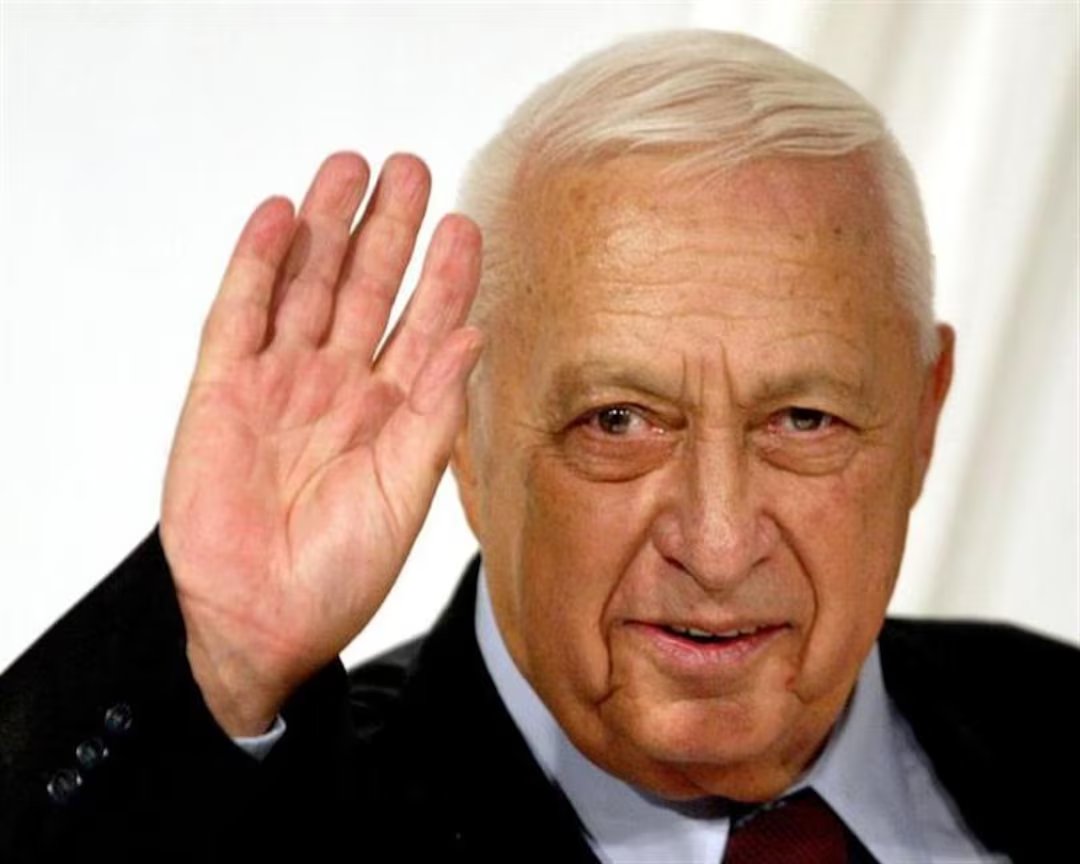
x.com1d@mikenov: #CIA CIA #FBI FBI #Mossad Mossad It is entirely possible that The Bulldozer Sharon went to bed (IN CAHOOTS) with The Mastermind Putin in orchestrating the 9/11, wi…
The News And Times

2 days ago

Sharon remained perpetually suspicious that Washington would pressure him into territorial or security concessions

The Mastermind: Putin and the 9/11 Attacks – All Feeds Reviewx.com2h@mikenov: Sharon remained perpetually suspicious that Washington would pressure him into territorial or security…

The News And Times

2 days ago

All Feeds Review: The Mastermind: Putin and the 9/11 Attacks

All Feeds Review: Mastermind: Putin and the 9/11 Attacks -The News And Times Information Network – Blogs By Michael Novakhov – thenewsandtimes.blogspot.com

The News And Times

2 days ago

Экономический и гуманитарный форум Россия – Африка

 Articles and TweetsX12mЭкономический и гуманитарный форум Россия – АфрикаX15m#News #Israel #Netanyahu News Israel Netanyahu Israel election resultsX1hRT by @mikenov: 🇮🇱 Israel’s…

The News And Times

3 days ago

THE PARTNERS

Articles and TweetsX2hRT by @mikenov: The Soviet Union collapsed in 1991. But its KGB spies didn’t vanish. Some now hold powerful positions in Russia’s intelligence agencies, targe…
The News And Times

11 days ago

Articles and Tweets: The Mastermind – Selected Tweets

Articles and TweetsX8m#CIA CIA #FBI FBI #Mossad Mossad The Mastermind Selected TweetsX1hRT by @mikenov: Unity Mitford (Unity Valkyrie Freeman-Mitford; 1914-1948), a British aristoc…

The News And Times

12 days ago

The Mastermind: Selected Tweets

Putin The Mastermind: The Russia – Germany – Israel Hypothesis in the investigation of 9/11 Attacks1000 Latest Starred PostsIntroduction: Putin The MastermindINTERPRETATIONPutin: I…

Categories
The News And Times Blog

Putin, Ariel Sharon, their political relationship, and the 9/11 attacks


Putin, Ariel Sharon, their political relationship, and the 9/11 attacks

1 Share

AI Mode reply for Putin, Ariel Sharon, their political relationship, and the 9/11 attacks

The political relationship between Russian President Vladimir Putin and Israeli Prime Minister Ariel Sharon was defined by mutual pragmatism, a shared approach to counter-terrorism, and a major alignment following the September 11, 2001, terrorist attacks. Both leaders took office during a period of intense internal conflict—Putin during the Second Chechen War and Sharon during the Second Intifada. The 9/11 attacks served as a massive geopolitical catalyst, allowing both men to reframe their local, controversial military campaigns into a unified, global war against Islamic extremism.

The Core of the Relationship

Prior to Putin’s rise in 2000 and Sharon’s election in 2001, Russia-Israel relations were historically fraught due to Soviet-era alignment with Arab states. However, Sharon famously referred to Putin as “a true friend of Israel,” signaling a new era of diplomatic warmth.

  • The Chechnya-Intifada Parallel: According to historical archives from the Middle East Forum, Sharon openly validated and praised Putin’s aggressive military policy in Chechnya, comparing it to Israel’s defense needs. In return, Putin shifted Russia’s traditionally pro-Arab foreign policy to show greater understanding of Israel’s security operations against Palestinian factions.
  • Personal Rapport: Despite disagreements—such as Russia’s weapon sales to Syria—Putin held great respect for Sharon’s unyielding stance on state security. In later years, Putin recalled personal conversations with Sharon, noting that the Israeli leader had once bluntly advised him never to trust anyone in the Middle East.

The Impact of the 9/11 Attacks

The immediate aftermath of the 9/11 attacks completely reshaped the international legitimacy of both leaders’ military strategies:

  • The Moscow Meeting (September 2001): Just days after the 9/11 attacks, Ariel Sharon traveled to Moscow to meet with Vladimir Putin. During this historic meeting, they jointly condemned international terrorism, explicitly declaring that both Russia and Israel were victims of the same global threat.
  • The “Global War on Terror” Rebranding:
    • For Putin: The 9/11 attacks allowed Russia to pivot away from Western criticism regarding human rights abuses in Chechnya. Putin framed the Chechen separatists not as local rebels, but as part of the broader, Al-Qaeda-linked global terrorist network.
    • For Sharon: Following 9/11, Sharon quickly aligned Israel with the U.S. and Russia, declaring the fight against terrorism an “international struggle of the free world against the forces of darkness”. By linking Palestinian suicide bombings to global terrorism, Sharon successfully shifted Western perspectives on Israel’s military actions during the Second Intifada.

The foundation built around their shared post-9/11 counter-terrorism stance resulted in several high-profile diplomatic engagements:

  • Frequent Summits: Sharon made multiple high-stakes state visits to Russia (September 2001, September 2002, and November 2003) to solidify intelligence and diplomatic cooperation.
  • Historic 2005 Visit: In April 2005, Putin became the first Russian leader to make an official visit to Israel, sitting down for extensive talks with Sharon to manage Middle East tensions.
  • Enduring Legacy: When Sharon passed away in 2014, Putin issued a highly respectful message commending Sharon’s “high personal qualities” and his fierce commitment to defending Israel’s interests. According to analysts at the Carnegie Endowment for International Peace, Sharon’s model of a strong, hyper-militarized state remained a profound point of professional admiration for Putin.
  • From Russia with love

    Meetings In September 2001, then prime minister Ariel Sharon and Russian President Vladimir Putin met in Moscow and jointly condem…

  • Russian

    Russian-Israeli relations In December 1991, Israel opened an embassy in Moscow while Russia opened an embassy in Tel Aviv. Israel’

  • Israel–Russia relations – Wikipedia

    The relationship between Israel and Russia substantially began to improve only in 2000, with the election of the more pro-Israel V…

  • Putin’s Pro-Israel Policy – Middle East Forum

    Soon thereafter, Israeli voters gave Ehud Barak’s Labor Party a resounding defeat, and Sharon became the new prime minister. Vilif…

  • Carnegie Endowment for International Peace

    A Message to Israel and a Message from Israel

    Vladimir Putin’s respectful message on the passing of former Israeli Prime Minister Ariel Sharon proves that to quite a few Russia…

  • Putin: Israel’s Sharon warned me against trusting anyone in Middle …

    Google * Russian President Vladimir Putin discusses Middle East tensions and reveals private conversations he had with former prim…

  • World shock over U.S. attacks – September 11, 2001 – CNN

    In Kabul, Afghanistan, Wakeel Ahmed Mutawakel, the foreign minister of Afghanistan’s ruling Taliban government, told the Arab tele…

  • Israel-Russia: a history of complex relations – CGTN

    In September 2001, Israeli Prime Minister Ariel Sharon and Russian President Vladimir Putin condemned “terrorism” in Moscow. Both …

Copied to clipboardFailed to copy to clipboard. Try again later.

Read the whole story
· · · · · ·

Sharon – US relations, the Second Intifada, and the 9/11 Attacks

1 Share

AI Mode reply for Sharon – US relations, the Second Intifada, and the 9/11 Attacks

The intersection of Ariel Sharon, U.S.–Israel relations, the Second Intifada, and the September 11 attacks marked a major shift in Middle Eastern geopolitics and security alignment.

The Outbreak of the Second Intifada (2000)

  • The Spark: On September 28, 2000, Israeli opposition leader Ariel Sharon visited the al-Aqsa Mosque/Haram al-Sharif compound in Jerusalem accompanied by hundreds of security personnel. Palestinians viewed the visit as deeply provocative, igniting widespread protests and the outbreak of the Second Intifada (al-Aqsa Intifada).
  • Sharon’s Election: Amidst escalating suicide bombings and violence, Israelis elected Ariel Sharon as Prime Minister in February 2001 on a platform promising to restore security.

The Impact of the 9/11 Attacks (2001)

  • Framing the Conflict: Following the September 11 attacks on the United States, Sharon and Israeli officials sought to align Israel’s campaign against Palestinian militant groups with the broader U.S. “War on Terror”.
  • The “Bin Laden” Parallel: Sharon publicly framed Palestinian Authority leader Yasser Arafat as Israel’s equivalent of Osama bin Laden and targeted the Palestinian Authority’s security infrastructure.
  • U.S. Administration Stance: The Bush administration increasingly sidelined Yasser Arafat, whom Washington viewed as an obstacle to peace, and pressured the Palestinians to transition to new leadership.

Tensions in U.S.–Israel Relations

  • Clashes Over Military Tactics: Despite ideological alignment against radical militant groups, Sharon occasionally ran into friction with the Bush administration. In late 2003, tensions peaked when Sharon sharply criticized U.S. pressure and policy directions regarding Israeli incursions and settlement actions in Palestinian territories.
  • Shift to Unilateralism: Frustrated by the breakdown of peace talks during the height of the Intifada, Sharon eventually pivoted away from bilateral negotiations toward unilateral measures, most notably the 2005 Israeli disengagement from the Gaza Strip, which was later supported by Washington and regional mediators like Egypt.
  • Second Intifada – Wikipedia

    An uptick in violent incidents started in September 2000, after Israeli politician Ariel Sharon made a provocative visit to the Te…

  • The legacy of 9/11 in the Middle East Peace Process

    Sep 10, 2021 — … or Intifada, that included waves of suicide attacks on Israelis, as well as massive Israeli military reprisals that resulted i…

  • How 9/11 helped Israel sell its war on Palestinians to America

    Sep 11, 2026 — With the second Palestinian Intifada under way, the September 11 attacks on the US provided an opportunity to once again put Israe…

  • Interactive Encyclopedia of the Palestine Question

    XI. Second Intifada and the Post-Arafat Era

    Jan 15, 2005 — Two months after the collapse of the US-Israeli-Palestinian peace summit at Camp David , Israeli politician Ariel Sharon made a hi…

  • University of New Brunswick | UNB

    Background and Causes of the Israeli-Palestinian Conflict

    Third, Sharon and Arafat helped shift the status quo from a tense situation to a violent one. Sharon’s visit was the spark that se…

  • The Palestinians after September 11 – The Electronic Intifada

    Sep 11, 2003 — Within a month, Sharon grew frustrated at Washington’s gentle rebuffs. Relations with Bush reached a low point when Sharon accused…

  • Egypt and the Second Palestinian Intifada – ASMEA

    However, this truce collapsed within a few months. As a result of that and against the background of Abbas’ resignation, Prime Min…

  • Israeli disengagement from the Gaza Strip – Wikipedia

    In 2005, following the Second Intifada (2000–05), Israel withdrew its forces from the Gaza Strip and dismantled and evacuated the …

  • Arab Center Washington DC

    How 9/11 Helped Israel Sell Its War on Palestinians to America

    Sep 11, 2026 — With the second Palestinian Intifada under way, the September 11 attacks on the US provided an opportunity to once again put Israe…

Copied to clipboardFailed to copy to clipboard. Try again later.

Read the whole story
· · · · · ·

Retrospective Approach in Counterintelligence Studies

1 Share

AI Mode reply for Retrospective Approach in Counterintelligence Studies

In counterintelligence (CI) studies, the . It shifts the focus from real-time monitoring to diagnostic, hindsight-driven evaluation.

This methodology bridges theory and practice by turning historical intelligence failures and caught-spy case studies into foundational frameworks for modern defense.

Core Applications of Retrospective Analysis

The retrospective approach is applied across several domains within counterintelligence:

  • Post-Mortem Case Studies: Analyzing caught spies (e.g., Aldrich Ames, Robert Hanssen, Edward Snowden) to reconstruct their path to radicalization or compromise. This helps behavioral analysts refine insider threat detection matrices.
  • Institutional Counterintelligence Analysis (ICA): Reconstructing past relational networks and institutional flaws. By looking back at how a hostile service penetrated an agency, analysts map systemic risk before it manifests in new operations.
  • Cyber Forensics and Incident Response: Going back in time to investigate past network activities following a breach. It traces what systems an Advanced Persistent Threat (APT) touched and what data was exfiltrated before an alert was triggered.
  • Deception Analysis: Studying historical enemy campaigns to recognize patterns in how foreign intelligence services feed false data to manipulate policy decisions.

Methodological Benefits vs. Strategic Limitations

Evaluating security via hindsight provides a robust educational baseline, but relying solely on the past introduces cognitive blind spots.

Dimension Benefits of the Retrospective Approach Trade-offs & Limitations
Data Integrity Offers access to complete historical archives, open-source records, and declassified files. Subject to hindsight bias, making past events seem more predictable than they actually were.
Pattern Recognition Identifies recurring adversary behaviors, motivations, and operational tradecraft. Limited by survival bias; it only analyzes the spies who were caught, leaving the successful ones unstudied.
Systemic Repair Pins down structural holes, poor access controls, and policy gaps that allowed a breach to happen. It is inherently reactive, preparing an organization to fight the “last war” rather than predicting novel threat vectors.

Theoretical Synergy: The Look-Back to Look-Forward Pipeline

In academic counterintelligence studies, the retrospective approach is rarely used in isolation. It acts as the anchor for anticipatory or predictive analysis.

  1. Retrospective Interpretation: Analysts break down the telemetry, human behavioral shifts, and communication pathways used in a past adversarial operation.
  2. Theoretical Modeling: The variables are extracted to form a broader theory of intelligence learning or vulnerability (e.g., Karl Weick’s retrospective approach to organizational sensemaking).
  3. Anticipatory Deployment: The resulting models are applied to modern data pipelines to flag early warning signals of strategic manipulation or systemic risk before the threat becomes fully visible.
  • Institutional Counterintelligence Analysis (ICA)

    A final methodological component of Institutional Counterintelligence Analysis is anticipatory analysis. The purpose of the discip…

  • Your Secret Weapon Against Advanced Persistent Threats

    Retrospective analysis means going back in time to investigate past network activity, especially before and after an alert was tri…

  • CIA World Factbook Archive

    Counterintelligence: The Unfixed Failure

    ODNI stood up. CI Enhancement Act passed. Peak reform article publication. The system reorganizes around itself. Structural Reform…

  • Genesis of Counterintelligence Activities of Border Authorities …

    Feb 3, 2026 — The purpose of the study is to analyse the historical aspects of the development of counterintelligence activities and counterinte…

  • (PDF) HISTORICAL ASPECTS OF INTELLIGENCE ANALYSIS …

    As already evident, the history of intelligence development is crucial in ensuring an efficient intelligence arm and analysis. How…

  • Case Western Reserve University

    Learning through Dialogue during Intelligence Assessments

    We translate a theory into the practice of intelligence assessments. Following Karl Weick’s (1993) retrospective approach, the tra…

  • IntelArchive Intelligence Studies Database | Zotero

    Aug 15, 2026 — Varouhakis discusses the lack of a theoretical framework in counterintelligence (CI). CI training and operations have been modeled…

  • Article: Deconstructing and Reconstructing Strategic … – CIA

    CI is the bedrock of intelligence and operational functions. Sound CI processes and activities applied to the collection and analy…

Copied to clipboardFailed to copy to clipboard. Try again later.

Read the whole story
· · · · ·

Ariel Sharon, Second Intifada, 9/11 Attacks, November 2001 Speech and Apology, bribery case, sudden illness, CIA involvement

1 Share

AI Mode reply for Ariel Sharon, Second Intifada, 9/11 Attacks, November 2001 Speech and Apology, bribery case, sudden illness, CIA involvement

The provided terms trace a highly volatile and transformative period in the life of former Israeli Prime Minister Ariel Sharon, spanning his role in triggering the Second Intifada, a critical post-9/11 diplomatic standoff with the Bush administration, domestic bribery scandals, and the sudden medical incapacitation that abruptly ended his political career.


🏛️ The Second Intifada (2000)

On September 28, 2000, Ariel Sharon, then the right-wing opposition leader of the Likud party, made a highly controversial and heavily guarded visit to the Al-Aqsa complex on the Temple Mount in Jerusalem.

  • The Spark: Palestinians viewed the high-profile tour as an aggressive provocation.
  • The Fallout: The visit triggered massive riots that quickly mushroomed into the multi-year armed conflict known as the Second Intifada.
  • Political Ascent: Sharon used the resulting security crisis to run a hardline campaign, defeating incumbent Prime Minister Ehud Barak in early 2001.

✈️ Post-9/11 Standoff & The October 2001 “Appeasement” Speech

Following the September 11 attacks, the United States under President George W. Bush sought to build a broad international counter-terrorism coalition that included Arab and Muslim nations.

  • The Accusation: Fearing the U.S. would pressure Israel into concessions to appease its new Arab allies, Sharon gave an extraordinary speech on October 4, 2001. He warned the Bush administration not to repeat the “terrible mistake of 1938” when European democracies sacrificed Czechoslovakia to Adolf Hitler. He bluntly added, “Israel will not be Czechoslovakia.”
  • The Apology: The White House reacted with fury, publicly calling Sharon’s comparison of Bush to Neville Chamberlain “unacceptable.” Facing a catastrophic rift with Israel’s closest ally, Sharon issued a formal statement on October 7, 2001, apologizing for the “misunderstanding” and expressing regret over how his metaphor was interpreted.

💼 The Bribery Cases (“The Greek Island Affair”)

Throughout his premiership, Sharon and his sons, Omri and Gilad, were dogged by intense corruption investigations.

  • The Allegation: Prominent real estate developer David Appel was charged with attempting to bribe Sharon in the late 1990s (when Sharon was Foreign Minister).
  • The Scheme: Appel allegedly hired Sharon’s son, Gilad, as a highly paid “consultant” on a Mediterranean resort project to secure his father’s diplomatic and bureaucratic help in bypassing Greek government hurdles.
  • The Outcome: Though Israeli state prosecutors strongly considered indicting the Prime Minister, the charges against Sharon himself were ultimately dropped due to a lack of definitive evidence linking him directly to the transactions, though the scandal significantly damaged his political standing.

🩺 Sudden Illness (2005–2006)

In late 2005, Sharon shocked the political landscape by breaking away from the Likud party to form Kadima, a new centrist party designed to bypass hardline opposition to his unilateral disengagement from the Gaza Strip.

  • The Stroke: While positioned to easily win the upcoming election, Sharon suffered a minor stroke in December 2005, followed by a catastrophic, massive hemorrhagic stroke on January 4, 2006.
  • The End of an Era: The sudden illness left him permanently incapacitated. He fell into a vegetative coma and never regained consciousness, remaining hospitalized for eight years until his death in January 2014.

Historically, the CIA maintained a deeply complex, dual-faceted relationship with Sharon throughout his military and political careers:

  • Intelligence Profiles: Declassified documents show the CIA closely tracked Sharon for decades, explicitly characterizing him as a “brilliant, ruthless, and ambitious” strategist.
  • Lebanon War Coordination: As Defense Minister during the 1982 Lebanon War, Sharon directly petitioned CIA Director William Casey for secret paramilitary funding ($10 million) to support Bashir Gemayel’s rightist Christian Phalangist militia in their joint effort to expel the PLO from Lebanon.
  • Trilateral Security Commitments: During the Second Intifada, Sharon’s administration regularly coordinated field security investigations and trilateral security meetings directly alongside CIA personnel to establish local ceasefires.
  • Sharon’s scandals | News – Al Jazeera

    The following offers some background on the scandals surrounding Israeli Prime Minister Ariel Sharon. Will ‘the Bulldozer’ be forc…

  • Ariel Sharon – Wikipedia

    ^ Upon leaving the military, Sharon entered politics, joining the Likud party, and served in a number of ministerial posts in Liku…

  • U.S. Department of State (.gov)

    Remarks With Israeli Prime Minister Ariel Sharon

    PRIME MINISTER SHARON SECRETARY POWELL: Thank you very much, Mr. Prime Minister. And thank you for your hospitality this evening. …

  • The Israel Democracy Institute

    Remembering Ariel Sharon (1928–2014)

    Position In the fall of 2000, Sharon decided to take a tour of the Temple Mount. This highly publicized tour is commonly seen as t…

  • Ariel Sharon – a monster or a martyr for Israel?

    Jan 11, 2014 — Ariel Sharon – a monster or a martyr for Israel? right from the 1950s onwards culminating in the notorious. massacre at Sabra and …

  • Ariel Sharon dies at 85; Israel’s controversial, iron-willed …

    Jan 11, 2014 — In 2000, Sharon was widely blamed for helping spark a bloody conflict with the Palestinians, the second intifada, which followed t…

  • Furious Bush hits back at Sharon | World news – The Guardian

    This article is more than 25 years old Suzanne Goldenberg in Hebron, West Bank and Julian Borger in Washington Fri 5 Oct 2001 21.1…

  • Sharon Speech Riles U.S.

    Sharon Speech Riles U.S. Israeli Warned U.S. Not to ‘Appease’ Arabs to Gain Support October 5, 2001More than 25 years ago By Alan …

  • Sharon Apologizes Over Dispute With U.S. – The New York Times

    On October 7, 2001, Prime Minister Ariel Sharon apologized for a misunderstanding over his remarks that the United States was appe…

  • Reflecting on the life and legacy of Ariel Sharon

    Jan 11, 2014 — Reflecting on the life and legacy of Ariel Sharon he was one of his nation’s most controversial figures a ferocious military strat…

  • ARIEL SHARON | CIA FOIA (foia.cia.gov)

    ARIEL SHARON: When a Jew was killed, immediately we were asked to show self-restraint. I mean from all around the world we got req…

  • ROAD TO NICARAGUA: HOW THE CIA INHERITED THE …

    In early 1982, CIA Director William Casey received a visit from Israel`s defense minister, Ariel Sharon, a burly, truculent former…

Copied to clipboardFailed to copy to clipboard. Try again later.

Read the whole story
· · · · · · · ·

Ariel Sharon: critical post-9/11 diplomatic standoff with the Bush administration

1 Share

AI Mode reply for Ariel Sharon: critical post-9/11 diplomatic standoff with the Bush administration

The critical post-9/11 diplomatic standoff between Israeli Prime Minister Ariel Sharon and the George W. Bush administration peaked on October 4, 2001, when Sharon publicly accused the United States of trying to appease Arab nations at Israel’s expense, comparing Western diplomatic maneuvering to the 1938 Munich betrayal of Czechoslovakia.

The fiery rhetoric triggered an immediate, furious rebuke from the White House, marking one of the most severe fractures in modern U.S.–Israel relations before the two leaders ultimately realigned their anti-terrorism strategies.

🌐 The Catalyst: Building the Post-9/11 Coalition

Following the September 11 terrorist attacks, the Bush administration urgently sought to build a broad international counter-terrorism coalition. To secure the vital participation of Arab and Muslim-majority states (such as Saudi Arabia, Syria, and Egypt), Washington began adjusting its Middle East diplomacy:

  • The “Hands-Off” Reversal: Before 9/11, President Bush had maintained a relatively hands-off approach to the Second Intifada. Post-9/11, Washington fast-tracked a diplomatic initiative.
  • Endorsing Palestinian Statehood: On October 2, 2001, President Bush publicly declared that a Palestinian state had always been “part of a vision” for the Middle East, an idea subsequently echoed by Secretary of State Colin Powell.
  • Sidelining Israel: To avoid alienating Arab partners needed for the upcoming war in Afghanistan, the U.S. intentionally kept Israel at arm’s length from the formal coalition.

🎙️ The “Czechoslovakia” Speech

Fearing that Israel was being sacrificed for American geopolitical interests, Sharon delivered a blunt, televised address in Tel Aviv on October 4, 2001. He issued a stark warning to Western democracies:

“Do not repeat the dreadful mistake of 1938, when enlightened European democracies decided to sacrifice Czechoslovakia for a convenient temporary solution. Do not try to appease the Arabs at our expense. Israel will not be Czechoslovakia.”

Sharon’s historical analogy directly implied that President Bush was acting like Neville Chamberlain, the British Prime Minister who capitulated to Adolf Hitler.

⚡ The White House Fury and Apology

The speech deeply offended President Bush. The response from Washington was swift and uncharacteristically severe:

  • The Rebuke: White House Press Secretary Ari Fleischer issued a sharp statement, declaring Sharon’s remarks “unacceptable” and asserting that “Israel can have no better or stronger friend than the United States and better friend than President Bush.”
  • The Retraction: Recognizing the danger of alienating Israel’s most vital ally, Sharon quickly walked back his comments. Within 48 hours, he contacted American media and officials to convey a “clarification-cum-apology,” claiming he never intended a personal comparison to Bush.

🔄 The Turning Point and Realignment

Though the standoff was volatile, it ultimately paved the way for a profound strategic realignment between Bush and Sharon:

Phase U.S.–Israel Dynamic (Late 2001) Strategic Outcome (2002 onward)
The Standoff U.S. sidelines Israel to court Arab states; Sharon publicly accuses U.S. of appeasing terrorists. Sharon successfully forces the Bush administration to reconsider its regional demands.
The Realignment The U.S. adopts Bush’s doctrine: “You’re either with us, or you’re with the terrorists.” Sharon successfully frames Israel’s fight against Palestinian suicide bombers as an identical front in the Global War on Terror.
The Resolution The January 2002 Karine A arms-smuggling incident proves Yasser Arafat is trading weapons with Iran. Bush concludes Arafat is compromised by terror. By June 2002, Bush fully aligns with Sharon, calling for total Palestinian leadership change before any statehood talks proceed.
  • Before Attacks, U.S. Was Ready To Say It Backed Palestinian State

    Before Attacks, U.S. Was Ready To Say It Backed Palestinian State The Israeli prime minister, Ariel Sharon, and some Jewish groups…

  • Furious Bush hits back at Sharon | World news | The Guardian

    Oct 5, 2001 — … felt personally affronted by the comparison to Neville Chamberlain and the discredited policies of appeasement in the run up t…

  • Sharon Apologizes Over Dispute With U.S. – The New York Times

    On Thursday, Mr. Sharon addressed the United States and other Western democracies, saying, ”Do not repeat the dreadful mistake of…

  • Sharon warns U.S. not to ‘appease’ Arabs – October 5, 2001

    Israeli Prime Minister Ariel Sharon bluntly warned the United States on Thursday not to “appease” Arabs at Israel’s expense and sa…

  • YouTube·WashingtonInstitute

    Ariel Sharon’s Road from Settlement Building to Gaza Withdrawal

    Jan 5, 2023 — he will pursue the policies of Bush the father is he used to call him George H.W bush and I think Sharon did not really know what …

  • How 9/11 Changed U.S. Policy Toward Israel – U.S. News – Haaretz

    The blunt speech shocked the U.S. administration, which was still counting the bodies in the ruins and attempting to track down th…

  • Globes – Israel Business News

    A wise, brave speech

    Prime Minister Ariel Sharon’s remarks about Czechoslovakia were not meant to be historically accurate. He wanted to cause a stir a…

  • U.S. rejects Israel’s charge of appeasing Arabs | CBC News

    Oct 5, 2001 — Social Sharing. The White House rebuked Israeli Prime Minister Ariel Sharon Friday for suggesting the Bush administration was appe…

  • Sharon Speech Riles U.S. – The Washington Post

    Oct 5, 2001 — The U.S.-Israeli dispute began after Sharon suggested in a speech on Thursday that the administration risked repeating the mistake…

  • U.S.

    U.S.-Israel Tension in the Aftermath of September 11 The tension peaked at the end of last week when Israeli prime minister Ariel …

Copied to clipboardFailed to copy to clipboard. Try again later.

Read the whole story
· · · · · · ·

Sharon – US relations and the Second Intifada

1 Share

AI Mode reply for Sharon – US relations and the Second Intifada

Overview of the Relationship

During the Second Intifada (September 2000 – February 2005), the relationship between Israeli Prime Minister Ariel Sharon and the United States evolved into a close, pragmatic alliance, particularly after George W. Bush took office in January 2001.

Key Elements of Sharon-US Dynamics

  • The Sharon–Bush Alliance: Prime Minister Sharon and U.S. President George W. Bush forged a relationship characterized by deep mutual trust and open political alignment. According to Sharon’s bureau chief, Dov Weissglass, this strong bond ensured firm U.S. backing for Israel’s military campaign against Palestinian militant groups and suicide bombings.
  • The Second Intifada Catalyst and Context: Sharon’s visit to the Temple Mount/Al-Aqsa compound in September 2000—while he was still in the opposition—served as a major spark for the outbreak of the Second Intifada. When Sharon won a landslide election in February 2001 on a platform of strong security and counter-terrorism, the Bush administration engaged directly with him rather than isolating him.
  • U.S. Policy Shifts and Support:
    • In November 2001, President Bush became the first U.S. president to publicly endorse the creation of a Palestinian state living alongside Israel (the two-state framework).
    • Over the course of the intifada, the U.S. administration backed Israel’s security measures, including military incursions into West Bank cities during 2002 (such as the Battle of Jenin), while intermittently pushing diplomatic roadmaps like the Quartet’s “Roadmap for Peace.”
  • Major Political Understandings:
    • Sharon secured important written assurances from President Bush regarding permanent-status negotiations, including U.S. acknowledgment of demographic realities and Israel’s retention of major West Bank settlement blocs.
    • Bush also expressed support for the idea that Palestinian refugees would be resettled within a future Palestinian state rather than inside Israel.
  • The Transition to Unilateralism (Gaza Disengagement): Frustrated with the lack of a reliable Palestinian peace partner under Yasser Arafat, Sharon quietly coordinated his shift toward unilateral steps with Washington. In 2003, Sharon communicated his intention to withdraw from the Gaza Strip to U.S. officials, culminating in the 2005 Gaza disengagement plan which had tacit U.S. backing as the Second Intifada drew to a close.
  • Second Intifada – Wikipedia

    … that the visit could trigger violence, and that the purpose of his visit was political. According to one observer, Sharon, in …

  • Election Day in Israel, from Sharon to Netanyahu | Brookings

    Mar 17, 2015 — Ariel Sharon won the February 2001 election in a landslide. The second intifada was underway and Israelis wanted a strongman with …

  • The Implications of the Second Intifada on Israeli Views of Oslo

    The Implications of the Second Intifada on Israeli Views of Oslo Ehud Barak, elected in 1999, likewise met with Arafat under the a…

  • Sharon prized ties with US, didn’t want to lead Iran struggle …

    Late PM’s bureau chief Dov Weissglass highlights trusting, affectionate alliance with president George W. Bush In a conference cal…

  • University of New Brunswick | UNB

    Background and Causes of the Israeli-Palestinian Conflict

    Third, Sharon and Arafat helped shift the status quo from a tense situation to a violent one. Sharon’s visit was the spark that se…

  • YouTube·WashingtonInstitute

    Ariel Sharon’s Road from Settlement Building to Gaza Withdrawal

    Jan 5, 2023 — in the early 1990s Sharon would become infamous for announcing a new settlement project each time U.S Secretary of State James Bak…

  • U.S. Role in the Israeli

    U.S. Role in the Israeli-Palestinian Conflict The administration of President George W. Bush endorsed the Mitchell Report on Midea…

  • Ariel Sharon was a long-term advocate for Israeli settlements …

    April 16, 2026 — Sharon’s Policy Shift: Ariel Sharon’s seemingly contradictory moves, such as the 2005 Gaza disengagement and his early statements …

  • Facebook·Middle East Institute

    What was it like to meet with Israeli Prime Minister Ariel Sharon …

    Oct 8, 2025 — What was it like to meet with Israeli Prime Minister Ariel Sharon? In this week’s episode of Taking the Edge Off the Middle East, …

Copied to clipboardFailed to copy to clipboard. Try again later.

Read the whole story
· · · · · ·
Next Page of Stories
Loading…
Page 2

Reading Putin’s mind: he communicates in accidents -Review

1 Share

AI Mode Conversation: Reading Putin’s mind: he communicates in accidents -Review

Reading Putin’s mind: he communicates in accidents -Review

AI Mode reply for Reading Putin’s mind: he communicates in accidents -Review