|
|
Does the #GRU use its human assets and agents for the #PrecisionTargeting in its attacks on #Kyiv, e.g. with the planted mobile phones? – Google Search google.com/search?q=Does+the…
— Michael Novakhov (@mikenov) Jul 19, 2026
Does the #GRU use its human assets and agents to help #Iran with the #PrecisionTargeting in its attacks on Israel, e.g., Bat Yam? – Google Search google.com/search?q=Does+the…
— Michael Novakhov (@mikenov) Jul 19, 2026
|
Does the GRU use its human assets and agents to help Iran with the Precision Targeting in its attacks on Israel, e.g., Bat Yam? – Google Search google.com/search?q=Does+the…
— Michael Novakhov (@mikenov) Jul 19, 2026
“Ukraine just tore a hole in Russia’s strategic triad — proving nothing in Putin’s nuclear‑capable arsenal is safe.”
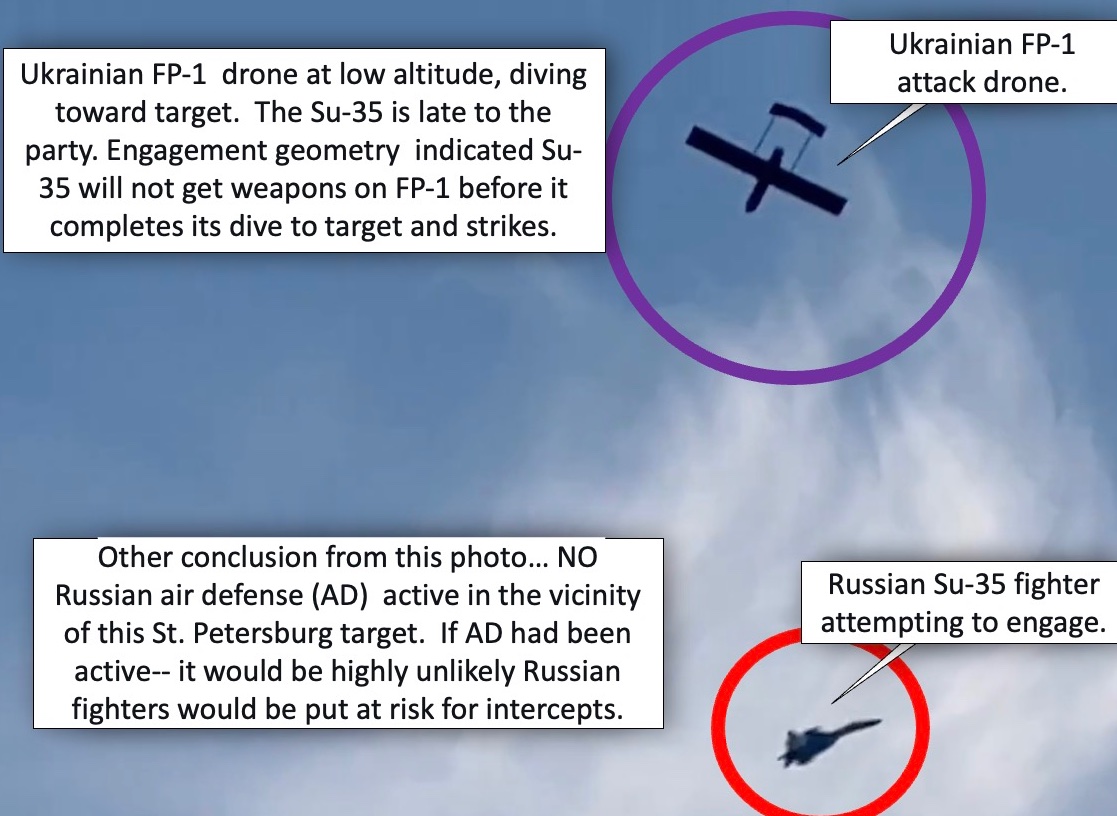
On July 16, a swarm of Ukrainian long‑range kamikaze drones struck the heavily protected Engels‑2 strategic airbase in Saratov. Multiple OSINT sources and local Russian reports confirm the destruction of a Tu‑95 strategic bomber — one of Russia’s most valuable and hardest‑to‑replace aircraft.
Engels‑2 is the primary hub for Russia’s long‑range bomber fleet, used to launch missile strikes against Ukrainian cities. By hitting deep inside Russian airspace and wiping out a Tu‑95, Ukraine delivered a psychological and military shock to the Kremlin’s sense of strategic security.Bottom line: Ukraine just proved that even Russia’s nuclear‑capable bomber fleet is not untouchable.
Source: OSINT analysts (GeoConfirmed, Russian regional channels), geolocated imagery from Engels‑2— @jalle51 Jul 19, 2026
#Patriotmissiles are no match to #Iskander and #Kinzhal missiles – Google Search google.com/search?q=Patriot+…
— Michael Novakhov (@mikenov) Jul 19, 2026
Russian and Chinese military advisers are using their own surveillance satellites and targeting equipment to help Iran target Israel, e.g.: Bat Yam – Google Search google.com/search?q=Russian+…
— Michael Novakhov (@mikenov) Jul 19, 2026
Russian and Chinese military advisers are using their own surveillance satellites and targeting equipment to help #Iran target #US bases across the #MiddleEast.
share.google/aimode/9mpZ96z0…U.S. intelligence reports and leaked documents confirm that Iran has leveraged Chinese-built satellites and Russian military intelligence to monitor and coordinate strikes against U.S. bases in the Middle East. Leaked Iranian military documents first revealed that the Islamic Revolutionary Guard Corps (IRGC) Aerospace Force acquired operational control of a Chinese-made spy satellite to track U.S. assets. Additionally, U.S. defense officials have noted growing concerns that Russia and China are providing advanced targeting assistance as Iran deploys increasingly maneuverable, high-speed missiles against American positions. [1, 2, 3, 4]
China’s Role: In-Orbit Satellite Delivery and ImageryThe TE01B Satellite: Built and launched by the Chinese company Earth Eye Co, the TE01B remote-sensing satellite was transferred to Iran’s military via an “in-orbit delivery”. This allows the IRGC to input task orders directly, effectively giving them an independent space-based reconnaissance asset. [1, 5, 6, 7]
High-Resolution Capabilities: The satellite provides sub-meter resolution (down to approximately half a meter), offering imaging capabilities nearly ten times sharper than Iran’s domestic military satellites. [6]
Targeting Evidence: Captured coordinate lists and time-stamped images show the satellite monitored locations before and after major drone and missile strikes. Tracked installations include:Prince Sultan Air Base (Saudi Arabia)
Muafaq Salti Air Base (Jordan)
U.S. Fifth Fleet Naval Base (Manama, Bahrain)
Erbil Airport (Iraq) [1, 5, 8, 9]U.S. Sanctions: In response to these operations, the U.S. Treasury Department issued sanctions against Chinese space firms, including Chang Guang Satellite Technology and Earth Eye Co, for directly aiding Iran’s tactical acquisition and target synchronization. [10, 11]
Russia’s Role: Intelligence Sharing
Satellite Mapping Support: Ukrainian and U.S. intelligence assessments indicate that Russian state satellites have conducted geographical surveys of U.S. installations across 11 Middle Eastern nations. [2, 8]
Direct Data Pipeline: This mapping data and actionable satellite imagery were reportedly passed to Tehran, helping Iranian forces bypass domestic infrastructure limitations—especially following heavy regional counter-strikes on Iran’s own systems. [2, 7, 12]
Operational ImpactsThe influx of high-tier foreign space assets has fundamentally altered the tactical landscape. Analysts attribute the high accuracy of recent drone and missile strikes—such as the complex maneuvers utilized in recent strikes on Jordanian installations and the drone attacks on Camp Udairi and Ali Al Salem Air Base in Kuwait—directly to this enhanced intelligence architecture. While Beijing has officially dismissed these reports as disinformation, the U.S. Defense Intelligence Agency maintains that foreign space-based support poses an active threat to American personnel throughout the region. [1, 4, 13, 14, 15]
[Rich media excluded from paste]
[1] reuters.com[2] forbes.com
[3] youtube.com
[4] turkiyetoday.com[5] youtube.com
[6] youtube.com
[7] cnn.com
[8] youtube.com
[9] youtube.com
[10] hudson.org
[11] kharon.com
[12] youtube.com
[13] timesofisrael.com
[14] youtube.com
[15] bbc.co.uk— Michael Novakhov (@mikenov) Jul 19, 2026
Recent developments highlight intensifying geopolitical conflicts, particularly in Eastern Europe and the Middle East, alongside domestic political tensions in the U.S. Russia’s large-scale missile strikes on Ukraine and retaliatory drone attacks on Russian infrastructure signal a dangerous escalation. Meanwhile, U.S. election integrity debates and rising democratic socialist influence reflect deepening polarization. Cybersecurity tools and OSINT warnings underscore growing concerns about digital manipulation and intelligence reliability.
Russia launches massive missile barrage on Kyiv amid escalating war — Russian forces fired 41 missiles and 120 drones at Kyiv in one of the largest salvos of the war, killing at least one person. Ukraine’s military reports increased long-range drone strikes on Russian oil facilities and tankers, suggesting a shift toward asymmetric warfare. Sources: [5, 25, 38].
U.S. and Iran tensions flare as drone strikes target military bases — Iran conducted kamikaze drone attacks on U.S. military bases in Kuwait, marking a direct escalation. Separately, Iranian officials warned U.S. forces to flee the region, hinting at broader retaliation for perceived provocations. Sources: [18, 48].
Trump’s election claims spark expert backlash and security concerns — President Trump’s primetime speech alleging foreign election interference was dismissed by experts as unsubstantiated, with critics warning it could undermine trust in the 2026 midterms. A fired federal election official highlighted risks of politicizing election security. Source: [2].
Democratic socialists gain traction amid U.S. political divisions — Democratic Socialists of America-backed candidates secured primary victories, while Zohran Mamdani’s calls to arrest Netanyahu during a U.S. visit underscored rising left-wing activism. Critics argue the movement’s policies could alienate business leaders. Sources: [31, 32, 39].
OSINT tools and disinformation warnings highlight cybersecurity risks — A viral post cautioned against trusting anonymous OSINT sources, alleging some are paid actors or controlled opposition. Meanwhile, a list of top cybersecurity virtual machines, including Kali Linux, gained attention for defensive and offensive applications. Sources: [3, 4, 26].